How to Master Interview Coordination

How to Master Interview Coordination
What is Interviewer Availability Coordination?
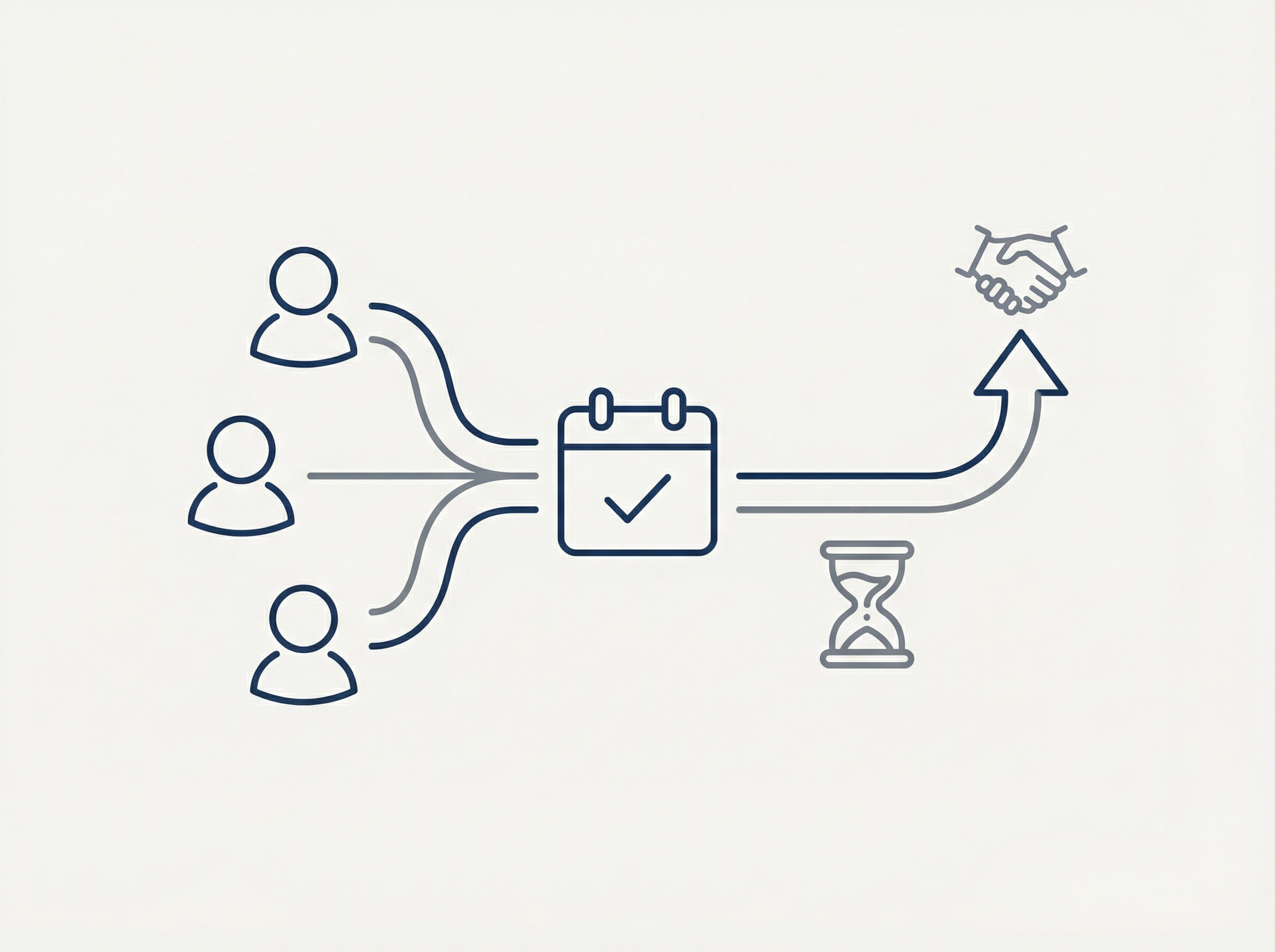
Interviewer availability coordination is the strategic process of aligning the schedules of hiring managers, recruiters, and candidates to facilitate seamless interview panels. At its core, it solves the notorious "calendar Tetris" problem that plagues modern talent acquisition. Why does this matter? Recent data from 2026 shows that 42% of candidates drop out of the hiring funnel simply because interview scheduling takes too long. Effective interviewer availability coordination directly improves hiring speed, ensures evaluation consistency, and dramatically elevates the candidate experience, ultimately determining whether you secure top talent or lose them to a faster-moving competitor.
Consider the reality of a modern hiring process. Time-to-hire averages around 44 days across the US, and the bulk of that time isn't spent interviewing—it's spent waiting. To understand the friction, look at Sarah, a senior technical recruiter at a rapidly scaling software company. After an extensive sourcing and resume screening phase, Sarah found the absolute perfect candidate for a critical Principal Engineer position. The candidate was engaged, skilled, and ready to move forward. However, the hiring workflow required a four-person panel interview consisting of a VP in London, a peer engineer in New York, and a Product Manager in San Francisco.
Without a system for interviewer availability coordination, Sarah was forced to act as a manual dispatcher. She spent 14 agonizing days sending endless email threads, manually cross-referencing hidden calendar events, and negotiating overlapping time slots. When she finally secured a two-hour block that worked for all four internal stakeholders, she sent the invite to the candidate—only to discover the candidate had accepted an offer from a competitor the day before. The competitor hadn't offered a better salary; they simply had better hiring workflow automation and scheduled the interview within 48 hours. This wasted effort, lost revenue potential, and immense frustration highlights the measurable, hidden cost of ignoring availability logistics.
Best Practices and Common Pitfalls
4 Heuristics for Efficient Scheduling
Mastering interviewer availability coordination requires shifting your talent acquisition strategy away from manual habits and embracing structured, automated workflows. Here are four actionable heuristics to permanently streamline the process:
- Use shared calendar blocks and internal SLAs: You cannot coordinate what you cannot see. Establish strict Service Level Agreements (SLAs) that require interviewers to respond to scheduling requests within 24 hours. Furthermore, mandate that hiring managers designate specific, recurring "interview blocks" on their weekly calendars. When a recruiter knows exactly when a manager is free, the friction disappears.
- Implement structured interviews and ATS automation: Leverage your Applicant Tracking System (ATS) to instantly align availability. Modern hiring workflow automation allows candidates to receive a self-scheduling link that cross-references the calendars of a multi-person panel in real time. This eliminates back-and-forth emails and puts the power of choice in the candidate's hands.
- Maintain calibrated backup interviewers: One of the biggest bottlenecks in interviewer availability coordination is the last-minute cancellation. Prevent rescheduling drop-offs by always having a "shadow" or backup interviewer who is fully calibrated on the role. If a primary panelist is suddenly pulled into an executive meeting, the backup steps in seamlessly, keeping the timeline intact.
- Standardize interview scorecards: Keep the focus on candidate evaluation, not administrative logistics. When interview scorecards are highly standardized and tied directly to the role's core competencies, any trained interviewer can step into the rotation. This modular approach to panel creation makes calendar alignment exponentially easier.
3 Common Misconceptions
Even experienced HR teams and talent leaders stumble when implementing interviewer availability coordination. To protect your pipeline, you must avoid these three common pitfalls:
- Relying on manual email threads for a "personal touch": There is a persistent myth that emailing candidates manually to negotiate times is more polite. In reality, candidates vastly prefer the speed, autonomy, and clarity of automated self-scheduling links. Waiting three days for an email reply creates anxiety, not a personal connection.
- Failing to account for timezone discrepancies and interviewer burnout: A common trap is packing an interviewer’s schedule back-to-back simply because there is open space on their calendar. Failing to buffer interviews or ignoring the cognitive load of a 7:00 AM cross-timezone call leads to severe interviewer fatigue. Fatigued interviewers provide poor candidate experiences and fill out incomplete scorecards.
- Believing that scheduling software alone fixes a broken hiring culture: An AI interview platform and advanced scheduling algorithms are incredibly powerful, but they cannot fix fundamentally flawed internal priorities. If your hiring managers consistently refuse to prioritize interviews or frequently override calendar blocks, no amount of software will save your time-to-hire. Coordination requires both technical tools and cultural discipline.
The Breakthrough Moment
Transforming the Hiring Workflow
The turning point for Sarah’s talent acquisition team occurred when leadership finally recognized that poor logistics were bleeding their talent pipeline dry. They decided to completely overhaul their approach, treating interviewer availability coordination as a core strategic pillar rather than an administrative afterthought. They mapped out their entire process: from initial sourcing and resume screening, straight through to AI interviews, panel evaluations, offers, and background checks.
The team integrated their ATS with mandatory, shared calendar blocks across all departments. They established a rule: if a hiring manager opens a requisition, they must commit to five hours of dedicated interview availability per week. The breakthrough moment happened during the hiring for the next executive role. Instead of days of manual negotiation, Sarah initiated an automated workflow. The system identified overlapping availability across three time zones and sent the candidate a customized booking link instantly.
The before-and-after impact was staggering. By shifting from manual negotiation to systematic interviewer availability coordination, the team reduced scheduling time by 60%—dropping the wait time from an average of 14 days down to just under 48 hours. Pass-through rates surged, and candidate drop-offs at the interview stage plummeted. Instead of a disjointed, frustrating delay, candidates experienced a seamless progression. Hiring managers arrived at interviews prepared, decision alignment improved because the panels were consistent, and Sarah reclaimed over 15 hours a week previously lost to calendar management.

Pros & Cons Table Integration
Implementing strict interviewer availability coordination fundamentally changes how recruiting teams and hiring managers interact. While the benefits are transformational for your hiring metrics, there are necessary realities to consider. Here is a breakdown of the strategic advantages and practical tradeoffs:
| Benefit | Tradeoff |
|---|---|
| Accelerated Speed-to-Hire: Drastically reduces scheduling delays, directly preventing the high candidate drop-off rates associated with slow coordination and unresponsiveness. | Rigid Calendar Discipline: Requires hiring managers to strictly maintain calendar accuracy, respect blocked interview times, and surrender some ad-hoc scheduling freedom. |
| Improved Decision Alignment: Standardized scheduling ensures that the correct panel members are always present, leading to consistent, unbiased, and highly calibrated candidate evaluations. | Initial Onboarding Time: Talent teams must invest significant upfront time to train staff, calibrate backup interviewers, and properly configure ATS automation and scorecard systems. |
Career Impact and FAQs
Career Leverage for Talent Leaders
For recruiters, hiring managers, and talent acquisition leaders, mastering interviewer availability coordination is a distinct, high-leverage career differentiator. In a labor market where hiring velocity is your greatest competitive advantage, professionals who can systemize the calendar bottleneck are highly valued by executive leadership. Understanding this niche transitions your role from a reactive, administrative coordinator to a strategic talent partner who drives measurable business outcomes.
Q: "How have you applied interviewer availability coordination to improve outcomes?"
A: "I operationalized our scheduling workflow by implementing ATS automation and SLA-driven shared calendar blocks. This standardized our cross-functional interview panels, streamlined the entire coordination process, and reduced our time-to-schedule by 60%. Ultimately, this proactive alignment improved our candidate pass-through rate and increased our final offer acceptance rate by 25%."
If you are a talent professional looking to highlight this expertise in your own career progression, focus on quantifiable impact. Here are several concise resume bullet examples demonstrating mastery of this skill:
- Streamlined interviewer availability coordination across distributed global teams, reducing average time-to-hire by 12 days.
- Standardized structured interviews and corresponding scorecards, ensuring 100% evaluation alignment across cross-functional hiring panels.
- Reduced candidate drop-off by 40% through the implementation of automated scheduling workflows and strict internal SLA tracking.
- Calibrated a comprehensive backup interviewer pool to eliminate rescheduling delays and significantly improve the end-to-end candidate experience.
- Improved talent acquisition efficiency by integrating AI interview platforms with internal calendars, saving the recruiting team 15+ hours weekly.
Frequently Asked Questions
What is interviewer availability coordination?
Interviewer availability coordination is the systematic process of aligning the schedules of recruiters, hiring managers, and candidates to facilitate interviews. It replaces manual calendar checking with structured workflows, shared availability blocks, and automation. By solving scheduling bottlenecks, it drastically reduces time-to-hire, prevents candidate drop-off, and creates a highly professional, seamless candidate experience from initial screening to final offer.
Can interviewer availability coordination backfire?
Yes, strict interviewer availability coordination can backfire if implemented too rigidly without human empathy. Over-automation without clear communication can make the process feel highly impersonal to top-tier candidates. Additionally, inflexible calendar blocks might frustrate internal hiring managers if they lack the breathing room to handle urgent, unforeseen business crises, leading to internal friction and pushback.
How does this impact the overall candidate experience?
Efficient coordination removes the profound anxiety of waiting days or weeks for an interview confirmation. It creates a transparent, seamless process that fundamentally respects the candidate's time. This operational efficiency significantly reduces the likelihood of top talent abandoning your hiring funnel out of frustration to accept an offer from a faster competitor.
What operational systems are required for success?
Modern talent acquisition teams rely on a unified stack of operational systems. This includes integrated Applicant Tracking Systems (ATS), automated self-scheduling links, AI interview platforms, shared calendar protocols, and standardized interview scorecards to ensure logistics run invisibly in the background.
Mastering interviewer availability coordination creates a durable hiring advantage, transforming administrative bottlenecks into a formidable competitive edge for your organization. If you want to operationalize interviewer availability coordination with structured workflows (Sourcing → resume screening → AI interviews → scorecards → offers → background checks), try tools like Foundire (https://foundire.com).