How to Master Candidate Risk Assessment

How to Master Candidate Risk Assessment
What is candidate risk assessment? At its core, it is the systematic process of identifying and evaluating potential red flags in a candidate’s skills, behavioral tendencies, and cultural alignment before extending a job offer. In today’s highly competitive and fast-paced talent market, mastering candidate risk assessment matters because it directly protects organizations from the staggering financial and cultural costs of a bad hire. By operationalizing this structured evaluation process, talent acquisition teams can drastically improve hiring speed, boost quality of hire, ensure decision-making consistency, and deliver a much fairer candidate experience.
Imagine this scenario: Sarah, a senior engineering hiring manager, spent six grueling weeks recruiting a lead developer. After four rounds of unstructured interviews, the team fell in love with a candidate and extended a premium offer. However, a late-stage background check revealed severe, undisclosed discrepancies in the candidate's employment history. The offer was immediately revoked. Sarah was left with a critical vacancy, a burned-out recruiting team, and thousands of dollars wasted in lost productivity. This painful inefficiency, inconsistency, and misalignment is exactly the core problem a robust risk assessment framework solves.
What is Candidate Risk Assessment and Why It Matters
The True Cost of Misaligned Hires
A bad hire is far more than just a temporary inconvenience for the HR department; it is a profound financial and operational burden that ripples across the entire business. According to recent labor and industry reports, the cost of a bad hire can easily equal 30% to over 100% of the employee's first-year earnings, and for specialized or executive roles, this figure often skyrockets into the hundreds of thousands of dollars. Startlingly, survey data shows that nearly 74% of employers admit to having hired the wrong person for a job at least once.
When talent acquisition teams fail to properly assess candidate risk, the fallout is multi-dimensional. First, there are the direct financial losses associated with wasted onboarding, training resources, and recruiter fees. Second, there are indirect costs: decreased team morale, toxic workplace dynamics, and a significant drag on productivity. A misaligned employee can cause high-performing team members to become disengaged or even resign. Furthermore, leaving a seat empty carries its own "vacancy tax." Unfilled roles can cost businesses upwards of $4,000 per month in lost output and delayed revenue. Proper candidate risk assessment acts as a necessary insurance policy against these organizational drains.
A Real-World Recruiting Scenario
Let’s look at candidate risk assessment in action through an end-to-end recruiting scenario. Meet David, a Senior Talent Acquisition Partner at a rapidly growing mid-sized tech firm. Historically, his team suffered from a notoriously low pass-through rate at the offer stage. They routinely lost top candidates due to misaligned compensation expectations, or worse, they discovered critical background check discrepancies far too late in the hiring workflow.
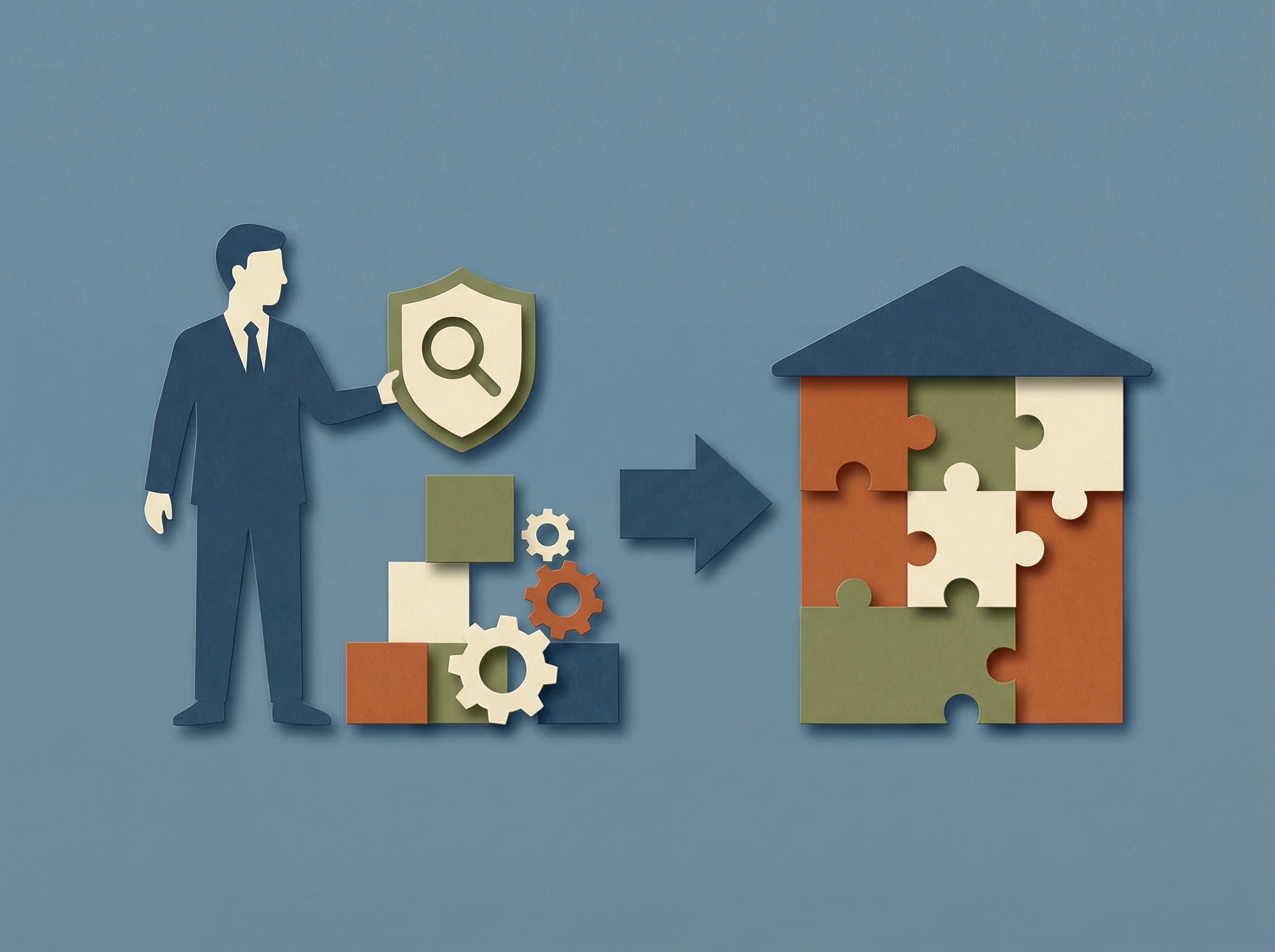
Determined to fix this, David overhauled the company's hiring workflow automation. The process began at the intake session. David and the hiring manager explicitly defined what constituted a "high-risk" trait for the specific role—such as a lack of cross-functional communication skills or inability to handle rapid pivoting. Next, David implemented an AI interview platform for initial resume screening and early behavioral assessment, ensuring candidates met baseline criteria before human intervention was required.
During the formal interview stage, every panelist was required to use standardized interview scorecards. Instead of submitting vague feedback like "he wasn't a good cultural fit," the ATS captured specific, calibrated data on technical competencies and collaborative problem-solving. Finally, by initiating preliminary background checks and clear expectation setting earlier in the cycle, David’s team mitigated late-stage surprises. The result? They reduced late-stage candidate drop-offs by 40%. The pass-through rate from the first interview to successful hire jumped from a dismal 15% to a highly predictable 45%, proving that measuring the problem and applying a structured solution works.
Core Insights and Practical Strategies for Mitigation
Top Heuristics for Effective Assessment
To build a resilient and highly effective talent acquisition engine, recruiters and hiring managers should internalize these actionable heuristics:
- Integrate early AI screening: Utilize an AI interview platform to screen for baseline competencies and behavioral risks at the very top of the funnel. This standardizes the first touchpoint and ensures that only viable candidates proceed.
- Enforce structured interview scorecards: Never let a hiring manager enter an interview without a grading rubric. Scorecards ensure all candidates are judged on identical criteria, neutralizing subjective bias and anchoring decisions in objective data.
- Calibrate your hiring panels: Before sourcing even begins, hold a calibration session. Ensure all interviewers agree on what a "strong hire" versus a "high-risk candidate" looks like to prevent mixed signals during debriefs.
- Automate hiring workflows: Connect your ATS to your background check and reference tools. Moving these checks into a seamless hiring workflow automation prevents manual delays and keeps the candidate experience smooth and engaging.
- Assess past behavior as a predictor: Always probe into how candidates handled failure or conflict in the past. Behavioral inconsistencies during these answers are major risk indicators that should be flagged early.
Common Pitfalls to Avoid
Even well-intentioned talent teams can stumble if they lack discipline. Avoid these common traps when evaluating talent:
- Relying on gut feelings: Claiming "I just have a good feeling about them" is not a scalable or defensible hiring metric. Gut feelings almost always mask unconscious bias and cause interviewers to actively ignore objective risk indicators.
- Unstructured interview questions: Asking candidates random brain-teasers, shifting questions based on the candidate's background, or conducting purely conversational interviews makes it impossible to compare candidates fairly. This drastically increases the likelihood of a bad hire.
- Ignoring early behavioral inconsistencies: If a candidate is highly unresponsive during sourcing, frequently reschedules without good reason, or is rude to a recruiting coordinator, do not brush it off. These are critical data points in your candidate risk assessment that often reflect future on-the-job behavior.
The Breakthrough Moment
The true turning point for any HR or talent team occurs when they transition from manual guesswork to automated, data-driven candidate risk assessment. Consider the breakthrough experienced by a large enterprise software company. Prior to overhauling their strategy, their average time-to-fill hovered around 65 days. The process was heavily bogged down by panel disagreements, misaligned expectations, and devastating late-stage background check failures.
Once leadership mandated the use of interview scorecards and automated their early screening steps, the transformation was immediate and profound. The time saved by eliminating redundant alignment meetings alone shaved 15 days off their time-to-fill. Because expectations were crystal clear and risks were identified in the first week rather than the fifth, candidate drop-offs plummeted. Hiring managers finally experienced the relief of knowing that every offer extended was backed by empirical data and rigorous evaluation, rather than just hopeful intuition. This breakthrough shifted the talent team's reputation from an administrative bottleneck to a strategic revenue-enabling partner.
Career Advantage: Elevating Your Talent Strategy
Differentiating Yourself in TA
For recruiters, HR professionals, and talent leaders, mastering candidate risk assessment is a significant career differentiator. It is the specific skill set that transitions you from a transactional order-taker to a strategic business partner who actively protects the company's bottom line. When you can fluently speak the language of risk mitigation, operational efficiency, and data-backed hiring, executive leaders listen.
Consider how mastering these concepts prepares you for career growth and enables you to ace senior-level interviews. Here is a prime example of how to articulate this value:
Q: “How have you applied candidate risk assessment to improve outcomes?”
A: “I standardized our entire evaluation process by implementing structured interview scorecards and leveraging an AI interview platform for early resume screening. Additionally, I automated our background checks within the ATS. These calibrated efforts streamlined our workflow, reduced our time-to-fill by 20%, and significantly improved our early-stage pass-through rate by weeding out misaligned candidates before the panel stage.”
If you are looking to update your resume to reflect your expertise in candidate risk assessment, consider adding these concise, impact-driven bullet points:
- Standardized candidate risk assessment protocols across all technical roles, reducing average time-to-fill by 18 days.
- Implemented structured interview scorecards and panel calibration sessions, increasing early-stage pass-through rates by 30%.
- Integrated hiring workflow automation with the ATS to streamline background checks, effectively eliminating late-stage offer revocations.
- Deployed an AI interview platform to assess behavioral competencies, resulting in a 25% increase in first-year new hire retention.
- Partnered with hiring managers to define risk heuristics, reducing the cost per hire and mitigating the risk of employee turnover.
Pros & Cons of Risk Assessment Frameworks
While the advantages of implementing a formal assessment structure are vast, it is important for talent leaders to understand the holistic picture, including the operational tradeoffs required to achieve success.
| Benefit | Tradeoff |
|---|---|
| Higher quality of hire and significantly reduced long-term employee turnover. | Requires upfront workflow setup time and comprehensive hiring manager training. |
| Data-driven consistency eliminates unconscious bias and gut-feeling decisions. | May initially slow down the very top of the sourcing funnel as standards increase. |
| Early identification of behavioral red flags prevents late-stage offer drop-offs. | Necessitates financial investment in integrated ATS, AI, and screening tools. |
Frequently Asked Questions and Next Steps
Expert FAQs
What is candidate risk assessment?Candidate risk assessment is the structured process of identifying potential red flags in a job applicant's skills, behavioral tendencies, and background early in the hiring process. By systematically evaluating these factors through scorecards, AI interviews, and automated checks, talent teams mitigate the risk of costly bad hires and ensure long-term alignment.
Can candidate risk assessment backfire?Yes, if poorly designed, it can backfire. Over-indexing on rigid risk frameworks can lead to excessive filtering, causing you to miss out on non-traditional but highly capable talent. Additionally, if interview scorecards are not properly calibrated, they can unintentionally introduce bias. A balanced approach requires objective data combined with human context.
How do structured interviews reduce risk?Structured interviews reduce risk by ensuring every candidate is evaluated against the exact same criteria using standardized questions and interview scorecards. This consistency minimizes the influence of a hiring manager's gut feeling, prevents moving goalposts, and provides clear, defensible data to base final hiring decisions on.
Why are background checks a critical part of risk assessment?Background checks verify a candidate's credentials, employment history, and legal standing. By integrating them seamlessly into your hiring workflow automation, you prevent fraudulent claims from slipping through, thereby protecting the company's reputation, ensuring workplace safety, and avoiding the massive financial fallout of a mis-hire.
Securing a Durable Hiring Advantage
Mastering candidate risk assessment is not merely a one-time administrative project; it is the ultimate foundation of a durable hiring advantage. When you rigorously and consistently apply structured evaluation frameworks, you build a resilient organization capable of scaling without ever sacrificing talent quality. By proactively identifying red flags, you save your company thousands of dollars, protect internal team culture, and vastly elevate the strategic reputation of your talent acquisition team.
If you want to operationalize candidate risk assessment with structured workflows (Sourcing → resume screening → AI interviews → scorecards → offers → background checks), try tools like Foundire (https://foundire.com).