How to Fix Your Reschedule Workflow

How to Fix Your Reschedule Workflow
The True Cost of a Broken Reschedule Workflow
What It Is and Why It Matters
A reschedule workflow is a systematic process for managing interview delays and timeline adjustments seamlessly. When candidates or hiring managers need to change their meeting times, a standardized reschedule workflow automates the logistics, ensuring minimal friction and preventing critical communication breakdowns. This process is absolutely essential because it directly impacts your overall hiring speed, the quality of your talent pool, and the broader candidate experience. Without a structured protocol in place, companies suffer from massive administrative inefficiencies and risk losing top-tier talent to faster, more organized competitors. According to recent 2026 data, over 42% of candidates abandon the hiring process entirely due to scheduling delays and poor communication. By implementing a proactive, carefully designed system, talent acquisition teams can effectively prevent bottlenecks, maintain forward momentum, and secure the best candidates before they accept competing offers.
A broken scheduling system doesn't just waste time; it actively damages your employer brand and drains your talent pipeline of its highest-quality candidates.
Scenario: A Recruiter's Nightmare
Let’s look at a concrete example featuring Sarah, a Senior Recruiter at a rapidly scaling enterprise. Sarah had spent weeks sourcing and finally connected with David, a highly qualified engineering candidate who perfectly matched the role's requirements. The initial stages of the hiring process moved smoothly: the intake meeting aligned expectations, the resume screening was flawless, and David aced his initial phone screen. But when it was time to schedule the crucial technical interview, the hiring manager unexpectedly called in sick.
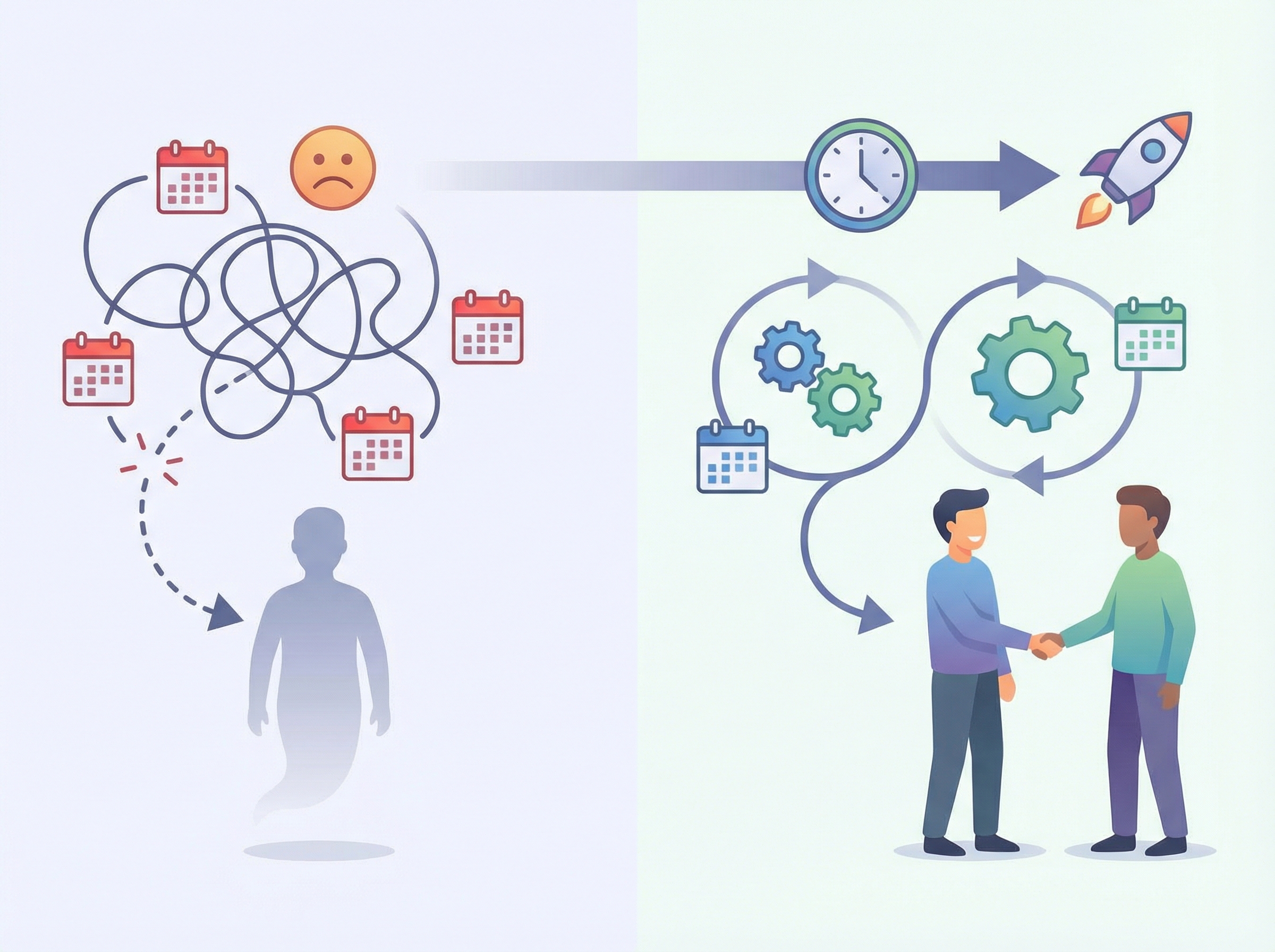
Lacking a formal, automated reschedule workflow, Sarah had no choice but to send a hurried, manual email to David asking for alternative times. Thus began a messy, agonizing five-day back-and-forth email chain. Time zones were confused, proposed calendar links expired before they could be clicked, and simple days of delay quickly turned into weeks. The friction in this disjointed process was palpable.
Because of this disorganized approach, the company's time-to-fill metric for this critical role was delayed by 15 days. Worse, the team’s overall interview pass-through rate dropped by 20% that quarter due to similar scheduling fumbles. By the time Sarah finally secured a confirmed new time slot, David had already accepted an offer from a competitor whose process took just ten days end-to-end. This lost hire cost the company thousands of dollars in wasted sourcing efforts and left the engineering team understaffed for another month.
Core Insights: Optimizing the Reschedule Workflow
Actionable Best Practices
Fixing a broken scheduling system requires more than just buying new software; it requires a strategic overhaul of how your talent acquisition team operates. Here are four actionable heuristics to optimize your process:
- Deploy self-serve scheduling links via your ATS: Empower candidates to choose their own interview times. By integrating tools directly with your ATS, candidates can view a hiring manager’s real-time availability and select a slot that works for them, instantly eliminating the back-and-forth email dance.
- Build in automated buffer times: Meeting fatigue is real, and interviews often run over. Configure your system to automatically insert 15-minute buffers before and after scheduled interviews. This simple adjustment prevents back-to-back conflicts, reduces hiring manager stress, and ensures candidates aren't kept waiting in virtual lobbies.
- Utilize automated ATS triggers for immediate updates: When an interview is moved, your system should automatically update all related documentation. Set triggers so that if a date changes, the corresponding interview scorecards and calendar invites are instantly refreshed, ensuring the hiring panel always has the right context at the right time.
- Standardize the timeline for structured interviews: Structured interviews rely on consistency to reduce bias. When an interview is delayed, ensure your reschedule workflow maintains the intended sequence of the interview panel, preserving the integrity of your evaluation process.
Common Pitfalls to Avoid
Even well-intentioned teams can make mistakes when implementing new automation. Avoid these three common pitfalls:
- Penalizing candidates for unavoidable life events: Life happens. A candidate might need to reschedule because of a family emergency or a sudden illness. Rigid policies that flag rescheduled interviews as "negative marks" hurt your employer brand and disproportionately affect diverse talent pools. Treat scheduling changes with empathy.
- Failing to sync with secondary platforms: If a candidate pushes their technical interview back by a week, failing to update secondary systems can be disastrous. For example, if your AI interview platform expires the candidate's access link based on the original date, or if background checks are triggered prematurely, it creates severe confusion and technical lockouts.
- Ignoring time-zone conversions: In an era of distributed workforces, assuming everyone is in your local time zone is a critical error. Always ensure your scheduling tools automatically localize time zones for both the candidate and the interviewing panel to prevent missed connections.
The Breakthrough Moment
After losing David, Sarah realized the manual approach was unsustainable. She spearheaded an initiative to implement robust hiring workflow automation across her department. She integrated a new scheduling tool directly into the company’s ATS, established automated calendar syncs, and created templated, self-serve links for every stage of the funnel.
The before-and-after impact was staggering. Almost overnight, the time Sarah spent on manual scheduling dropped by 40%. Consistency across the recruiting team improved drastically, as every candidate received the exact same high-quality experience. Most importantly, candidate drop-offs plummeted. By removing the logistical friction, alignment between talent acquisition and hiring managers became seamless, allowing the team to focus on evaluating talent rather than playing calendar Tetris.
Career Impact and Strategic Tradeoffs
Elevating Your Talent Acquisition Career
For recruiters and talent leaders, mastering operational systems like the reschedule workflow is a massive career differentiator. In today’s highly competitive market, business leaders do not just want recruiters who can find good resumes; they want strategic partners who can architect frictionless hiring systems. Demonstrating that you can identify bottlenecks and implement scalable solutions elevates your profile from a tactical sourcer to an operational leader.
When you optimize the hiring engine, you stop being just an administrator and become a driver of strategic business growth.
If you are interviewing for a senior talent acquisition role, you need to be prepared to speak about system optimization. Consider this common interview scenario:
Q: “How have you applied a reschedule workflow to improve outcomes?”
A: “I standardized our scheduling integration across our ATS and AI tools, replacing manual emails with automated self-serve links. This calibrated our interview SLAs, reducing our average time-to-interview by 30% and significantly improving our overall hiring results by lowering candidate drop-off rates.”
To showcase this expertise on your resume, use concrete, action-oriented bullet points that highlight measurable impact:
- Standardized the company's enterprise-wide reschedule workflow, reducing mid-funnel candidate drop-off by 25%.
- Calibrated interview scheduling SLAs across 5 global departments, decreasing average time-to-interview by 30%.
- Streamlined communication between hiring managers and applicants using automated triggers, saving the recruiting team an average of 15 hours per week.
- Improved overall offer acceptance rates by maintaining candidate momentum through sophisticated hiring workflow automation.
- Integrated third-party AI assessment tools with core scheduling systems to ensure 100% data accuracy for interview panels.
Pros & Cons Tradeoff
Implementing a highly automated workflow is generally positive, but it is important to understand the strategic tradeoffs involved. Here is a breakdown of what to expect:
| Benefit | Tradeoff |
|---|---|
| Measurably lower candidate drop-off: Speed and convenience keep high-value candidates engaged and prevent them from abandoning the pipeline. | Risk of feeling impersonal: Over-automation can feel cold if not configured correctly. You must pair automated links with warm, personalized messaging to maintain the human touch. |
| Frees up recruiter bandwidth: Eliminating manual calendar management gives talent teams more time for strategic sourcing and candidate relationship building. | Significant initial time investment: Properly configuring ATS triggers, buffer times, and edge cases requires dedicated setup time and continuous system maintenance. |
| High data consistency: Automated syncing ensures that scorecards, calendar invites, and candidate profiles are always perfectly aligned. | Requires strict manager adherence: The system breaks down if hiring managers bypass the workflow or fail to keep their integrated calendars updated. |
FAQs and Building a Durable Hiring Advantage
Frequently Asked Questions
What is a reschedule workflow?
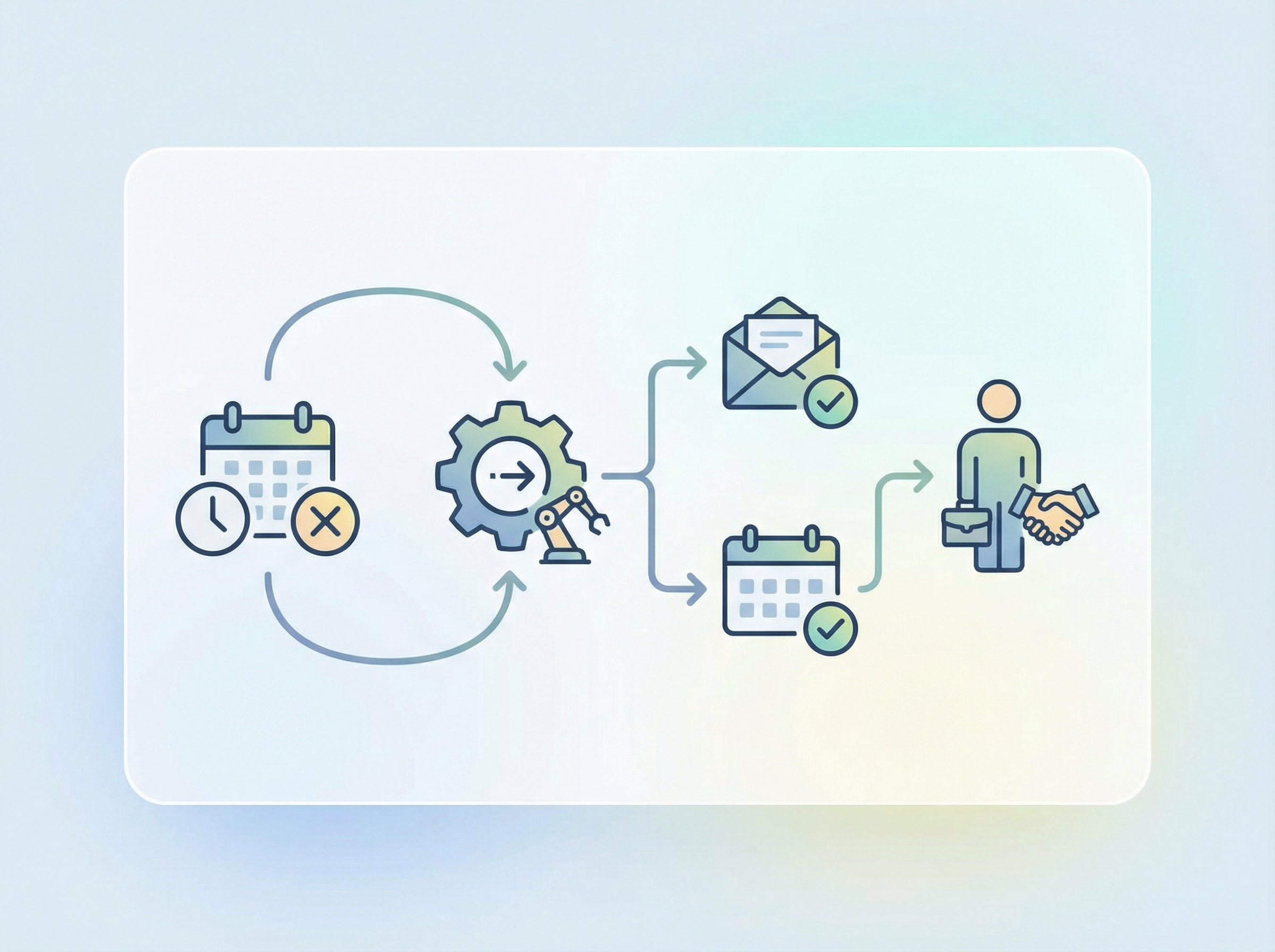
A reschedule workflow is an automated, standardized system used by recruiters to manage changes in interview times. It replaces manual back-and-forth emails with self-serve calendar links and automated system triggers, ensuring candidates and managers can adjust meeting times without causing pipeline delays.
Can a reschedule workflow backfire?
Yes, it can backfire if it relies too heavily on rigid automation without empathy. Over-automation can make candidates feel ignored. Furthermore, if the workflow fails to account for time-zone differences or doesn't sync properly with your ATS, it creates technical confusion rather than resolving it.
Why do candidates drop out during scheduling?
Top candidates are often off the market within 10 days. When scheduling is slow, disorganized, or lacks transparency, candidates lose trust in the employer's brand. Prolonged delays frustrate applicants, leading them to abandon the process and accept faster competing offers.
Next Steps
Ultimately, candidate experience is the ultimate differentiator in modern recruiting. Mastering the reschedule workflow is not just an administrative win; it creates a durable, long-term hiring advantage by fiercely protecting your candidate pipeline from unnecessary friction. By replacing chaos with structured automation, you ensure that top talent remains engaged from the first touchpoint to the final handshake.
If you want to operationalize your reschedule workflow with structured workflows (Sourcing → resume screening → AI interviews → interview scorecards → offers → background checks), try tools like Foundire (https://foundire.com).