How to Build a Structured Question Set

How to Build a Structured Question Set
What It Is and The Hiring Scenario
Defining the Search Intent
A structured question set is a standardized, pre-approved list of interview questions tied directly to specific scoring rubrics and behavioral benchmarks. It matters because it is the fundamental mechanism for ensuring hiring consistency, eliminating unconscious bias, and significantly accelerating decision-making velocity. By defining exactly what a "good" answer looks like before a candidate ever enters the room, talent teams can shift their focus from subjective gut feelings to objective data. Ultimately, utilizing a structured question set drastically improves the overall quality of hire, enhances the candidate experience by ensuring fairness, and reduces the time wasted on misaligned post-interview debriefs.
When a talent acquisition team standardizes their assessment criteria, they stop guessing who the best candidate is and start measuring who the best candidate is.
A Real-World Recruiting Nightmare
To understand the profound impact of this approach, consider the story of Sarah, a Director of Talent Acquisition at a rapidly growing mid-market tech company. Six months ago, Sarah was drowning in hiring inefficiencies. Her team was suffering from a sluggish 45-day time-to-fill, and the recruiting funnel was bleeding top-tier talent. Out of the hundreds of candidates moving from initial intake and resume screening to the final panel interviews, the pass-through rate had plummeted to a dismal 20%. The bottleneck was obvious: unstructured, conversational interviews.
During the typical hiring workflow—which spanned from a hiring manager intake, to phone screens, to panel interviews, to the final decision, offer, and eventual background checks—every single interviewer was essentially winging it. One software engineering manager would ask candidates to solve a complex algorithmic riddle on a whiteboard, while another would spend 45 minutes chatting about their favorite sci-fi movies under the guise of assessing "culture fit." Because they lacked a unified framework, candidate debriefs devolved into highly subjective debates. Hiring managers were entirely misaligned on what constituted a qualified candidate, resulting in perfectly good candidates being rejected simply because one interviewer "didn't get a good vibe," while underqualified candidates slipped through the cracks because they were highly charismatic.
The lack of a standardized baseline meant the company was wasting hundreds of hours interviewing, debating, and ultimately losing out on top talent. Candidates were frustrated by repetitive questions across different interview rounds, and recruiters were exhausted by constantly restarting the search process. Sarah realized that to fix the hiring pipeline, she needed to fix the conversations happening inside it. She needed to implement a system that held every interviewer accountable to the exact same evaluation standards.
The Breakthrough and Best Practices
Turning the Tide
The breakthrough moment occurred when Sarah halted all ongoing interviews and spent three days collaborating directly with her hiring managers to engineer a comprehensive, competency-based structured question set. They mapped every single question to the core responsibilities of the open roles, integrating these questions directly into their applicant tracking system (ATS). The impact was immediate and measurable. By calibrating the hiring team around standardized rubrics, Sarah's team dropped their time-to-fill from 45 days down to an efficient 28 days. The pass-through rate from final interview to offer extended jumped from 20% to over 65%. Candidate drop-offs virtually vanished because the interview process felt highly professional, intentional, and respectful of their time. The agonizing, hour-long debate sessions post-interview were replaced by concise, 15-minute data-driven decisions based on clear scorecard metrics.
Actionable Heuristics for Implementation
To replicate this kind of operational success in your own talent acquisition department, you must treat your interview design as a rigorous process. Here are the core best practices for building an effective framework:
- Map every question directly to behavioral interview scorecards: Do not ask a question unless you know exactly what competency it is meant to uncover. Whether you are assessing conflict resolution, technical proficiency, or leadership potential, each query in your structured question set must correlate to a specific row on the interviewer's scorecard. This prevents "filler" questions and keeps the interview highly focused.
- Standardize grading rubrics across all hiring workflows: A question is only as effective as the rubric used to grade it. Define what a 1-star, 3-star, and 5-star answer sounds like in advance. Ensure these definitions are embedded directly within your ATS so that interviewers are forced to justify their ratings with concrete examples from the candidate's response.
- Leverage an AI interview platform to ensure consistency at scale: Utilizing modern technology can act as a force multiplier for your recruiting efforts. Platforms that integrate AI can help administer standardized baseline assessments early in the funnel, ensuring that every candidate receives the exact same baseline questions before they even reach a human recruiter, standardizing the initial screening phase perfectly.
- Continuously iterate the set based on funnel metrics: A structured question set is not a "set it and forget it" document. You must regularly review your pass-through rates and offer acceptance metrics. If a specific question consistently results in universally high scores that don't correlate with long-term employee success, it is too easy. If a question causes massive candidate drop-off, it may be poorly phrased or misaligned with the role's actual requirements.
Common Pitfalls to Avoid
While standardizing your interviews can revolutionize your hiring outcomes, the execution can easily go awry if you ignore the human element of recruiting. Beware of these common missteps:
- Asking rigid, robotic questions that ruin the candidate experience: Standardization does not mean sounding like a robot reading from a script. If interviewers strictly read questions off a piece of paper without allowing for natural conversational flow or follow-up questions, candidates will feel interrogated rather than interviewed. The goal is structured consistency, not mechanical delivery.
- Failing to train interviewers on how to use the rubric: Handing a hiring manager a structured question set without teaching them how to calibrate their scoring is a recipe for disaster. If one interviewer considers a "3 out of 5" to be a failing grade, while another considers it an acceptable baseline, your data will be entirely skewed. Mandatory calibration training is non-negotiable.
- Ignoring semantic variants and problem-based phrases in question design: When designing questions, do not rely on industry jargon that candidates from different corporate backgrounds might misunderstand. Ensure your questions are phrased to uncover the root behavior or problem-solving capability. For example, instead of asking "Are you proficient in Agile methodologies?", ask "Describe a time you had to pivot a project mid-sprint due to changing requirements."
Career Relevance and Resume Impact
Why Talent Leaders Need This
For recruiters, HR generalists, and talent leaders, mastering the art of the structured interview is no longer an optional skill—it is a critical career differentiator. In an era where efficiency and diversity are paramount, executives are looking for strategic operators who can actively remove bias and introduce predictability into human capital management. The ability to design, implement, and drive adoption of a structured question set transitions a recruiter's personal brand from a simple "resume sourcer" to a strategic "talent architect." When you can prove that your operational workflows directly influence the bottom line by improving hiring speed and quality, your value to the organization skyrockets.
Demonstrating Your Expertise
When you are interviewing for your next promotion or a new role in talent acquisition, hiring managers will want to know exactly how you have operationalized these concepts. You should be prepared to deliver a concrete, metrics-driven narrative.
Q: "How have you applied a structured question set to improve outcomes?"
A: "I standardized our initial screening processes, calibrated interviewer feedback by tying all questions to behavioral rubrics, and ultimately reduced our decision time by 30%. By replacing unstructured chats with measurable scorecards, we increased our final-stage pass-through rates and eliminated hiring manager bottlenecks."
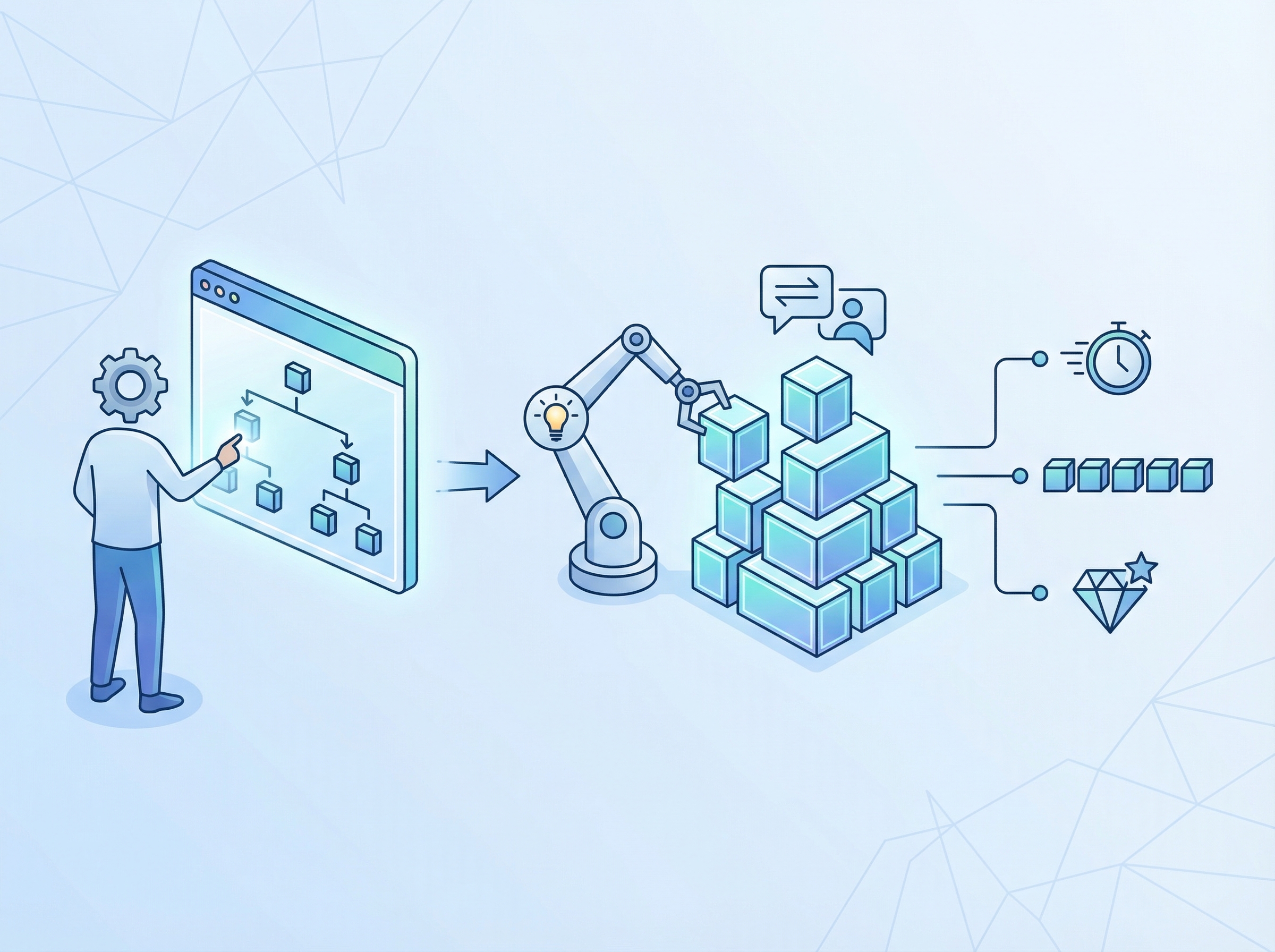
To ensure your resume captures this high-level operational expertise, consider incorporating these powerful, action-oriented bullet points to demonstrate your impact:
- Designed and implemented a structured question set across 5 critical engineering departments, drastically improving hiring consistency and reducing unconscious bias.
- Streamlined ATS workflow automation by embedding standardized interview scorecards, reducing time-to-fill from 45 to 28 days.
- Calibrated hiring teams through structured rubrics and comprehensive interviewer training, reducing late-stage candidate drop-offs by 15%.
- Orchestrated end-to-end hiring workflows, from initial resume screening to final offers and background checks, utilizing standardized evaluation criteria to guarantee equitable candidate assessment.
Pros, Cons, and FAQs for SEO
Evaluating the Tradeoffs
Implementing systemic changes to how an organization evaluates talent comes with distinct advantages and inherent challenges. Below is an objective breakdown of what to expect when shifting to a highly standardized interviewing model.
| Benefit | Tradeoff |
|---|---|
| Faster, Data-Driven Decisions Eliminates subjective debate by grounding all feedback in pre-defined interview scorecards, significantly reducing time-to-fill. |
High Upfront Setup Time Requires significant initial investment to collaborate with hiring managers, map competencies, and document grading rubrics for every single role. |
| Reduced Unconscious Bias Levels the playing field by ensuring all candidates are evaluated against the exact same criteria and questions. |
Requires Strict Interviewer Training Fails entirely if interviewers are not rigorously trained on how to use the rubrics and maintain a natural conversational tone. |
Frequently Asked Questions
What is a structured question set?
A structured question set is a standardized, pre-determined list of interview questions designed to evaluate specific competencies. Every candidate interviewing for a specific role is asked the exact same questions in the same order. Responses are then evaluated against a unified grading rubric or scorecard. This methodology dramatically reduces unconscious bias, increases hiring consistency, and ensures that talent acquisition teams make objective, data-driven decisions rather than relying on subjective "gut feelings."
Can a structured question set backfire?

Yes, it can backfire if executed poorly. If interviewers act like robots reading from a script, it stifles natural conversation and severely damages the candidate experience. Furthermore, if the grading rubrics are poorly calibrated or if interviewers are not trained on how to properly score the responses, the data collected will be flawed, leading to misaligned hiring decisions despite the appearance of structure.
How does this impact the background checks and offer stage?
By the time a candidate reaches the offer and background check stages, a structured interview process ensures that the organization has a highly documented, objective justification for the hire. This mitigates compliance risks, ensures salary offers are aligned with demonstrated competency levels rather than negotiation tactics, and provides a clear, documented audit trail that proves the candidate was evaluated fairly against all other applicants.
Conclusion and Next Steps
Mastering the design and execution of a structured question set creates a durable, repeatable hiring advantage for any organization. By moving away from unstructured, gut-driven interviews and embracing a data-centric approach, companies can build highly aligned teams faster, fairer, and with significantly less operational friction. It elevates the role of talent acquisition from mere administrative support to a core driver of business strategy. When every conversation is calibrated, every decision becomes clearer.
If you want to operationalize a structured question set with seamlessly structured workflows (spanning from initial Sourcing → resume screening → AI interviews → scorecards → offers → background checks), try tools like Foundire (https://foundire.com).