Why Consistency in Evaluation Matters

Why Consistency in Evaluation Matters
The High Cost of Inconsistent Hiring Processes
Defining Consistency in Evaluation
What is consistency in evaluation, and why is it the bedrock of modern talent acquisition? In simple terms, consistency in evaluation is the practice of assessing every single candidate against the exact same standardized criteria, using identical tools and structured workflows. It matters because subjective, unstructured hiring decisions introduce unconscious bias, create operational friction, and ultimately ruin the candidate experience. By standardizing your approach—from the initial resume screening to final offers—you drastically improve hiring speed, decision quality, and candidate satisfaction. In fact, standardizing your evaluation processes is the most effective way to eliminate the noise from hiring data.
Consider this: recent 2026 data reveals that up to 71% of candidates drop out of recruitment pipelines when the process feels disorganized, lengthy, or biased. When hiring managers ask different questions to different candidates, comparing their responses becomes impossible. The result? Extended hiring timelines, frustrated applicants, and a reliance on gut feelings rather than objective data. Consistency is the necessary antidote to these widespread hiring challenges.
A Tale of Two Candidates
Imagine two colleagues, Sarah, a Talent Leader, and Mark, a Hiring Manager at a growing tech firm. Last quarter, they lost three top-tier candidates in a row. Why? Their interview process was entirely chaotic. They lacked any semblance of consistency in evaluation. Mark relied heavily on his "gut feeling," treating interviews like casual conversations. He asked one candidate about their technical problem-solving skills and another about their favorite hobbies, gathering completely incompatible data.
Meanwhile, Sarah spent hours trying to decipher misaligned feedback in the ATS. Because there were no standard rubrics, Mark's feedback consisted of vague notes like "good culture fit" or "seemed a bit nervous." The lack of consistency in evaluation meant delayed decisions. Their unstructured resume screening and interviews led directly to a measurable problem: a 40% candidate drop-off rate and an average time-to-hire that ballooned to 45 days. Wasted hours in the ATS and delayed background checks meant their top choices accepted competing offers long before Sarah and Mark could align on a final decision.
How to Standardize Your Hiring Workflow
3 Rules for Structured Interviews
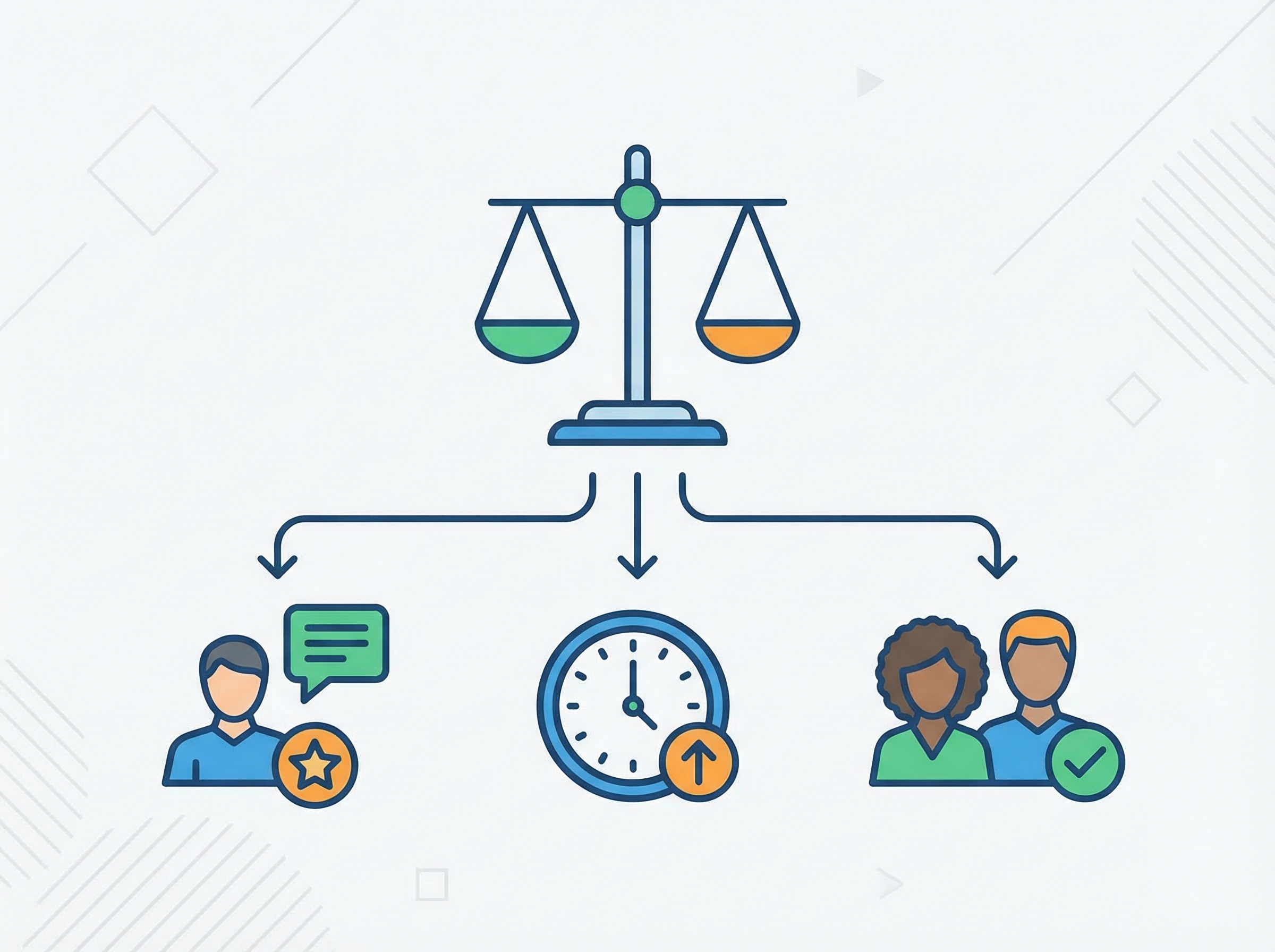
To fix a broken hiring funnel, talent leaders must shift from improvisation to hiring workflow automation and standardization. Here are three actionable heuristics to build consistency in evaluation into your daily operations:
- Use standardized interview scorecards: Never enter an interview without a scorecard. Scorecards force interviewers to rate candidates on a predetermined scale for specific competencies. This ensures that every candidate is judged on the exact same criteria, making post-interview debriefs objective and data-driven.
- Align on rubrics during intake: Consistency starts before the job is even posted. During the intake meeting, recruiters and hiring managers must define what a "strong" versus "weak" answer looks like. Establishing this baseline prevents shifting goalposts later in the process.
- Leverage an AI interview platform for baseline screening: To ensure the top of your funnel is completely standardized, use an AI interview platform to conduct the initial technical or behavioral screens. This technology guarantees that every applicant faces the exact same questions and difficulty level, providing a purely objective baseline before human interviews begin.
Common Pitfalls to Avoid
Even well-intentioned teams can stumble when trying to implement structured workflows. Watch out for these common misconceptions and pitfalls:
- Relying on "gut feeling" over data: The biggest enemy of consistency in evaluation is human intuition. When interviewers override scorecard data because they "just had a good feeling" about someone, it completely invalidates the structured process and reintroduces bias.
- Unstructured background checks and references: Many companies structure their interviews but leave reference and background checks completely open-ended. Asking different questions to different references yields inconsistent risk assessments. Standardize these steps just like you do the structured interviews.
- Ignoring interviewer calibration: Having a scorecard is useless if interviewers interpret the scale differently. If one manager rates a "good" answer as a 3/5 and another rates it as a 5/5, your data is skewed. Regular calibration sessions are required to ensure all evaluators apply the criteria uniformly.
The Turning Point
For Sarah and Mark, the breakthrough moment arrived when they decided to pause hiring and completely overhaul their system. Sarah implemented a highly structured workflow that mandated consistency in evaluation at every single touchpoint. They deployed standardized rubrics, enforced the use of interview scorecards within their ATS, and required calibration sessions before any interviews took place.
The impact was immediate and measurable. By eliminating the guesswork, they no longer needed extra round-table meetings to debate candidate viability. The before-and-after contrast was staggering: their time-to-fill dropped by 30%, decision alignment between Sarah and Mark improved dramatically, and they saw a massive increase in their pass-through rates. Candidates noticed, too. Because the process was transparent and predictable, candidate drop-offs fell to near zero, and offer acceptance rates soared.
Mastering Consistency for Career Growth
Interviewing the Interviewer
Understanding and applying consistency in evaluation doesn't just improve your company's hiring metrics; it actively differentiates you as a professional. For recruiters, HR leaders, and talent acquisition specialists, the ability to architect and execute structured hiring systems is a highly sought-after skill. When interviewing for your next promotion or a new talent leadership role, demonstrating your mastery of equitable, data-driven hiring proves that you are a strategic partner, not just an operational order-taker.
Q: "How have you applied consistency in evaluation to improve hiring outcomes?"
A: "I standardized our entire evaluation process by implementing universal interview scorecards and calibrating our hiring managers. I streamlined our top-of-funnel by integrating an AI interview platform, which reduced bias and reduced time-to-fill by 30%. Ultimately, these calibrated workflows improved our candidate pass-through rate and ensured all final offers were backed by objective data."
To showcase this expertise on your own profile, consider these concrete resume bullet examples:
- Standardized hiring workflows across 5 departments, implementing interview scorecards that increased decision alignment by 45%.
- Calibrated evaluation rubrics for 20+ hiring managers, reducing unconscious bias and improving overall quality of hire.
- Streamlined the talent acquisition funnel using an AI interview platform, cutting initial screening time by 40%.
- Reduced candidate drop-off rates by 30% by enforcing consistency in evaluation and transparent communication throughout the interview cycle.
The Pros and Cons
While the benefits are substantial, operationalizing this approach requires commitment. Here is a realistic look at the tradeoffs:
| Benefit | Tradeoff |
|---|---|
| Measurable reduction in hiring bias: Standardized scorecards ensure candidates are judged strictly on competencies. | High initial setup time: Building custom rubrics and scorecards for every single role requires significant upfront effort. |
| Faster, data-driven decisions: Calibrated feedback eliminates the need for lengthy, subjective debate meetings. | Requires strict change management: Hiring managers accustomed to "winging it" may initially resist the rigid structure. |
| Improved candidate experience: A predictable, fair process builds trust and dramatically lowers drop-off rates. | Less room for conversational tangents: Strict adherence to structured questions can make interviews feel slightly less organic. |
Frequently Asked Questions
Expert Answers
What is consistency in evaluation?
Consistency in evaluation is the practice of measuring all job candidates against the exact same standardized criteria. It involves using identical interview questions, structured scorecards, and calibrated rubrics. This method removes subjective "gut feelings" from the talent acquisition process, ensuring that hiring decisions are fair, data-driven, and objective.
Can consistency in evaluation backfire?
Yes, if applied with too much rigidity, it can backfire. While standardization is crucial for fairness, overly scripted interviews can feel robotic, potentially harming the candidate's ability to build a natural rapport with the team. The key is balancing structured, required evaluation criteria with a conversational tone that allows the candidate's personality to shine.
How does it impact candidate experience?
It drastically improves the candidate experience by fostering a sense of perceived fairness. When candidates face a transparent, organized process, they trust the organization more. Predictable timelines and objective questions reduce anxiety, meaning even candidates who don't receive offers leave with a positive view of your employer brand.
Next Steps
The data is clear: abandoning unstructured interviews and embracing consistency in evaluation is no longer optional; it is a fundamental requirement for success. By standardizing every touchpoint—from the initial resume screening to final background checks—you eliminate bias, save time, and secure top-tier talent before the competition does. Mastering consistent evaluation creates a durable hiring advantage that scales with your organization.
If you want to operationalize consistency in evaluation with structured workflows (Sourcing → resume screening → AI interviews → scorecards → offers → background checks), try tools like Foundire (https://foundire.com).