How to Optimize Knockout Question Logic

How to Optimize Knockout Question Logic for Smarter Hiring
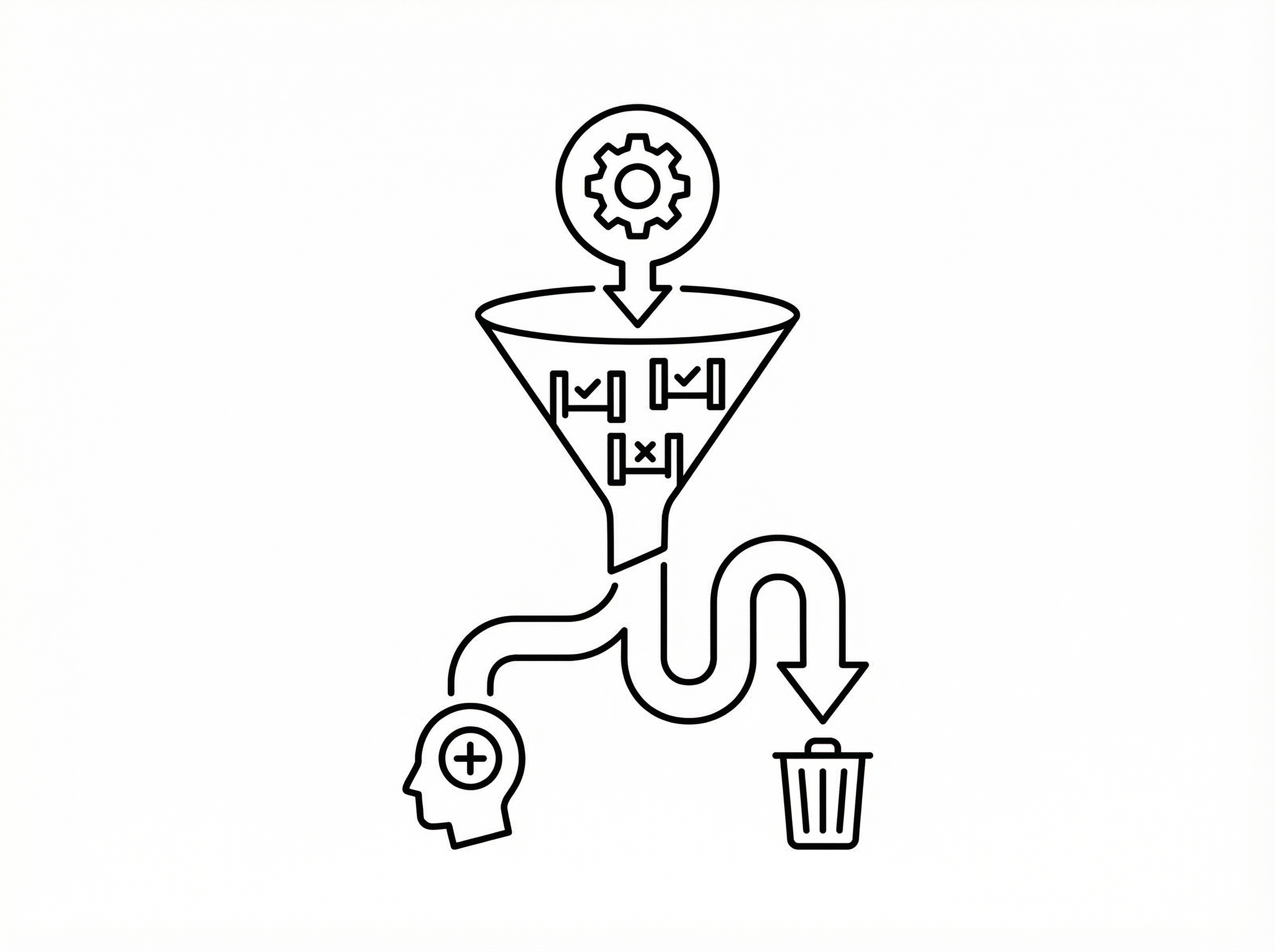
Recruitment is often described as a funnel, but without the right filters, it quickly becomes a flood. In the modern hiring landscape, where "easy apply" buttons can generate hundreds of applications in hours, knockout question logic has evolved from a tactical convenience to a strategic necessity. This article explores how to master this logic to save time, reduce bias, and improve candidate experience.
Introduction: Defining the Automatic Gatekeeper
Knockout question logic is the automated filtering mechanism within an Applicant Tracking System (ATS) or AI interview platform that instantly disqualifies candidates based on non-negotiable criteria. Unlike standard screening questions that are reviewed manually, knockout logic functions as a binary gatekeeper: if a candidate fails to meet a specific requirement—such as work authorization, licensure, or essential technical skills—their application is automatically moved to a "disqualified" status without human intervention.
Why does this matter? In 2026, the volume of applications continues to rise due to AI-assisted resume builders. For talent acquisition leaders, knockout question logic is the primary defense against operational bottlenecks. By automating the rejection of unqualified candidates, recruiters can redirect their focus toward engaging top talent, drastically reducing Time to Screen and improving overall hiring quality.
Key Takeaway: Knockout question logic is not about finding the best candidate; it is about efficiently removing those who cannot legally or functionally perform the job, thereby clearing the path for meaningful human interaction.
The Cost of "Noise" in Recruitment
Imagine a scenario that plays out in recruiting agencies and corporate HR departments daily. You post a role for a Senior Project Manager. Within 48 hours, you have 450 applications. Without automation, a recruiter must open every single file. If it takes 60 seconds to open a profile, scan the resume, realize the candidate lacks the mandatory PMP certification, and click "reject," that is 450 minutes—or 7.5 hours—of purely administrative work. This "noise" creates decision fatigue, leading to errors where great candidates are accidentally overlooked because the recruiter is drowning in unqualified profiles.
Real-World Scenario: The Overflowing Funnel
To understand the mechanics of knockout question logic, let’s look at a realistic "before and after" scenario involving a mid-sized tech company.
The Bottleneck: Sarah’s Struggle
Sarah is a Senior Tech Recruiter tasked with hiring a Lead DevOps Engineer. The role has three non-negotiable requirements:
- Must be located in the United States (cannot sponsor new visas).
- Must have an active Top Secret security clearance.
- Must have at least 5 years of experience with Kubernetes.
Sarah posts the job on Monday. By Wednesday, her ATS shows 300 applicants. However, Sarah is stuck in meetings and conducting phone screens for other roles. She doesn’t look at the DevOps queue until Friday.
The Manual Failure Point
When Sarah finally sits down to review the 300 resumes, she discovers a pattern:
- 40% are applicants from outside the US seeking sponsorship.
- 30% are junior developers with no security clearance.
- 20% are generalist IT managers with no Kubernetes experience.
Only 10% (30 candidates) are actually qualified. However, Sarah has to manually click through the other 270 profiles to archive them. By the time she reaches the qualified candidates on Page 15 of the queue, five days have passed. Two of the best candidates have already accepted interviews elsewhere. This is a classic "Time to Screen" failure caused by a lack of hiring workflow automation.
Core Insights: Designing Effective Logic
Implementing knockout question logic is not as simple as adding a few checkboxes. It requires a strategic approach to ensure you aren't filtering out "false negatives" (qualified candidates who answer incorrectly due to confusion). Here are the heuristics for designing effective logic.
Heuristic 1: Keep It Binary and Objective
Knockout questions must be indisputable. Subjective questions are the enemy of automation.
Bad Logic: "Do you have strong leadership skills?" (Subjective; everyone says yes).
Good Logic: "Have you managed a team of 5+ people for at least 2 years?" (Objective; Yes/No).
Heuristic 2: Stack Rank Criticality
Order your questions based on the hardest criteria first. This improves the candidate experience by letting unqualified candidates know immediately, rather than letting them fill out a 20-minute application only to be rejected by the final question. Typically, legal and logistical knockouts (Visa, Location, License) should come before skill-based knockouts.
Heuristic 3: The "Killer" Configuration
Advanced ATS and AI interview platforms allow for conditional logic. For example, if a candidate answers "No" to "Do you have a Bachelor's Degree?", the logic can trigger a secondary question: "Do you have 4 years of equivalent experience?" If they answer "Yes," they are not knocked out. This prevents the loss of non-traditional talent.
Common Pitfalls in Logic Design
Even seasoned Talent Acquisition leaders make mistakes when configuring these workflows. Avoid these common traps:
- The "Nice-to-Have" Trap: Never use knockout logic for preferred skills. If you knock out everyone who doesn't have a Master's degree, you might miss a genius with a Bachelor's. Knockouts are for requirements, not preferences.
- Ambiguous Phrasing: Questions like "Are you willing to work hard?" provide no data. Furthermore, questions like "Do you have experience with Java?" are too vague. A candidate with one week of experience might say yes. Instead, ask: "Do you have 3+ years of commercial experience with Java?"
- Overloading the Candidate: asking 20 knockout questions causes high drop-off rates. Stick to the "Fatal Four": Work Auth, Location, License/Cert, and Core Hard Skill.
The Breakthrough: Automation in Action
Let’s return to Sarah. Frustrated by losing candidates, she revamps her workflow using structured knockout logic integrated with her resume screening tools.
Flipping the Switch
She configures the following logic for the next DevOps role:
- Q1: "Are you legally authorized to work in the US without sponsorship?" (Answer: No → Auto-Reject).
- Q2: "Do you possess an active Top Secret clearance?" (Answer: No → Auto-Reject).
- Q3: "Do you have 5+ years of production experience with Kubernetes?" (Answer: No → Auto-Reject).
Measuring Impact
The next week, she receives 300 applicants again.
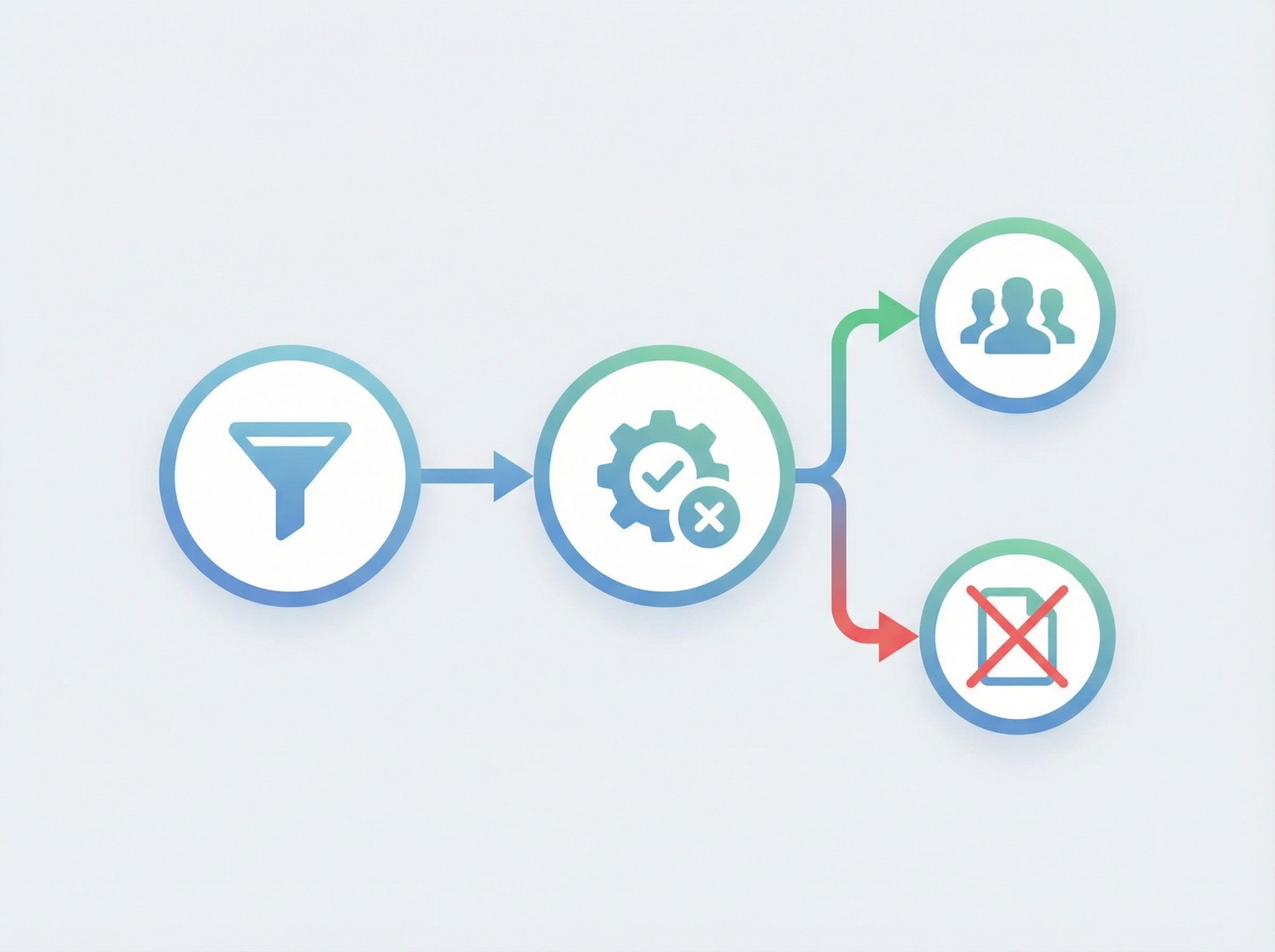
The System's Work: The logic instantly disqualifies 270 applicants who failed one of the three questions. They receive an immediate, polite automated email thanking them for their time.
Sarah's Work: Sarah opens her dashboard and sees only 30 candidates. She reviews them all in 45 minutes.
The Outcome: She contacts the top 5 candidates within 2 hours of their application. Her pass-through rate from review to interview jumps from 10% to 80% because she is only looking at viable profiles.
Furthermore, by integrating this with a tool like Foundire, Sarah can automatically invite those 30 qualified candidates to a structured AI interview or a technical assessment, further streamlining the process before she even picks up the phone.
Career Relevance for Recruiters
Understanding and configuring knockout logic is now a critical skill for Recruiters and TA Managers. It moves the recruiter from an "administrator" role to a "process architect" role.
Interview Q&A Strategy
If you are interviewing for a Talent Operations or Senior Recruiter role, you will likely be asked about efficiency.
Q: "How do you manage high-volume requisitions without compromising quality?"
A: "I implement strict knockout question logic at the top of the funnel to automate compliance and core-skill screening. For example, in my last role, I standardized disqualification criteria which reduced my initial resume review time by 60%, allowing me to spend more time on phone screens with truly qualified candidates."
Resume Bullets
Here is how to showcase this skill on your resume:
- Designed and implemented knockout question logic for 50+ roles, reducing time-to-screen by 40% and increasing hiring manager satisfaction.
- Operationalized hiring workflow automation by integrating binary screening questions with ATS triggers, ensuring 100% OFCCP compliance.
- Reduced candidate "black hole" status by automating instant dispositioning for applicants missing non-negotiable licensures.
Pros & Cons of Automated Screening
While powerful, knockout logic is a tool that must be wielded carefully. Below is a breakdown of the benefits and trade-offs.
| Benefit (The Upside) | Tradeoff (The Downside) |
|---|---|
| Speed & Scale: Instantly processes thousands of applications, ensuring no bottleneck during high-volume periods. | False Negatives: A highly qualified candidate might accidentally click the wrong button or misunderstand a question, leading to immediate rejection. |
| Bias Reduction: The logic is blind to name, gender, school, or age. It only cares about the specific criteria programmed. | Lack of Nuance: Binary logic cannot evaluate "potential" or transferable skills. It rejects non-traditional backgrounds that a human might have considered. |
| Compliance: Ensures every single applicant is asked the exact same questions, adhering to fair hiring standards. | Impersonal Experience: Being rejected 2 seconds after applying can feel robotic and discouraging to candidates if the rejection messaging isn't empathetic. |
Frequently Asked Questions
What is knockout question logic in recruitment?
Knockout question logic is an automated feature in recruiting software that filters out candidates who do not meet specific, mandatory requirements. If a candidate answers "incorrectly" to a critical question (e.g., "Do you have a medical license?"), the system automatically changes their status to rejected, preventing the recruiter from reviewing an unqualified profile.
Can knockout questions backfire on candidate experience?
Yes, if not designed well. If a company asks too many questions or asks for information already on the resume, candidates may abandon the application. Additionally, instant rejection emails can feel harsh. Best practice involves delaying the rejection email slightly or ensuring the copy is extremely polite and transparent about why they didn't qualify.
What are the best examples of knockout questions?
The best knockout questions are binary and objective. Examples include: "Are you 18 years of age or older?", "Do you have a valid driver's license?", "Are you willing to relocate to [City]?", and "Do you have [Specific Certification] required for this role?" Avoid behavioral questions or "years of experience" questions that don't match the job description.
How does AI impact knockout question logic?
Modern AI tools go beyond simple "Yes/No" logic. AI can analyze the semantic meaning of an answer. For example, if a knockout question asks for "Sales experience," and a candidate writes "Account Management," rigid logic might reject them, but AI recognizes the concepts are related and may pass the candidate through for human review.
Conclusion: The Durable Advantage
Mastering knockout question logic is not about building walls to keep people out; it is about building channels to get the right people in faster. By effectively using this logic, you shift the recruiting function from reactive paper-pushing to proactive talent advising. It creates a durable advantage where your hiring workflow automation handles the noise, and you handle the relationships.
To truly operationalize this logic, successful teams are moving beyond simple ATS filters and adopting comprehensive platforms that handle the entire flow—from sourcing and resume screening to structured interviews and offers. If you want to streamline your process with intelligent workflows that include AI-driven screening and scorecards, try tools like Foundire (https://foundire.com) to modernize your hiring stack.