How to Match Resumes to Job Descriptions

How to Match Resumes to Job Descriptions
How to match resumes to job descriptions is the process of evaluating a candidate’s qualifications against the specific requirements of a role to ensure a high-quality hire. For recruiters and hiring managers, mastering this skill is critical for reducing time-to-hire, minimizing bias, and improving the candidate experience. In an era where a single corporate job opening receives an average of 250+ applications, the ability to efficiently filter signal from noise is not just an administrative task—it is a strategic competitive advantage.
But the landscape is shifting. We are moving from the "ctrl+f" era of keyword hunting to a new age of semantic matching and AI-assisted workflows. The goal remains the same: identify the best fit quickly. However, the stakes are higher. A poor matching process results in wasted interview hours, frustrated hiring teams, and the loss of top talent to faster-moving competitors.
The Screening Bottleneck: A Real-World Scenario
Let’s look at this through the eyes of Sarah, a Senior Talent Acquisition Manager at a mid-sized fintech company. It’s Monday morning, and Sarah has just opened a requisition for a "Senior Product Manager." By Wednesday, her Applicant Tracking System (ATS) shows 340 applicants.
In the past, Sarah’s workflow looked like this:
- Intake: She briefly chatted with the hiring manager, who asked for "someone like Mike," a former employee.
- Screening: Sarah spent three hours every evening manually scanning PDFs, looking for the words "Agile," "Fintech," and "SQL."
- The Outcome: She shortlisted 20 candidates. After the initial phone screens, the hiring manager rejected 18 of them. Why? Because while they had the keywords, they lacked the specific contextual experience the role demanded.
The problem wasn't the volume; it was the precision. Sarah was matching words, not competencies. Her "pass-through rate" (the percentage of candidates moving from screen to interview) was a dismal 10%. She was drowning in "false positives"—candidates who looked perfect on paper but were misaligned in reality. This inefficiency didn't just burn Sarah out; it delayed the hire by six weeks, costing the company thousands in lost productivity.

5 Strategies to Match Resumes to Job Descriptions
To move from Sarah’s chaotic approach to a structured, high-conversion workflow, recruiters must adopt a more analytical mindset. Here are five heuristics to improve your matching accuracy.
1. Decode the Job Description (JD) First
You cannot find what you cannot define. Before opening a resume, break the JD down into two distinct categories:
- Must-Haves (Non-Negotiables): These are binary. Does the candidate have a CPA license? Do they have 5+ years of enterprise sales experience? If the answer is no, the match fails immediately.
- Nice-to-Haves (Differentiators): These are weighted variables. Experience with a specific CRM, a background in a related industry, or soft skills like "adaptability." These add points to a candidate's score but shouldn't trigger an automatic rejection if missing.
2. Move From Keywords to Semantic Matching
Novice recruiters look for exact keyword matches. Expert recruiters—and advanced AI interview platforms—look for semantic variants. This means understanding that different words can describe the same competency.
Example: If a JD requires "Client Success" experience, a semantic approach also accepts "Account Management," "Strategic Relationship Building," or "Post-Sales Support."
This approach prevents you from screening out qualified candidates simply because they used different terminology than your hiring manager.
3. Verify Context, Not Just Titles
A "Director" at a 10-person startup has a vastly different daily reality than a "Director" at a Fortune 500 company. When matching resumes, look for contextual markers:
- Scope: "Managed a budget of $50k" vs. "Managed a budget of $5M."
- Scale: "Led a team of 3" vs. "Led a distributed team of 50."
- Impact: Did they maintain the status quo, or did they drive measurable change?
4. Look for "The How," Not Just "The What"
High-quality matching requires evidence of competence. A resume that lists "Project Management" is weak. A resume that states "Delivered $2M software migration 3 weeks ahead of schedule using Agile methodology" is a match.
Actionable Tip: Scan for the "Action-Result" pattern. If a bullet point is just a list of duties ("Responsible for X"), downgrade the match. If it describes an outcome ("Improved X by Y%"), upgrade it.
5. Avoid the "Halo Effect" Pitfall
One of the most common pitfalls in resume matching is the Halo Effect—letting one impressive trait (like a degree from a prestigious university or a stint at a FAANG company) blind you to gaps in essential skills. Always return to your "Must-Haves" list to ensure the candidate meets the core technical requirements, regardless of their pedigree.
The Breakthrough: Structured Screening & Automation
Let’s return to Sarah. After two failed search cycles, she overhauled her process using structured interviews and automation tools.
The New Workflow:
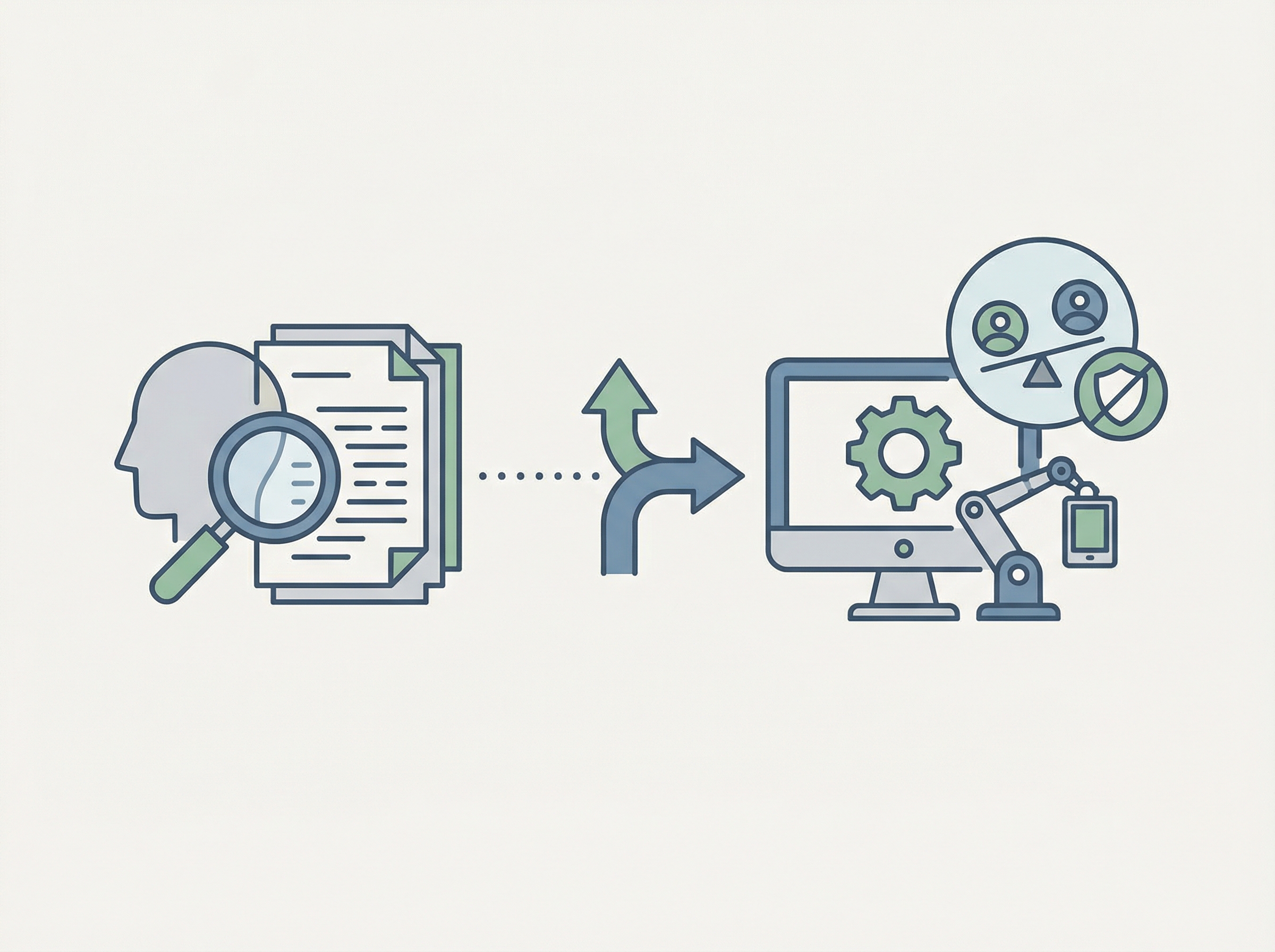
- Calibration: She forced the hiring manager to define the top 3 specific outcomes the new hire needed to achieve in Year 1.
- Automated Screening: She utilized an AI-driven tool to auto-screen the 300+ applicants based on semantic matches for those specific outcomes, not just keywords.
- Scorecards: She applied a simple "0-3" scoring system for every resume based on the "Must-Haves."
The Result:
Sarah’s screen-to-interview pass-through rate jumped from 10% to 45%. By filtering out the noise early, she spent more time engaging with high-potential candidates. The time-to-fill for the role dropped by 40%, and the hiring manager reported that the final interview panel was "the strongest we've ever had."
Career Relevance: Why This Matters for Recruiters
For talent professionals, the ability to accurately match resumes to job descriptions is a career-defining skill. It shifts your role from "paper pusher" to "talent advisor." When you can articulate why a candidate is a match based on data and semantics, you build trust with hiring managers.
Interview Q&A: Positioning Your Skills
Interviewer: "How do you handle high-volume recruiting without sacrificing quality?"
You: "I move beyond simple keyword matching to a standardized screening protocol. By calibrating 'must-haves' with the hiring manager upfront and using semantic matching to catch qualified candidates who might use different terminology, I recently reduced our false-positive rate by 30% and improved our interview-to-offer ratio."
Resume Bullet Points for Recruiters
- "Implemented structured resume scoring criteria, increasing candidate pass-through rates by 25%."
- "Leveraged semantic search techniques to identify niche talent, reducing reliance on external agencies by 40%."
- "Partnered with hiring managers to rewrite job descriptions for clarity, resulting in a 2x increase in qualified applicant volume."
Pros & Cons: Manual vs. Automated Matching
| Approach | Benefits | Tradeoffs |
|---|---|---|
| Manual Matching |
|
|
| AI/Automated Matching |
|
|
Frequently Asked Questions
What is the most efficient way to match resumes to job descriptions?
The most efficient method combines semantic parsing technology (to handle volume) with structured scorecards (for human review). Use software to filter based on "knock-out" questions (e.g., visa status, location), then use a scored checklist to evaluate the remaining qualified candidates on core competencies.
Can automated resume matching backfire?
Yes. If the job description is vague or the matching criteria are too rigid, automation can filter out great candidates who simply used different keywords. This is why "human-in-the-loop" workflows—where recruiters verify the AI's rejections—are considered best practice.
How do I handle resumes that don't match keywords but show potential?
Look for transferable skills and trajectory. A candidate may lack the exact software experience but demonstrate a pattern of rapid learning and high achievement in similar environments. These "wildcard" candidates often require a brief phone screen to verify if their potential outweighs the skills gap.
What role does the ATS play in resume matching?
Modern ATS platforms use resume parsing to extract data and compare it against the job requisition. Advanced systems provide a "match score" percentage. However, recruiters should treat this score as a guide, not a verdict, as formatting issues (like tables or graphics) can artificially lower a candidate's score.
Conclusion: Building a Durable Advantage
Matching resumes to job descriptions is no longer just about finding words on a page; it is about recognizing patterns of competence. As AI tools become standard by 2026, the recruiters who win will be those who can blend the speed of automation with the insight of human judgment. By implementing structured criteria, decoding JDs effectively, and validating matches with data, you create a hiring process that is fair, fast, and consistently successful.
If you want to operationalize this process with structured workflows—from sourcing and resume screening to AI interviews and automated scorecards—try tools like Foundire (https://foundire.com) to streamline your talent acquisition funnel.