How to Master the Screening Interview

How to Master the Screening Interview: The 2025 Guide to Filtering Talent
In the high-stakes world of talent acquisition, the screening interview is the single most critical filter in your hiring funnel. It is the gatekeeper that separates a chaotic flood of applicants from a streamlined pipeline of qualified talent. Simply put, a screening interview is a brief, high-level assessment—typically lasting 15 to 30 minutes—conducted by a recruiter, HR professional, or AI tool to verify a candidate's basic qualifications, interest level, and logistical fit before they advance to in-depth interviews.
Why does this matter? According to 2025 data, the average job opening now attracts over 300 applicants, yet only about 2% to 3% are ever invited to interview. Without a robust screening layer, hiring managers are forced to wade through hundreds of mismatched resumes, wasting valuable hours on candidates who may be too expensive, unwilling to relocate, or lacking fundamental skills. Mastering the screening interview improves time-to-hire, protects your hiring manager's time, and prevents costly "false positives" from clogging your pipeline.
Consider the story of Sarah, a senior recruiter at a mid-sized tech firm. Last year, Sarah was drowning. Her company opened three critical engineering roles, and within 48 hours, her inbox was flooded with 900 applications. Trying to be thorough, she passed every "promising" resume directly to her hiring managers. The result? Disaster. Her engineering leads spent 40 hours interviewing candidates who didn't know the core coding language or wanted double the budgeted salary. The hiring managers were furious, the candidates were frustrated, and the roles remained vacant for months. This is the reality when the screening interview is treated as an afterthought rather than a strategic firewall.
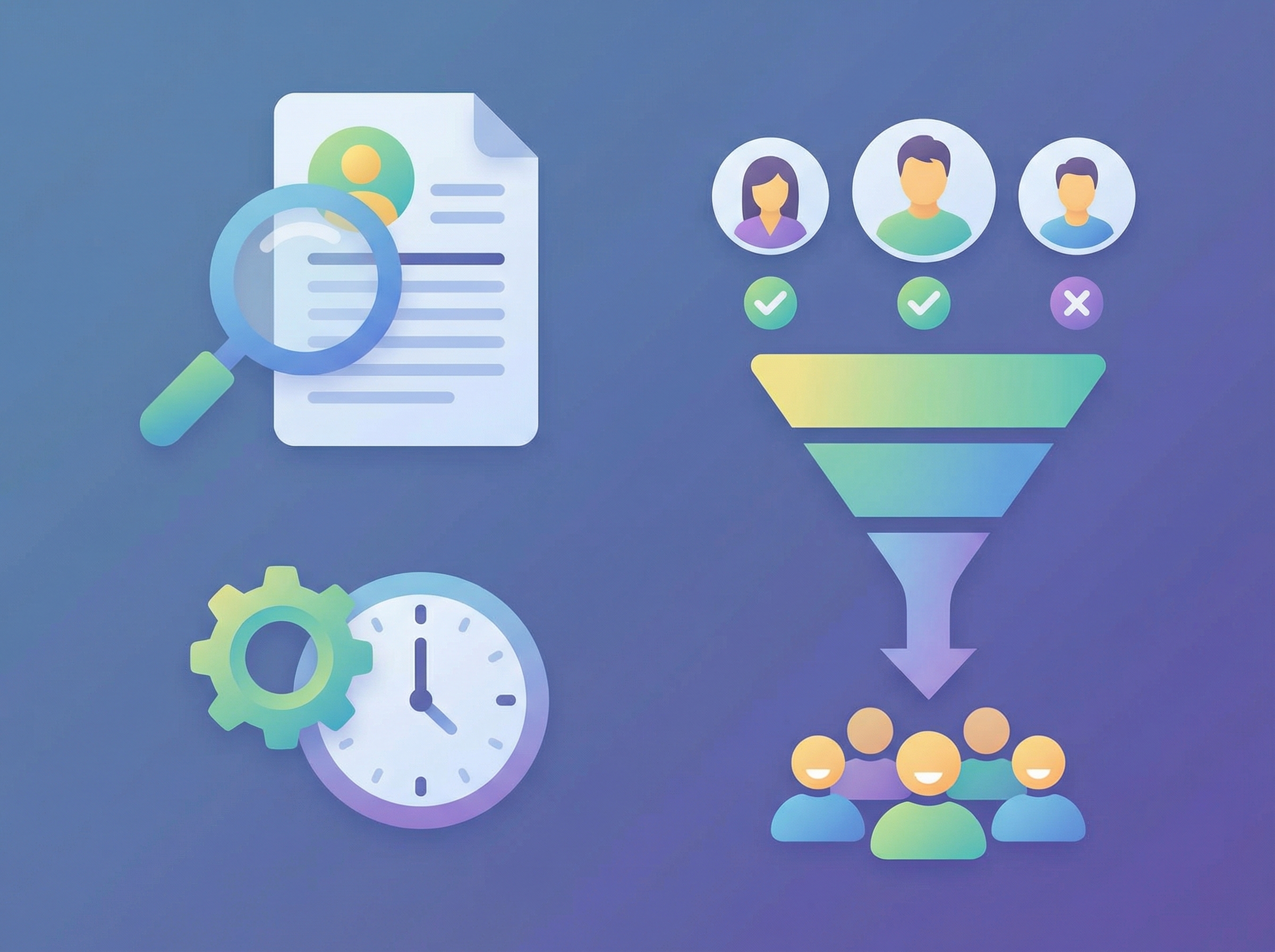
Real-World Scenario: The 15-Minute Filter That Saved a Quarter
To understand the transformative power of a well-executed screening interview, let's break down Sarah's scenario before and after she optimized her process. This isn't just about saving time; it's about operational excellence.
The Workflow Before Optimization
In Sarah's original workflow, the path was linear but leaky. It looked like this:
- Intake: Manager says, "I need a Java Developer."
- Application Review: Sarah spends 6 seconds per resume, looking for the keyword "Java."
- Manager Review: Sarah sends 50 resumes to the manager.
- Interview: Manager books 10 one-hour technical interviews.
- Outcome: 8 rejections due to salary misalignment, visa issues, or lack of actual hands-on experience. 2 offers made, 1 accepted but later rescinded due to relocation conflicts.
The cost was astronomical. The engineering manager wasted 10 hours of high-value time—equivalent to thousands of dollars in productivity loss—only to find out basic disqualifiers that could have been caught in a five-minute phone call.
Implementing the Structured Screen
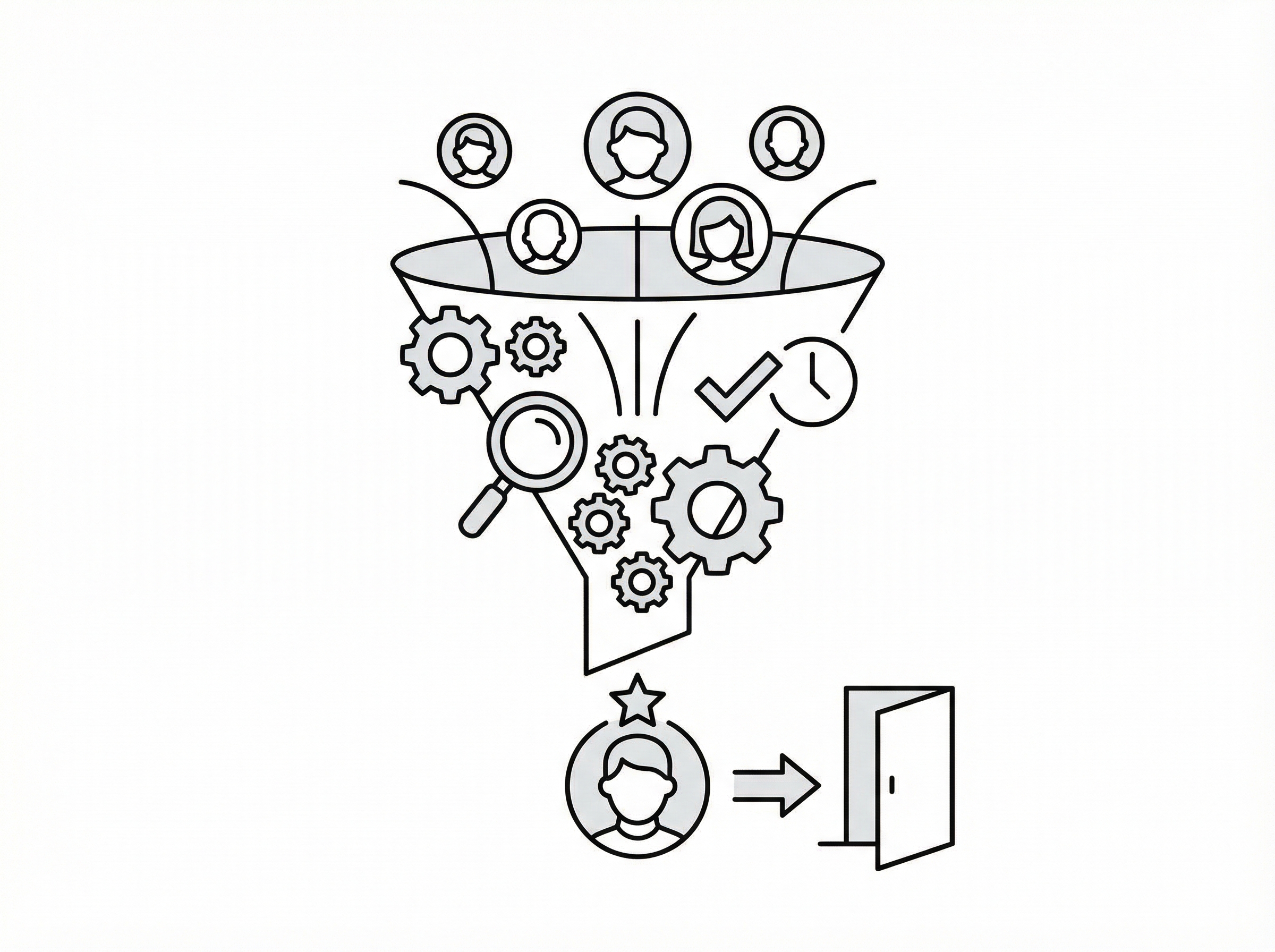
Sarah realized she needed a protocol. She introduced a mandatory screening interview stage. This wasn't a casual chat; it was a structured 20-minute audit designed to validate the "non-negotiables."
Her new workflow leveraged tools like Foundire to automate the scheduling and initial data capture. The screen covered three pillars:
- Logistics: "Are you comfortable with a hybrid schedule in Austin? What is your salary expectation range?"
- Tech Check: "Rate your proficiency in Java from 1-10. Describe your last project using it." (Verifying the resume claims).
- Intent: "Why are you leaving your current role, and why us?" (Gauging genuine interest vs. "spray and pray" applying).
The Metrics That Changed
The impact was immediate and measurable. By inserting this 15-minute friction point, Sarah filtered out 60% of the candidates who looked good on paper but were logistical mismatches. The metrics spoke for themselves:
- Pass-through Rate: Only the top 20% of candidates reached the hiring manager.
- Manager Satisfaction: The manager interviewed 4 candidates and hired 1. The interview-to-offer ratio skyrocketed.
- Time-to-Fill: Reduced from 65 days to 42 days, aligning with top-tier 2025 industry benchmarks.
Core Insights and Best Practices
Mastering the screening interview requires more than just a phone and a list of questions. It requires a shift in mindset from "gathering information" to "validating fit." Here are three actionable heuristics to revolutionize your screening process.
1. The "Knockout" Heuristic
Your first few questions should be "knockout" questions—binary queries that immediately disqualify a candidate if the answer is "no" or misaligned. Don't save salary discussions for the end. Ask them upfront.
Example: "This role requires being onsite in Chicago three days a week. Is that feasible for you?" If the answer is no, the interview ends politely there. This saves everyone time.
2. Structure is King
Research consistently shows that structured interviews—where every candidate is asked the same questions in the same order—are twice as effective at predicting job performance as unstructured chats. Use a scorecard. If you ask Candidate A about their salary and Candidate B about their hobbies, you cannot objectively compare them. Standardization reduces bias and ensures legal compliance.
3. Leverage Technology and Automation
In 2025, manual scheduling is a competitive disadvantage. Use AI interview platforms or tools like Foundire to handle the logistics. These tools can automatically trigger a screening request when a resume passes the ATS filter, allowing candidates to book time or even complete an asynchronous video screen. This ensures your pipeline moves while you sleep.
Common Pitfalls to Avoid
Even seasoned recruiters fall into traps. Avoid these three common mistakes:
- The Deep Dive Trap: Do not try to assess deep technical competency in a screening interview. You are not the hiring manager. Your job is to verify fluency, not expertise. Leave the coding challenges for the next round.
- The "Halo Effect": Just because a candidate worked at a prestigious company (like Google or Meta) doesn't mean they are right for your startup. Don't skip screening questions just because the resume looks "fancy."
- Overselling the Role: The screen is a two-way assessment, but don't spend 15 minutes pitching the company and only 5 minutes assessing the candidate. You need data to make a decision.
The Breakthrough and Career Impact
There is a specific moment in every recruiter's career when they master the art of the screen. It's the "Breakthrough Moment." For Sarah, it happened three months into her new process. She sent a shortlist of three candidates to her notoriously picky VP of Engineering. He scheduled interviews with all three. By Friday afternoon, he walked over to her desk and said, "I don't know who to pick. They are all perfect. This is the hardest decision I've had to make all year."
That is the power of the screening interview. It transforms you from a "resume shuffler" into a strategic talent advisor. You are no longer wasting the business's time; you are curating their future success.
Recruiter Q&A: How I Fixed Hiring
Q: "How have you applied screening interview techniques to improve outcomes?"
A: "I moved from ad-hoc phone calls to a standardized scorecard system. By focusing on 'knockout' logistics first, I reduced manager interview volume by 40% while increasing our offer acceptance rate to 85%. I essentially stopped the 'false positives' at the door."
Resume Boosters for Talent Professionals
If you are a recruiter looking to prove your worth, mastery of screening is a key differentiator. Add these bullets to your resume:
- Designed and implemented a structured screening interview protocol that reduced time-to-fill by 30% across engineering and product roles.
- increased interview-to-offer ratio from 4:1 to 2:1 by introducing rigorous logistical and cultural pre-screening.
- Leveraged AI automation tools to streamline the screening workflow, processing 500+ applicants weekly with zero backlog.
Pros & Cons of Screening Interviews
| Benefit | Tradeoff |
|---|---|
| Massive Efficiency Gains: Rapidly filters out unqualified candidates (estimated 60-80% of applicants) before they reach expensive hiring manager time. | Risk of False Negatives: A rigid screen might accidentally reject a "diamond in the rough" candidate who doesn't interview well but has great skills. |
| Consistency & Fairness: Structured screens ensure every applicant is judged on the same criteria, reducing unconscious bias. | Impersonal Experience: If over-automated (e.g., AI-only screens), candidates may feel like a number, potentially hurting your employer brand. |
| Cost Reduction: Prevents the "bad hire" costs (avg. $17,000+) by verifying non-negotiables like salary and location early. | Time Investment: Requires upfront setup of scorecards, scripts, and scheduling tools, which can feel slow initially. |
Frequently Asked Questions
What is a screening interview?
A screening interview is a preliminary, 15-30 minute assessment conducted by a recruiter or AI tool. Its primary goal is to verify a candidate's basic qualifications, salary expectations, logistical availability, and interest in the role before passing them to the hiring manager for a comprehensive evaluation.
Can screening interviews backfire?
Yes. If the screening criteria are too rigid or the recruiter lacks understanding of the role, they may reject qualified candidates (false negatives). This often happens when recruiters screen strictly for keywords rather than transferable skills or potential.
Should I use manual phone screens or AI interviews?
It depends on volume. For high-volume roles (retail, customer support), AI screening tools are superior for speed and consistency. For specialized or executive roles, a human phone screen is essential to build rapport and assess soft skills that AI might miss.
How long should a screening interview take?
Ideally, 15 to 30 minutes. Anything shorter risks missing red flags; anything longer turns into a full interview, which is inefficient at this stage. Stick to a tight script to respect both your time and the candidate's.
Conclusion: The Durable Hiring Advantage
In an era where AI can generate resumes and apply to jobs automatically, the noise in the hiring market is louder than ever. The screening interview is your noise-canceling headphone. It is not just a bureaucratic step; it is the strategic pivot point where a pile of resumes transforms into a pool of talent.
Mastering this step creates a durable advantage. You save money, you save time, and most importantly, you build trust with your hiring managers. When they know that a candidate from you is "pre-vetted" and "safe," you become an indispensable partner in the business.
If you want to operationalize your screening interview with structured workflows—from sourcing and resume screening to AI interviews, scorecards, and background checks—try tools like Foundire (https://foundire.com) to bring efficiency and intelligence to your hiring funnel.