How to Master the Recruiter Intake Notes Template

How to Master the Recruiter Intake Notes Template
A recruiter intake notes template is a structured framework used during the initial "kickoff" meeting between a recruiter and a hiring manager to align on the specific requirements, ideal candidate profile, and business objectives of a new role. It is the single most critical document in the recruitment lifecycle, serving as the blueprint that turns a vague job description into a precise hiring strategy.
Why does this matter? Because misalignment is expensive. According to recent 2025 data, a bad hire can cost a company up to 30% of the employee’s first-year earnings—and for leadership roles, that figure can skyrocket to over 200%. But the cost isn't just financial; it’s operational. When recruiters and managers aren’t on the same page, roles sit open for months, candidates get ghosted, and teams burn out covering the gap.
Imagine this: You spend three weeks sourcing candidates for a "Senior Project Manager," only to have the hiring manager reject every single one because "they don't have SQL experience"—a requirement that was never mentioned in the job description or the brief email they sent you. That wasted time is exactly what a robust recruiter intake notes template prevents.
Real-World Scenario: The "Unicorn" Hunt
Let’s look at how this plays out in the real world. Meet Sarah, a senior recruiter, and Mike, a Director of Engineering who is desperate to hire a Lead DevOps Engineer.
The "Old Way" (Without a Template)
In the past, Mike would email Sarah a link to an old job description he copied from a competitor. "Just find me a rockstar," he’d say. "Someone who knows AWS, Azure, Kubernetes, and can code in Python and Go."
Sarah would spend weeks sourcing "rockstars." She’d screen 30 resumes, interview 10 candidates, and send the top 3 to Mike. Mike would reject all of them within minutes. "This person is too junior," or "This person is too corporate; we need a startup mindset." The result? Zero hires, a frustrated manager, and a time-to-fill metric creeping past 90 days.
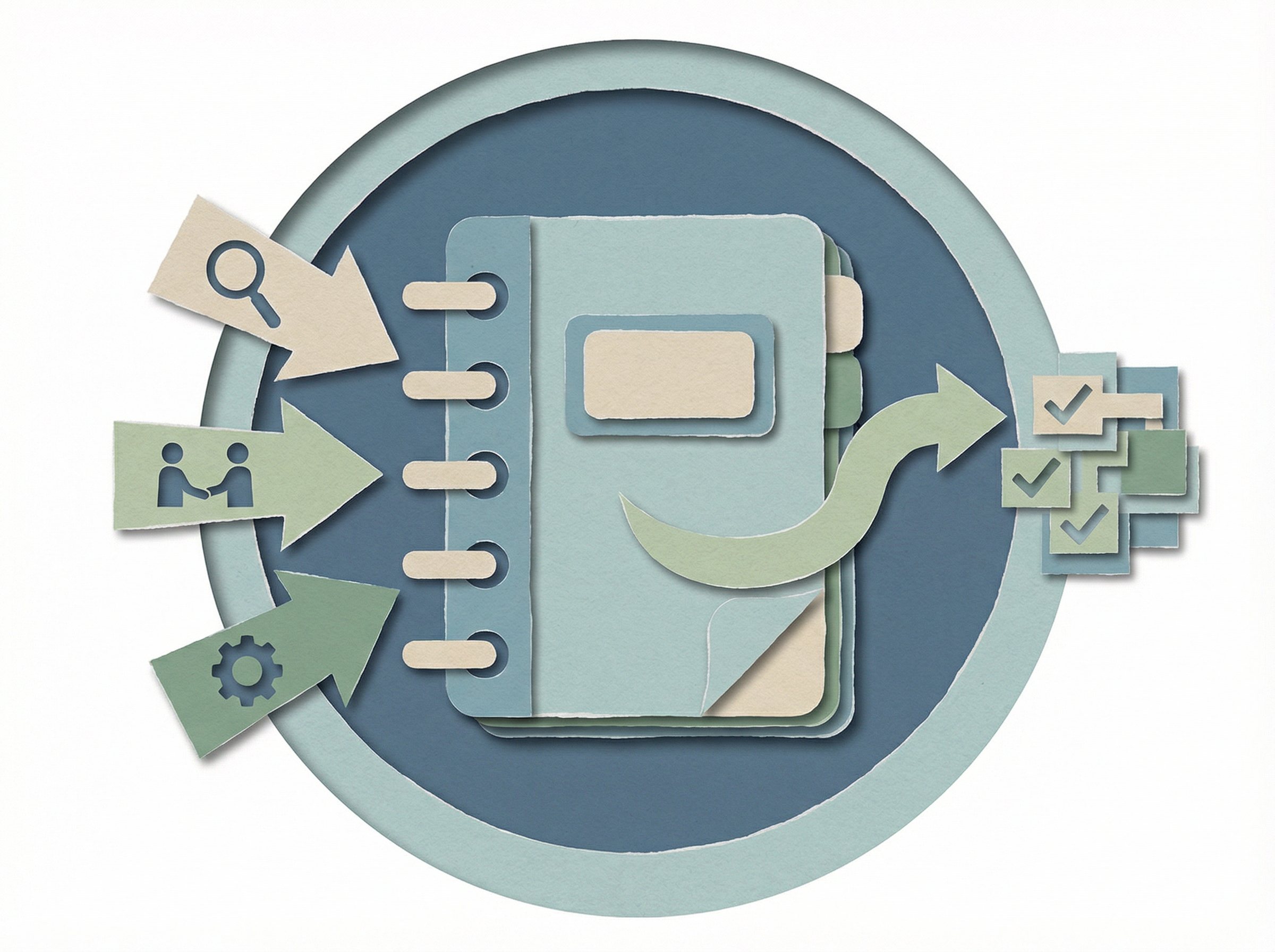
The "New Way" (With a Structured Intake Strategy)
This time, Sarah schedules a 45-minute intake meeting before sourcing a single candidate. She opens her recruiter intake notes template.
She doesn’t ask, "What are the requirements?" Instead, she asks behavioral and operational questions:
- "Mike, if you could replicate your best hire on the team, who would it be and why?"
- "What is the single biggest problem this person needs to solve in their first 90 days?"
- "You listed AWS and Azure. If a candidate is world-class in AWS but has zero Azure, would you still talk to them?" (Mike admits: "Yes, actually.")
Sarah also pushes for the Anti-Persona. "Who would absolutely fail in this role?" Mike thinks and says, "Someone who needs a ticket for everything. We are unstructured. If they need a handbook, they will fail."
By the end of the meeting, Sarah isn't looking for a "unicorn." She is looking for a "scrappy AWS expert who thrives in chaos." This clarity allows her to calibrate her resume screening and AI interview platform tools to filter specifically for these traits.

Core Components of a Winning Template
To replicate Sarah’s success, your recruiter intake notes template needs to go beyond basic logistics. It must capture the nuance of the role. Here are the essential sections:
1. The Business Case & "The Why"
Candidates want to know their impact. Your notes must capture why the role exists.
Key Question: "If this role remains open for another 3 months, what breaks?"
2. The Avatar (Must-Haves vs. Nice-to-Haves)
This is where you distinguish between negotiable and non-negotiable skills.
Pro Tip: Limit "Must-Haves" to 3-5 items. If everything is a priority, nothing is.
3. The Anti-Persona
Often overlooked, this section saves the most time. It defines the traits that result in a "No."
Examples: "Low tolerance for ambiguity," "Lone wolf mentality," or "Requires rigid 9-5 structure."
4. Selling Points (EVP)
Why would a top performer leave their current job for this one?
Details to capture: Remote flexibility, specific tech stack, upcoming high-visibility projects, or a fast track to management.
5. The Process & SLAs
Define the hiring workflow automation steps immediately to avoid bottlenecks later.
Agreements:
• "I will submit candidates every Tuesday."
• "You agree to provide feedback within 48 hours."
• "We will use structured interviews with predefined interview scorecards."
Tech Insight: Once you have these notes, you can input the criteria into tools like Foundire to automate the early stages. For example, you can set up an AI interview platform to screen for the specific "Anti-Persona" traits you identified, ensuring only aligned candidates reach the hiring manager.
Best Practices & Common Pitfalls
Heuristic: Be a Consultant, Not a Scribe
The biggest mistake recruiters make is acting as a stenographer, writing down everything the manager says without question. If a manager asks for 10 years of experience in a coding language that has only existed for 5 years, it is your job to push back. Use data to ground their expectations.
Pitfall: Ignoring Soft Skills Calibration
Technical skills are easy to screen for; culture fit is hard. In your notes, translate "culture fit" into observable behaviors. Instead of "good communicator," write "can explain complex technical concepts to non-technical stakeholders."
Best Practice: The "Calibration Profile"
Before opening the floodgates, find 2-3 LinkedIn profiles that look like a match and review them with the manager during the intake call. This real-time feedback loop ("Yes, she's great, but too senior") calibrates your search instantly.
The Breakthrough: From Intake to Offer
When you master the intake notes template, the metrics change drastically. In our scenario with Sarah, the impact was measurable:
- Pass-through rate improved: Instead of Mike rejecting 100% of resumes, he accepted 80% of the first batch.
- Time to interview: Reduced from 3 weeks to 5 days.
- Candidate Experience: Candidates were better prepared because Sarah knew exactly how to sell the role and what the interview process entailed.
By moving from "order taking" to "strategic alignment," you reduce the noise in the funnel. You stop sourcing mismatched talent, which frees up time for high-value activities like closing offers and conducting thorough background checks.
Career Relevance for Recruiters
Mastering this template is a career accelerator. In talent acquisition interviews, you will often be asked how you handle difficult hiring managers. Your answer lies in your intake strategy.
Interview Q&A Snippet
Q: "Tell me about a time you managed a difficult hiring manager."
A: "I had a manager with unrealistic expectations who kept rejecting candidates. I initiated a structured intake reset using a 'Must-Have vs. Nice-to-Have' calibration exercise. We discovered his 'requirements' were actually flexible preferences. By documenting this in a shared intake template and setting clear SLAs for feedback, we filled the role in 3 weeks after it had been open for 4 months."
Resume Bullet Examples
- Implemented a standardized recruiter intake notes template across the engineering org, reducing time-to-fill by 28% in Q1.
- Partnered with hiring managers to define "Anti-Personas," increasing interview-to-offer ratios from 4:1 to 2:1.
- Operationalized hiring workflow automation by mapping intake criteria directly to ATS scorecards and AI screening tools.
Pros & Cons of Structured Intake Templates
| Benefit | Tradeoff |
|---|---|
| Speed & Alignment: Drastically reduces wasted sourcing time and prevents "mis-hire" costs. | Upfront Time Investment: Requires a 30-60 minute meeting, which impatient managers may resist initially. |
| Candidate Experience: Candidates receive accurate job details and faster feedback loops. | Rigidity: If followed too strictly without periodic review, you might miss "wildcard" talent. |
| Accountability: Creates a paper trail of agreements (SLAs) that protects the recruiter. | Maintenance: The document is living; if the market shifts, the notes must be updated or they become obsolete. |
Frequently Asked Questions
What is a recruiter intake notes template?
It is a strategic document used by recruiters to capture detailed job requirements, business context, and logistical agreements during a kickoff meeting with a hiring manager. It bridges the gap between a generic job description and the actual needs of the team.
Can using a template backfire?
Yes, if it becomes too rigid. If you treat the intake notes as "set in stone" and refuse to look at candidates who deviate slightly, you might miss exceptional talent. It should be a guide, not a cage.
How often should the template be updated?
You should review the notes after the first batch of candidate screens. If the manager rejects the first three "aligned" candidates, the intake notes are wrong. Re-calibrate immediately.
Is this relevant for AI recruiting tools?
Absolutely. The quality of your AI output depends on the quality of your input. Detailed intake notes provide the specific keywords, competencies, and behavioral traits needed to configure resume screening and AI interview platforms effectively.
Final Thoughts
The difference between a frantic recruiter and a strategic talent advisor often comes down to one 45-minute meeting. Mastering the recruiter intake notes template doesn't just make your life easier—it positions you as a partner who understands the business.
When you operationalize this clarity with structured workflows—from sourcing and resume screening to AI interviews and final offers—you create a hiring engine that is predictable, scalable, and successful. If you are looking to streamline this process further, leveraging tools like Foundire can help you turn your intake notes into automated, high-precision screening workflows.