How to Master Resume Screening

How to Master Resume Screening
Resume screening is the critical gatekeeping phase of recruitment where candidate applications are evaluated against job requirements to determine who advances to an interview. It is the bridge between a raw applicant pool and a qualified shortlist. For talent acquisition teams, mastering this process is not just about filtering; it is about maximizing hiring speed, improving quality of hire, and ensuring consistency.
In 2025, the stakes are higher than ever. With the average time-to-hire stretching to nearly 69 days and corporate roles attracting over 250 applicants each, inefficient screening is the primary bottleneck in modern recruiting. A robust screening process—often augmented by AI—transforms this chaos into a competitive advantage, ensuring that recruiters spend their time engaging the best talent rather than drowning in documents.
Key Takeaway: Effective resume screening shifts the recruiter's focus from "finding reasons to reject" to "identifying evidence of potential," directly impacting the bottom line by reducing time-to-hire and increasing candidate conversion rates.
Defining Resume Screening for High-Impact Hiring
The High Cost of Inefficiency
Most organizations underestimate the silent costs of a slow screening process. When a recruiter manually reviews resumes without a structured framework, they spend approximately 15 hours per week just reading applications. This delay has a domino effect: top candidates—who are often on the market for less than 10 days—accept offers elsewhere while their applications sit in a queue. Data from 2025 indicates that 40% of candidate drop-offs occur solely due to delays in the initial screening phase.
What is Resume Screening?
At its core, resume screening is a pattern-matching exercise designed to predict job performance. It involves parsing a candidate's work history, skills, and education to answer three fundamental questions: Does this person have the core technical competencies? Do they show a trajectory of growth? And do their stated achievements align with the business impact we need? When done correctly, it standardizes the entry point for every candidate, reducing bias and ensuring that the "pass" decision is based on data, not intuition.
The Chaos Before Structure: A Real-World Scenario
The Overwhelmed Recruiter
Meet Sarah, a senior recruiter at a mid-sized tech firm. Her Monday begins with a familiar sense of dread: 538 qualified applications for a single "Product Manager" role have flooded her inbox over the weekend. Without an automated layer or a structured rubric, Sarah is forced to scan each PDF manually. She looks for keywords like "Agile" or "Roadmap," often skimming for less than six seconds per resume.
By Wednesday, Sarah is suffering from severe decision fatigue. She inadvertently rejects a strong candidate because their title was "Product Owner" instead of "Manager," while advancing a weaker candidate who simply keyword-stuffed their summary. The process is reactive, inconsistent, and deeply biased by her current mood/energy levels.
The Bottleneck Metrics
The operational fallout of Sarah's manual process is measurable and damaging:
- Time-to-Screen: It takes her 12 days to clear the backlog, by which time the top 5% of applicants have already scheduled interviews with competitors.
- Pass-Through Rate: Only 12% of the candidates she sends to the hiring manager are accepted for an interview, indicating a misalignment on criteria.
- Candidate Experience: Hundreds of applicants receive no response for weeks, damaging the company's employer brand on Glassdoor.
Core Insights and Best Practices for Screening
Actionable Heuristics
To move from chaos to clarity, recruiters must adopt heuristics that standardize decision-making. These are mental shortcuts backed by process structure:
- Implement "Knockout Questions": Don't waste time reviewing resumes that fail non-negotiables. Use your ATS to ask binary questions upfront, such as "Do you have a valid work visa?" or "Are you willing to relocate?". This simple step can instantly reduce volume by 20-30%.
- Use Blind Screening Techniques: Unconscious bias is a major risk in manual review. Tools that anonymize names, schools, and dates allow you to evaluate "raw merit." This practice has been shown to increase the diversity of interview slates by focusing purely on skills and achievements.
- Calibrate Early with Hiring Managers: Before screening a single resume, hold a "calibration meeting." Review 5-10 dummy profiles with the hiring manager to define exactly what a "Yes," "No," and "Maybe" looks like. This aligns expectations and prevents the frustration of rejected shortlists later.
Common Pitfalls to Avoid
Even with good intentions, screening often fails due to these common traps:
- The "Keyword Match" Trap: Relying solely on exact keyword matches (e.g., "Java") leads to false negatives for candidates who use synonyms or have transferable skills. It also encourages candidates to "stuff" their resumes with buzzwords rather than substance.
- Title Bias: rejecting a candidate because their previous job title doesn't match the open requisition exactly. A "Customer Success Lead" at a startup might have the exact same responsibilities as a "Key Account Manager" at a corporation.
- Ignoring the "False Negative" Risk: Over-tuning automated filters to be too strict often filters out "hidden gems"—candidates with non-linear career paths who could be high performers.
The Breakthrough: Automating for Quality
The Turning Point
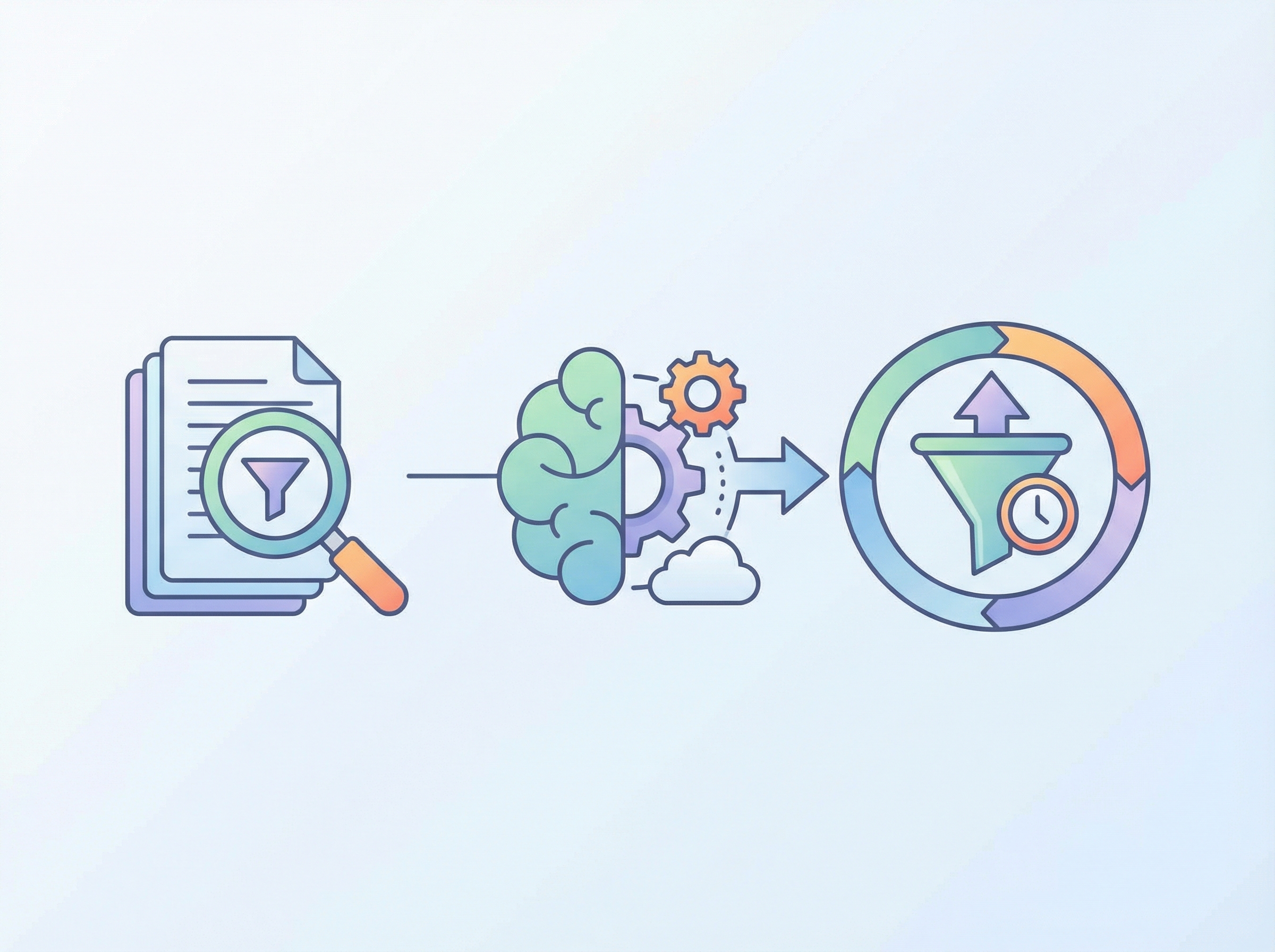
Sarah's turning point came when her team integrated an intelligent screening workflow. Instead of manual reads, every incoming application was first processed by a parsing engine that scored candidates based on a weighted scorecard (skills + experience density + growth). The top 30% were automatically invited to an asynchronous AI interview where they answered three core behavioral questions.
This shifted Sarah's role. Instead of reading 500 resumes, she reviewed 50 scored candidate profiles that included audio responses. She could hear the candidate's communication style and passion before scheduling a live call.
Measuring Success
The impact of this "breakthrough" was immediate and quantifiable:
- Screening Time Reduced by 60%: Sarah regained 20+ hours a week to focus on closing candidates.
- Quality of Interview: The pass-through rate from Recruiter Screen to Hiring Manager Interview jumped to 65% because the candidates were better vetted.
- Time-to-Hire: The overall hiring cycle dropped from 68 days to 45 days.
Career Relevance: Discussing Screening in Interviews
For recruiters and talent leaders, demonstrating mastery of resume screening is a key differentiator. It shows you understand the operational mechanics of the funnel, not just the "people" side of hiring.
Q&A for Recruiters
Q: "How have you applied resume screening to improve hiring outcomes?"
A: "I moved our team from a manual review process to a structured, data-driven workflow. By implementing knockout questions for non-negotiables and calibrating our scoring criteria with hiring managers upfront, I reduced our time-to-screen by 40%. This allowed us to engage top talent within 24 hours of their application, significantly improving our offer acceptance rate."

Resume Bullet Examples
- Standardized Screening: "Designed and implemented a 15-point resume scoring rubric, increasing hiring manager acceptance rates from 45% to 80%."
- Automation Impact: "Leveraged AI-driven screening tools to process 1,200+ monthly applications, reducing time-to-hire by 14 days while maintaining a 95% candidate satisfaction score."
- Bias Reduction: "Introduced blind resume screening protocols that increased underrepresented minority presence in interview slates by 25%."
Pros and Cons of Automated Screening
| Benefit | Tradeoff |
|---|---|
| Speed & Scalability: Can process thousands of applications in minutes, ensuring no candidate is left pending for weeks. | False Negatives: Rigid algorithms may reject qualified candidates who have formatting issues or non-traditional backgrounds. |
| Bias Reduction: consistently applies the same criteria to everyone, ignoring names, ages, and demographics (if configured correctly). | Loss of Nuance: AI struggles to "read between the lines" or value soft skills like grit and adaptability that a human might spot. |
| Consistency: Eliminates "decision fatigue," ensuring the 500th resume is treated with the same rigor as the 1st. | Impersonal Experience: If not paired with good communication, it can feel robotic and alienating to candidates. |
Frequently Asked Questions
What is resume screening?
Resume screening is the process of reviewing job applications to determine if a candidate meets the qualifications for a role. It involves analyzing education, experience, and skills against a job description to decide if an applicant should move to the interview phase.
Can automated resume screening backfire?
Yes, if the criteria are too rigid. "Over-filtering" can reject qualified candidates who use different terminology or have unique resume formats. It is essential to audit your rejection reasons regularly to ensure the system isn't excluding great talent.
How long should resume screening take per candidate?
Manual screening typically takes 6 seconds to 2 minutes per resume. Automated tools can process this instantly, while a detailed "human review" of a shortlisted candidate should take 3–5 minutes to assess context and fit.
What is the difference between screening and sourcing?
Sourcing is the proactive act of finding passive candidates who haven't applied (outbound). Screening is the reactive process of evaluating candidates who have already applied to your job posting (inbound).
Conclusion
Mastering resume screening is the foundation of a high-performance recruiting engine. In an era where volume is high and speed is currency, relying on outdated manual reviews is a liability. By combining structured heuristics, smart automation, and continuous calibration with hiring managers, talent teams can turn their applicant tracking system from a graveyard of PDFs into a goldmine of talent.
The future of hiring belongs to those who can operationalize consistency. Tools should never replace human judgment, but they must elevate it by removing the noise.
If you want to operationalize resume screening with structured workflows (Sourcing → resume screening → AI interviews → scorecards → offers → background checks), try tools like Foundire (https://foundire.com).