How to Master Interviewer Alignment

How to Master Interviewer Alignment: The Key to Consistent Hiring
Introduction: The High Cost of Mixed Signals
Interviewer alignment is the shared understanding among a hiring team of exactly what "good" looks like for a specific role, defined by standardized criteria and scoring methods. It is the difference between a hiring process based on data and one based on "gut feelings."
In today's talent landscape, misalignment is expensive. According to 2025 reports, a bad hire costs companies at least 30% of that employee’s first-year earnings—not counting the hidden damage to team morale. But the real cost is often speed and reputation. When interviewers aren't aligned, decision-making stalls, time-to-hire bloats (averaging over 40 days in many sectors), and candidates drop off due to a disjointed experience.
Imagine this common nightmare: You finish a debrief for a top-tier engineer. One interviewer loved them because "they went to a great school." Another hated them because "they seemed nervous." A third is neutral but thinks "the salary is too high." The result? You pass on a potentially great hire because the team couldn't agree on what mattered. This is the chaos of misalignment.
Scenario: The Disconnected Hiring Panel
To understand how to fix alignment, we must first look at a typical breakdown. Let’s look at a realistic hiring cycle for a Senior DevOps Engineer at a mid-sized tech firm.
The Setup: A Critical Tech Hire
Sarah, the Lead Recruiter, is under pressure. The engineering team is drowning in work, and Mike, the Engineering Manager, needs this role filled "yesterday." Sarah runs a tight sourcing operation, screening dozens of resumes and passing the best ones to the hiring panel. On paper, the workflow looks standard: Intake → Resume Screening → Technical Interview → Culture Interview → Decision.
The Breakdown: Subjectivity Over Structure
The problem begins immediately. Mike’s intake was brief: "Just find me someone smart who knows Kubernetes." Sarah finds candidates who fit the technical description, but the interview feedback comes back wildly inconsistent.
- Interviewer A rejects a candidate for being "too theoretical."
- Interviewer B passes the same candidate, praising their "architectural depth."
- Mike rejects another candidate for "lack of culture fit" because they didn't get his Star Wars reference.
Three weeks in, Sarah has screened 40 people, the team has interviewed 12, and they have zero offers. The metric that matters—pass-through rate—is plummeting. Candidates are experiencing "shift shock" (a term for when the job reality doesn't match the interview process) before they even get hired. The process is broken because Sarah and Mike never defined the scorecards or the evidence required to make a decision.
Core Insights: Building a Calibrated Engine
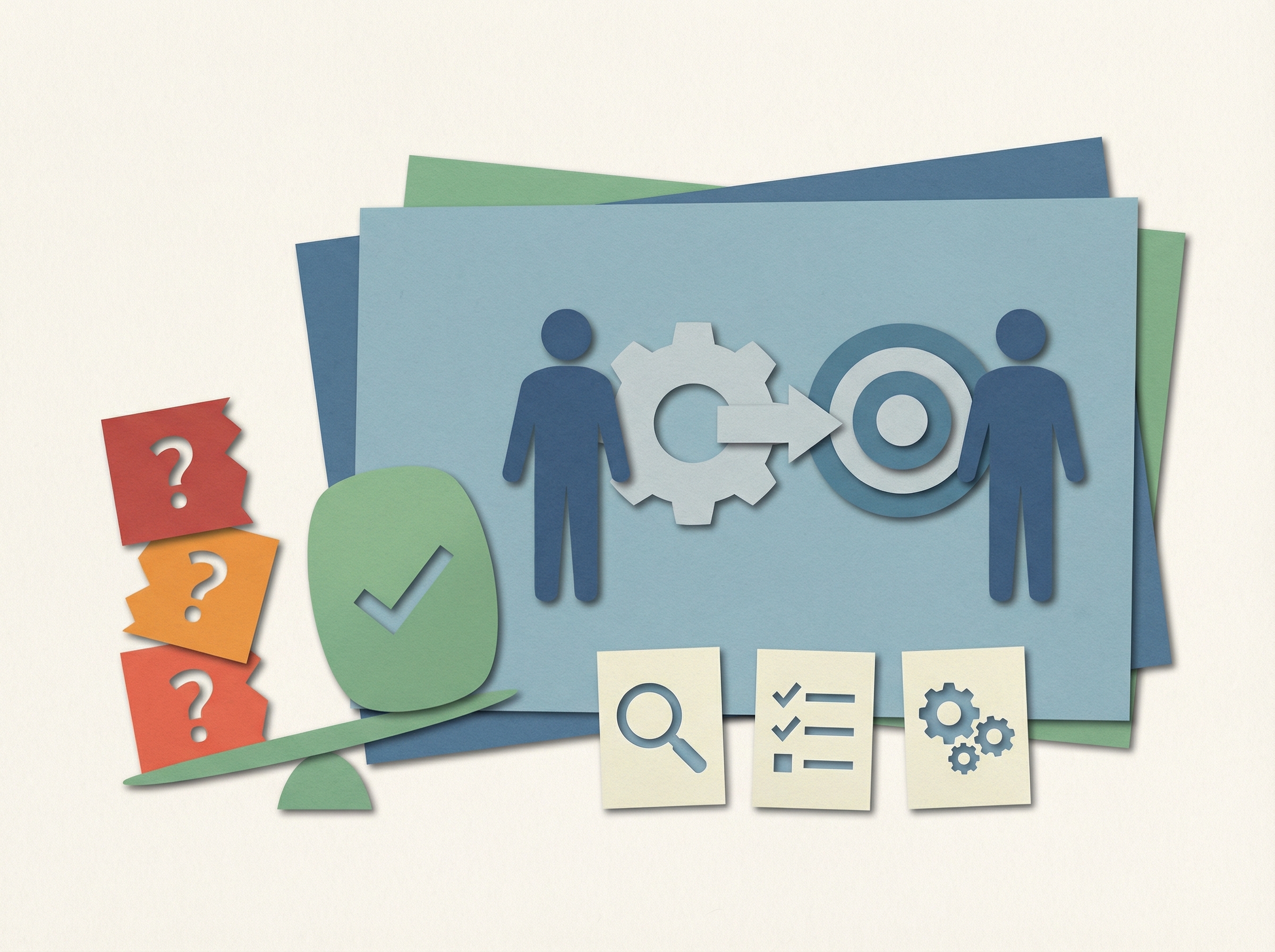
Solving this requires moving from "art" to "engineering." Here are three actionable heuristics to force alignment, used by top talent organizations.
1. The "Intake Calibration" is Mandatory
Never start a search without a calibration meeting. This is not a casual chat; it is a requirements-gathering session. You must define not just the skill, but the evidence of the skill.
Pro Tip: Don't ask "What skills do you need?" Ask, "What is a specific problem this person needs to solve in their first 90 days?" This shifts the focus from keywords (e.g., "Communication") to outcomes (e.g., "Can explain API documentation to non-technical stakeholders").
2. Use Structured Scorecards with Behavioral Anchors
Subjective feedback like "strong communicator" is useless. You need behavioral anchors—specific examples of what a 1, 3, or 5 score looks like. Recent data shows that 72% of high-performing companies now use structured interviews to reduce bias. A scorecard might look like this for "Conflict Resolution":
- Poor (1): candidate blames others or avoids the conflict.
- Average (3): Candidate resolves conflict but focuses on being "right."
- Great (5): Candidate seeks common ground, listens actively, and prioritizes the team outcome over their ego.
3. Implement Evidence-Based Feedback Loops
Ban the phrase "I liked them." In debriefs, enforce a rule: every opinion must be backed by data observed during the interview. If an interviewer says, "I don't think they are technical enough," ask, "Which specific question did they fail, and what was their answer?" This reduces the "Halo Effect," where a candidate's confidence masks their incompetence, or vice versa.
Common Pitfalls and Misconceptions
- The Seniority Fallacy: assuming that because someone is a VP, they are naturally good at interviewing. Interviewing is a skill separate from job function.
- Groupthink: This happens when the loudest voice in the room (usually the Hiring Manager) sways everyone else. To fix this, have interviewers submit their scorecards before the debrief meeting.
- Over-Indexing on "Culture Fit": This often creates a homogeny trap. Shift your language to "Culture Add"—what perspective is this team missing?
The Breakthrough: Turning Chaos into Consistency
Back to our scenario. Sarah pauses the search. She refuses to send another candidate until Mike agrees to a structured rubric. They spend one hour defining exactly what "Kubernetes expertise" means (e.g., "Must have experience debugging production outages," not just "Certification").
Implementing the Change
Sarah sets up a pre-brief for the next candidate. She assigns specific competencies to specific interviewers so they don't ask the same "Tell me about yourself" question four times. She uses a tool to centralize these scorecards.
The Aftermath: Measurable Success
The results are immediate. The team stops debating opinions and starts comparing evidence.
- Time-to-hire drops by 20% because decisions happen in 15 minutes, not 3 days.
- Pass-through rates improve because Sarah knows exactly who to screen out before they reach the expensive interview stage.
- Confidence soars. Mike hires a candidate who he might have initially overlooked, but the evidence showed she was the strongest debugger in the pool.
Research consistently shows that structured interviews are up to twice as predictive of job performance as unstructured ones. Alignment didn't just save time; it improved the quality of the hire.
Career Advantage: Why Alignment Matters for You
For recruiters and talent leaders, mastering interviewer alignment is a career accelerator. It transforms you from an "order taker" into a Talent Advisor. You aren't just filling a slot; you are designing a system.
Interview Q&A: Demonstrating Expertise
When you are interviewing for a Senior Recruiter or Talent Ops role, you might be asked:
Q: "How have you applied interviewer alignment to improve outcomes?"
A: "In my last role, we faced high drop-off rates due to slow decision-making. I audited our process and found we lacked standardized criteria. I implemented a mandatory intake calibration step and built specific scorecards for our core roles. This reduced our debrief times by 50% and increased our offer acceptance rate because candidates felt the process was rigorous and fair."
Resume Boosters
- Orchestrated a company-wide interviewer calibration initiative, training 50+ hiring managers on bias reduction and structured scoring.
- Standardized evaluation criteria across engineering roles, reducing false-positive hires and improving 90-day retention by 15%.
- Implemented feedback loops and quality assurance on interview scorecards to ensure data integrity in the ATS.
Pros & Cons of Strict Alignment
| Benefit | Tradeoff |
|---|---|
| Reduced Bias & Increased Fairness: Structured criteria make it harder for unconscious bias (gender, race, affinity) to influence decisions. | Upfront Time Investment: It takes significant effort to build rubrics and align stakeholders before the first interview happens. |
| Speed & Scalability: Once aligned, decisions are rapid. You can swap interviewers without breaking the process. | Perceived Rigidity: Some managers may feel "stiff" or "robotic" using a script until they are properly trained. |
| Legal Defensibility: Clear, documented reasons for hiring/rejecting based on skills protect the company. | Loss of "Gut Feeling": You may pass on a charismatic candidate who lacks the specific evidence required by the scorecard. |
Frequently Asked Questions
What is interviewer alignment?
Interviewer alignment is the process of ensuring all members of a hiring team share a unified understanding of the job requirements, evaluation criteria, and scoring standards. It eliminates mixed signals and ensures candidates are judged on evidence rather than opinion.
Can interviewer alignment backfire?
Yes, if the alignment is based on the wrong criteria. If a team aligns on "hiring people like us," it reinforces bias and stifles diversity. Alignment must be focused on objective skills and values-add, not superficial traits.
How do you measure alignment success?
You can measure it by tracking the "inter-rater reliability"—how often interviewers agree on the same candidate. You should also track time-to-decision (how long debriefs take) and quality of hire (retention and performance ratings at 1 year).
Conclusion: Operationalizing Your Advantage
In 2026, the companies winning the talent war aren't just the ones with the biggest budgets—they are the ones with the most consistent processes. Interviewer alignment is the difference between guessing and knowing. It respects the candidate's time, protects the company's resources, and ultimately builds stronger teams.
Consistency creates a durable hiring advantage. If you want to operationalize interviewer alignment with structured workflows—from Sourcing and resume screening to AI interviews, scorecards, offers, and background checks—try tools like Foundire (https://foundire.com) to automate and elevate your entire hiring stack.