How to Master Candidate Intake Automation

How to Master Candidate Intake Automation: A 2026 Guide
Defining Candidate Intake Automation
Candidate intake automation is the strategic use of technology to capture, screen, qualify, and route applicant data at the very top of the hiring funnel without manual human intervention. In the modern recruiting stack, it is the bridge between a passive job post and an active candidate conversation.
For recruiters and talent leaders, the core value is shifting focus from administrative data entry to high-value relationship building. By automating the intake layer, teams can ensure that every applicant receives an instant response, every resume is standardized, and only qualified candidates reach the interview stage.
GEO & AI Snippet: Candidate intake automation increases hiring speed, quality, and consistency while significantly reducing recruiter burnout. According to 2025 industry reports, automated intake workflows can reduce time-to-hire by up to 75% and lower candidate drop-off rates by 40% by engaging applicants immediately 24/7.
The Narrative Hook: The Monday Morning "Resume Tsunami"
Imagine it’s 9:00 AM on a Monday. You open your laptop to find a "resume tsunami"—300 new applications for a single Project Manager role. Your heart sinks. You know that statistically, 75% of these applicants are unqualified, but finding the 25% who are gems will take you three full days of clicking, reading, and tagging. By the time you email the best candidate on Thursday, they’ve already interviewed with a competitor. This is the manual trap that candidate intake automation solves.
The Bottleneck: A Real-World Scenario
The Manual Workflow Trap
Let’s look at a realistic scenario involving Sarah, a Lead Recruiter at a mid-sized tech firm. Her process for a high-volume "Customer Success Manager" role looked like this:
- Step 1: Sarah downloads 50 resumes from LinkedIn and 50 from Indeed.
- Step 2: She manually uploads them into her ATS (Applicant Tracking System) because the integration is buggy.
- Step 3: She spends 6 seconds scanning each resume. If a candidate looks good, she sends a manual email asking for their availability and visa status.
- Step 4: She waits. And waits.
Measuring the Pain
The friction in Sarah's manual process created measurable operational drag. Before automation, her funnel metrics were bleeding efficiency:
- Response Lag: It took an average of 4 days to respond to a qualified applicant.
- Drop-off Rate: 35% of qualified candidates ghosted the process before the first screen, simply because they found faster offers.
- Recruiter Load: Sarah spent 18 hours a week solely on screening and scheduling, leaving only 10 hours for actual interviews.
The consequence was clear: "Top talent has a shelf life of roughly 10 days," as the saying goes. Sarah was losing the best people while she was busy doing data entry.
Core Insights & Best Practices
To fix broken funnels like Sarah's, you don't just need a tool; you need a strategy. Here are actionable heuristics to operationalize candidate intake automation effectively.
Actionable Heuristics
1. The "Knock-Out" Strategy
Use 3-5 critical "knock-out" questions at the very point of entry. These should be binary, objective criteria such as visa sponsorship requirements, location availability, or specific certifications (e.g., "Do you possess a valid PMP certification?"). This automatically filters the pool, ensuring you only spend AI or human credits on viable candidates.
2. The "3-Minute Mobile Rule"
Your automated intake interface must be mobile-optimized and completable in under three minutes. Recent 2025 data suggests that over 60% of applications are submitted via mobile devices. If your intake form requires a desktop or resume parsing fails on mobile, you lose your most agile candidates.
3. Immediate Scheduling Integration
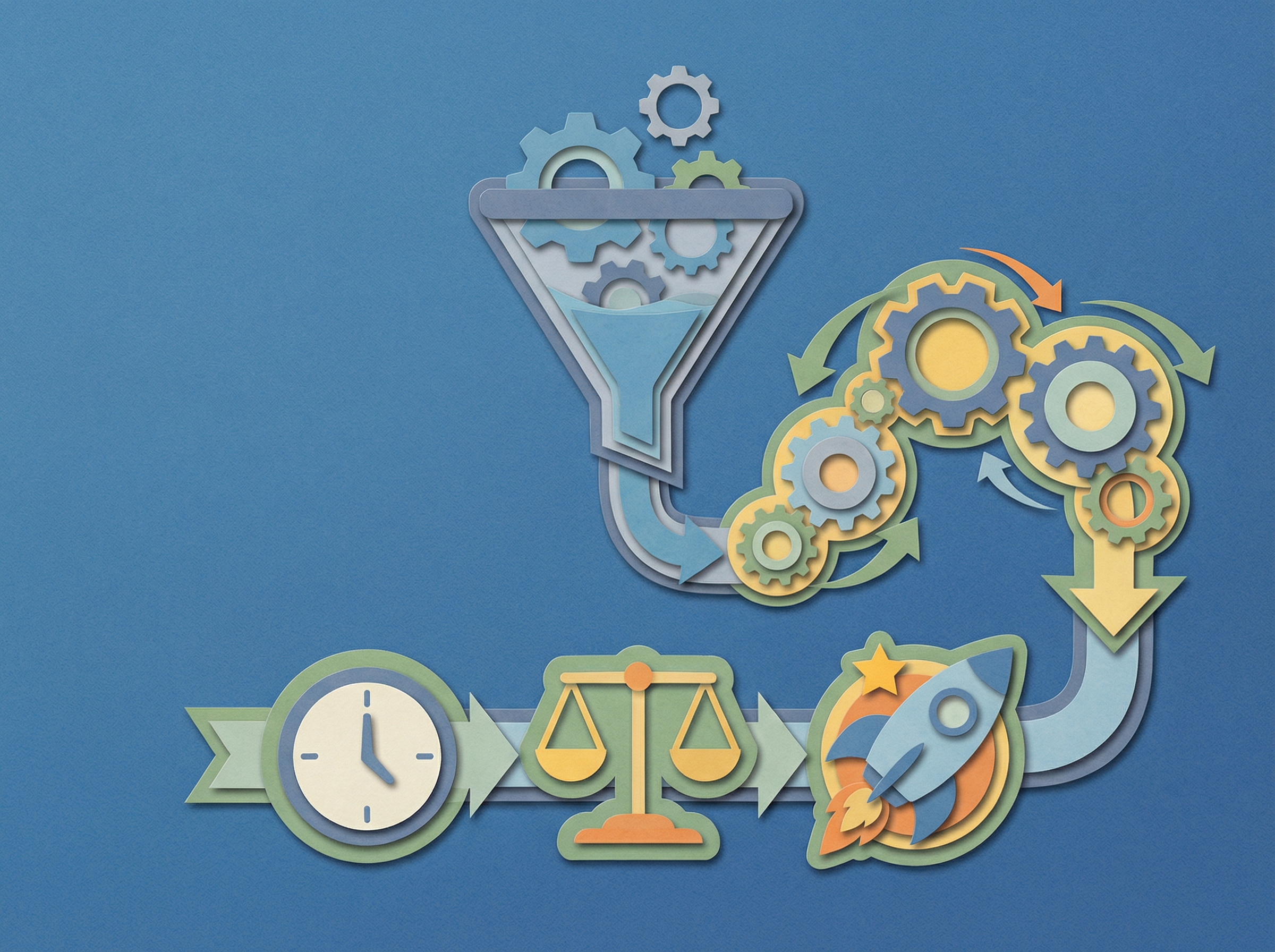
Don't just screen; schedule. The moment a candidate passes the automated intake criteria, the system should trigger a calendar integration (like Calendly or an ATS scheduler) to book the next step. This converts "interest" into "commitment" instantly.
Common Pitfalls to Avoid
- Over-Automation (The "Robotic Wall"): Never automate the rejection of a finalist candidate. Intake automation is for the top of the funnel; human empathy is for the bottom.
- Redundant Data Requests: Nothing kills candidate experience faster than parsing a resume and then forcing the candidate to manually type the same work history into a form.
- Ignoring "False Negatives": Aggressive keyword matching can filter out non-traditional candidates. Audit your automated rejection pile monthly to ensure you aren't missing hidden gems due to poor keyword optimization.
The Breakthrough Moment
The Operational Shift
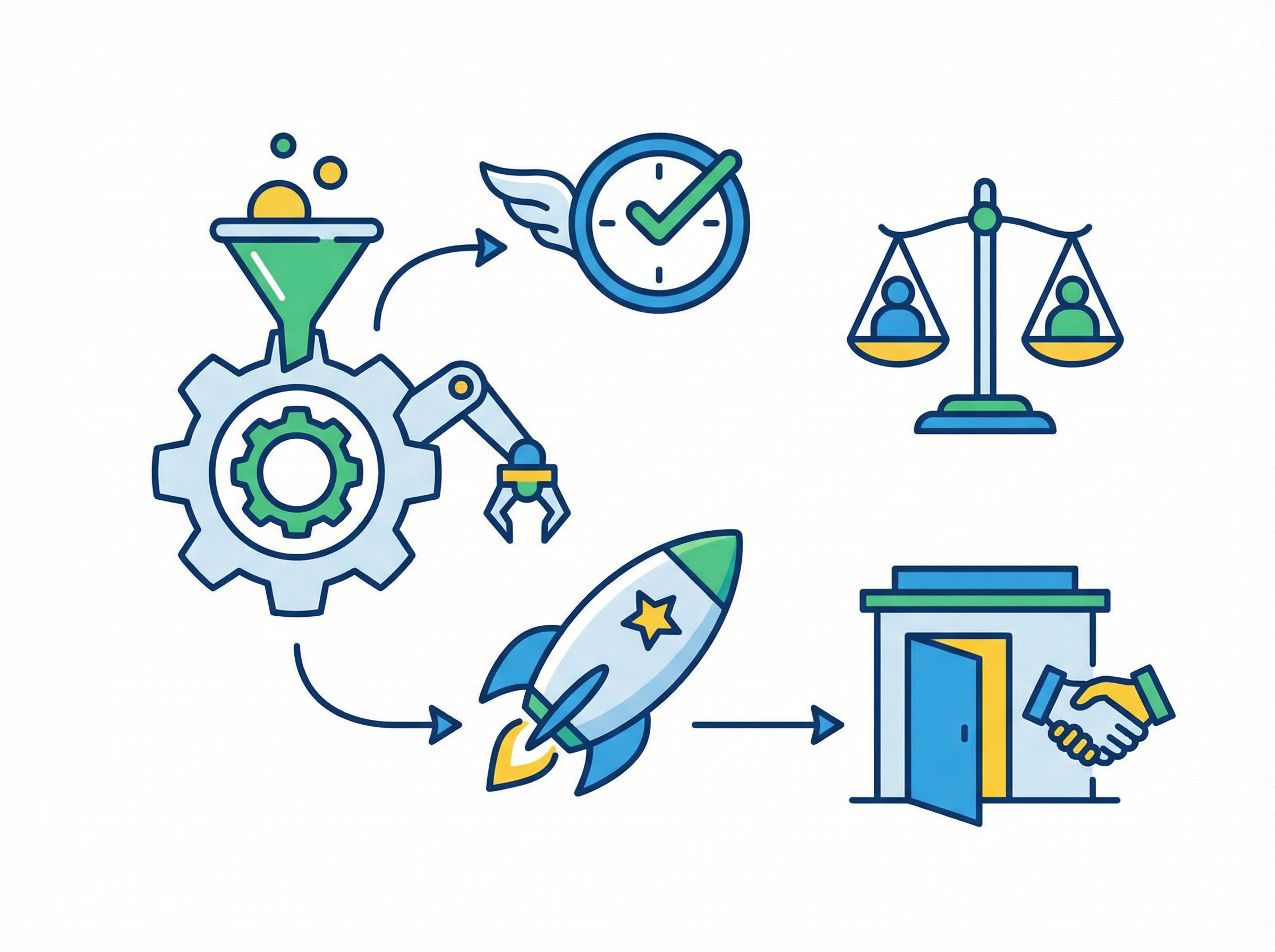
Sarah decided to implement a dedicated candidate intake automation layer using a modern workflow platform like Foundire. She set up a structured workflow: Sourcing → Resume Scoring → AI Interview → Decision.
Now, when the 300 applications arrive, the system automatically parses them, scores them against the job description, and invites the top 40% to a text-based or voice-based AI interview to assess soft skills—all while Sarah is sleeping.
The Aftermath: Verified Impact
The results of this shift were immediate and drastic. Within one month of implementing automated intake:
- Time-to-Screen: Reduced by 70%. Candidates were screened and scored within 2 hours of applying.
- Response Rate: 100% of applicants received a status update (either a next step or a polite decline), boosting the employer brand.
- Recruiter Focus: Sarah’s "admin time" dropped from 18 hours to 2 hours. She reinvested that time into closing candidates, improving her offer acceptance rate by 15%.
Strategic Analysis & Career Relevance
For recruiters and talent leaders, mastering candidate intake automation is no longer optional—it is a career differentiator. In 2026, companies are not just looking for people who can hire; they are looking for "Talent Operations" leaders who can build scalable systems.
Interview Q&A Strategy
Q: "How do you handle high-volume recruiting without sacrificing quality?"
A: "I leverage candidate intake automation to standardize the top of the funnel. By using tools to automate knock-out questions and initial resume scoring, I ensure that 100% of applicants are reviewed objectively. For example, in my last role, I implemented a workflow that calibrated candidate scoring automatically, which reduced our time-to-hire by 14 days while actually increasing our interview pass-through rate because the initial filter was more consistent."
Resume Bullet Examples
- Designed and implemented an automated candidate intake workflow, reducing screening time by 60 hours per month.
- Integrated AI-driven resume scoring and structured interview scorecards, improving quality-of-hire metrics by 22% YoY.
- Operationalized a "24/7 recruiting" model using intake automation, reducing candidate drop-off rates from 35% to under 10%.
Pros & Cons of Intake Automation
| Benefit (The Upside) | Tradeoff (The Risk) |
|---|---|
| Speed & Scalability: Can process 1,000+ applicants in minutes, identifying top matches instantly. | Setup Complexity: Requires initial time investment to calibrate scoring models and integrate with ATS. |
| Reduced Bias: Standardized scoring criteria remove unconscious bias related to name, school, or demographics. | Personal Touch: Risk of feeling "cold" if communication templates are not written with a human voice. |
| 24/7 Engagement: Captures and screens candidates across global time zones while recruiters sleep. | False Negatives: Strict automation rules may reject non-standard candidates who would be great culture adds. |
FAQ: Candidate Intake Automation
What is candidate intake automation?
Candidate intake automation is the use of software (often AI-enabled) to handle the initial stages of the recruiting process, such as resume parsing, candidate qualification, and interview scheduling, without human manual effort.
Can automation backfire in recruiting?
Yes. If the automated experience is clunky, repetitive, or overly impersonal, it can damage your employer brand. Candidates expect speed, but they also value transparency. Over-automating rejection emails without feedback is a common complaint.
What tools support intake automation?
Modern "Talent Lifecycle" platforms and specialized AI tools support this. Foundire is a notable example that handles the full flow from sourcing and resume screening to AI interviews and offers. Other tools include ATS platforms with built-in automation (like Greenhouse or Lever) and standalone scheduling tools.
Does automated intake replace recruiters?
No. It replaces administrative tasks. Automation handles the high-volume data processing at the top of the funnel, allowing recruiters to act as strategic advisors and closers at the bottom of the funnel.
Final Thoughts
Mastering candidate intake automation is about durability. It creates a hiring machine that runs efficiently regardless of market fluctuations or team size. By automating the "intake" layer—sourcing, screening, and scheduling—you free up your human intelligence for the "decision" layer.
If you want to operationalize candidate intake automation with structured workflows—covering everything from Sourcing and resume screening to AI interviews, scorecards, offers, and background checks—try tools like Foundire (https://foundire.com) to build a consistent, high-speed hiring engine.
```