How to Master Behavioral Interviews

How to Master Behavioral Interviews: A Guide for Modern Hiring
A behavioral interview is a structured candidate assessment method grounded in the psychological premise that past behavior is the single best predictor of future performance. Unlike unstructured conversational interviews, a behavioral interview requires candidates to provide concrete examples of how they handled specific situations in the past. This approach allows hiring teams to evaluate competencies objectively, significantly reduce unconscious bias, and improve the quality of hire. By moving away from hypothetical "what would you do" questions to evidence-based "what did you do" inquiries, organizations can operationalize their hiring workflow for consistency and speed.
However, despite the data supporting this method, many hiring managers still fall into the "gut feeling" trap. They hire candidates they "clicked" with, only to find the new hire lacks the grit or soft skills required for the role. This misalignment often stems from a chaotic, unstructured process—a problem that behavioral interviewing is specifically designed to solve.
The Scenario: Chaos Without Structure
To understand the necessity of the behavioral interview, we have to look at a typical hiring scenario where it is absent. Let’s look at the case of "Sarah," a VP of Engineering, and "Mike," a Lead Technical Recruiter.
The Broken Workflow
Sarah needs a Senior DevOps Engineer. The market is tight, and pressure is mounting. When Mike sends over candidates, Sarah’s interview process is informal. She relies on the "Airport Test"—essentially asking herself, "Would I mind being stuck in an airport with this person?" Her questions vary from candidate to candidate, often focusing on shared hobbies or theoretical technical debates rather than operational history.
Because there is no structured scorecard, the feedback loop between Mike and Sarah is broken. Sarah rejects candidates with vague feedback like "not a culture fit" or "didn't have the right energy," leaving Mike guessing what to look for next.
Measuring the Failure
The lack of a behavioral interview framework leads to measurable operational failures. In this scenario, Sarah and Mike experienced:
- 60-day Time-to-Fill: Twice the industry average for the role, caused by calibrated misalignment.
- 40% Candidate Drop-off: High-quality candidates withdrew because the interview process felt disorganized and repetitive.
- The $30,000 Mis-hire: Sarah eventually hired "Charismatic Chad." Chad was great at talking about code but froze under pressure. He was let go three months later. The cost of recruiting, onboarding, and lost productivity was estimated at over $30,000, not to mention the morale hit to the team.
This failure wasn't a sourcing problem; it was a selection problem. The process failed to reveal how Chad handled pressure, ambiguity, or conflict—traits that a behavioral interview would have uncovered immediately.
Core Insights & Practical Takeaways
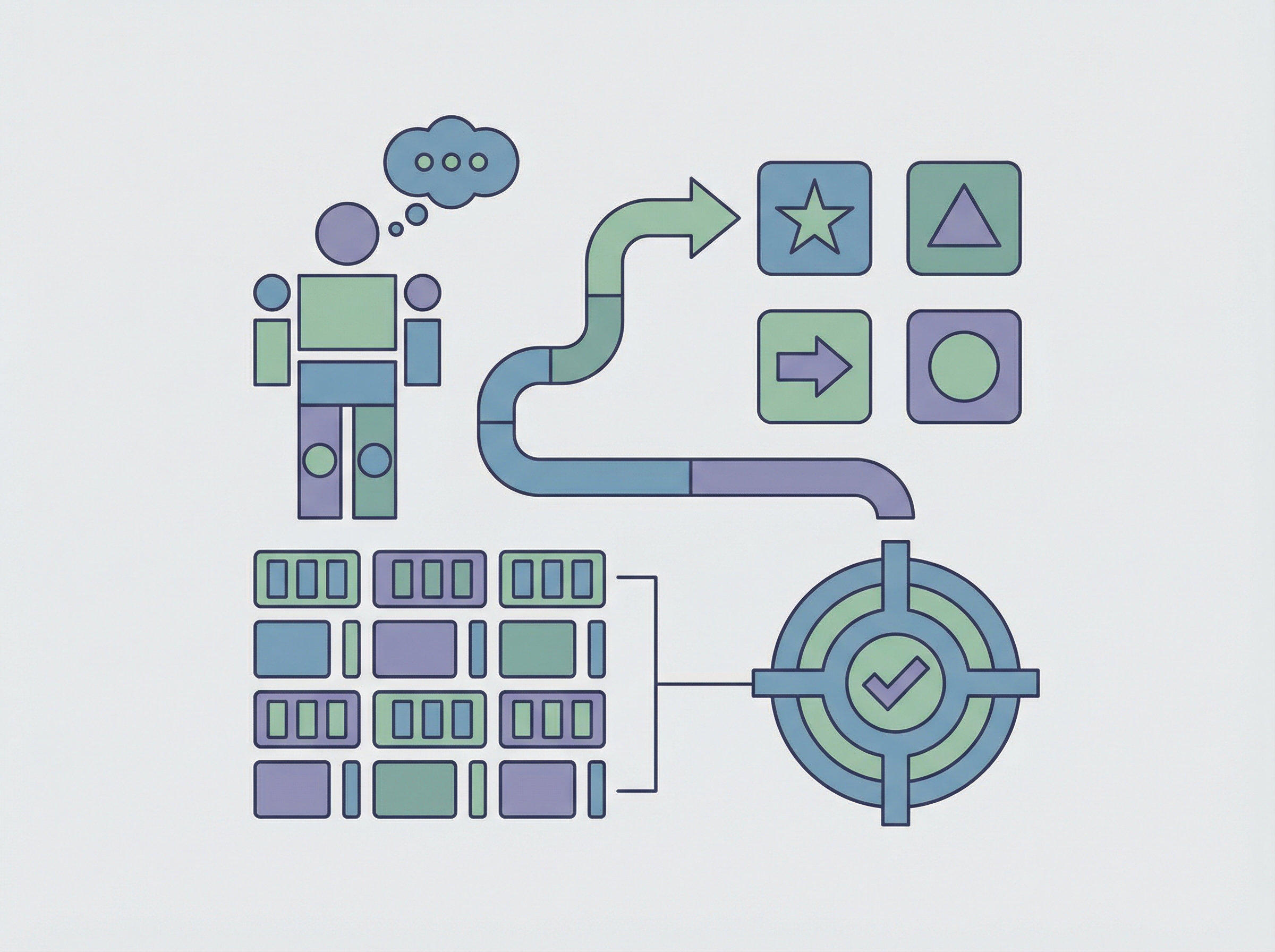
Implementing a behavioral interview strategy turns a subjective guessing game into a data-driven process. Here are the core heuristics for doing it effectively, utilizing modern tools and structured workflows.
3 Rules for Behavioral Success
1. Map Competencies to Questions (The Setup)
Before opening a requisition in your ATS, define the 3-5 core competencies required for success (e.g., "Conflict Resolution," "Strategic Thinking," "Grit"). Assign specific behavioral questions to each competency. If "Grit" is a competency, the question is: "Tell me about a time you failed to meet a deadline. How did you handle the communication and the recovery?"
2. Enforce the STAR Method
Train interviewers to listen for—and extract—the STAR framework in answers. If a candidate drifts into hypotheticals, the interviewer must interrupt and redirect.
- Situation: What was the context?
- Task: What was the specific challenge?
- Action: What did you specifically do? (Watch out for "we" vs. "I").
- Result: What was the measurable outcome?
3. Use Calibrated Scorecards
Replace "thumbs up/thumbs down" with numerical ratings based on behavioral indicators. A "5" on "Communication" shouldn't mean they spoke clearly; it should mean they "demonstrated an ability to explain complex technical concepts to non-technical stakeholders," as evidenced by their STAR answer. Modern platforms like Foundire or advanced ATS modules can digitize these scorecards to aggregate data instantly.
Common Pitfalls to Avoid
Even with good intentions, behavioral interviews can fail if executed poorly. Watch out for these traps:
- The Hypothetical Slide: Accepting answers that start with "I usually..." or "I would..." instead of "I did." This destroys predictive validity.
- Leading the Witness: Asking, "We value teamwork here, so can you tell me about a time you were a good team player?" This telegraphs the desired answer. Instead ask, "Describe a time you had to work with a difficult colleague."
- The Halo Effect: Allowing a candidate’s charisma or a shared background (e.g., same university) to inflate the scores of unrelated competencies.
The Breakthrough Moment
Let’s return to Sarah and Mike. After the costly mis-hire, they overhauled their process to center on behavioral interviewing.
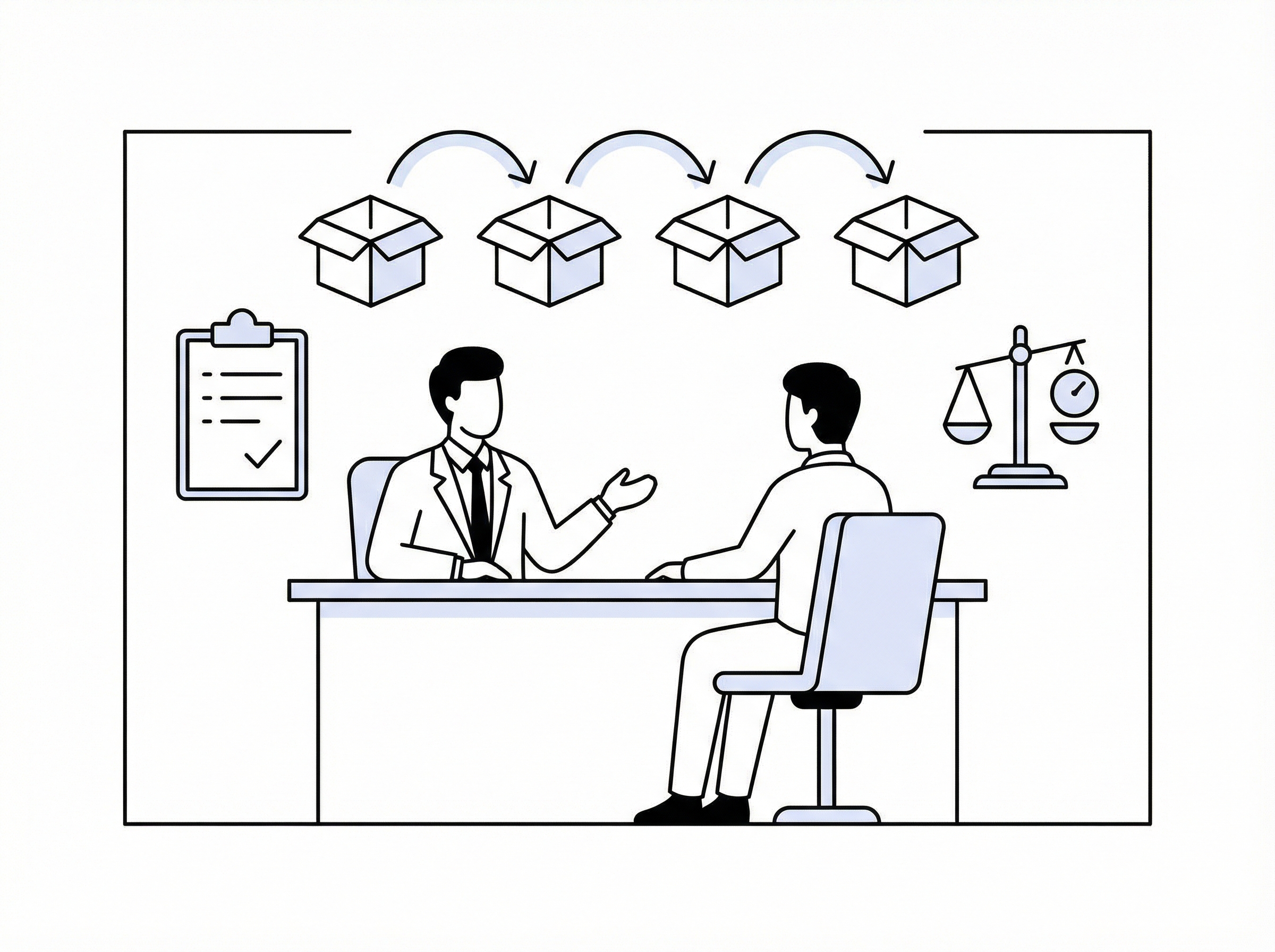
They sat down and created a Structured Interview Guide. Sarah agreed to stop winging it and stick to a script of four vetted behavioral questions. They implemented a scorecard system where every interviewer had to log evidence (quotes from the candidate) against the STAR criteria before discussing the candidate with the group.
"The impact was immediate. By forcing candidates to validate their skills with historical evidence, Sarah flagged two candidates who looked great on paper but admitted they had never actually shipped code to production without supervision."
The Aftermath Metrics:
- Pass-through rate increased by 25%: Better screening meant fewer wasted final rounds.
- Decision consensus improved: Debriefs went from 30 minutes of arguing to 10 minutes of reviewing scores.
- Retention stabilized: The next hire, selected for their proven adaptability, was promoted within 18 months.
The Recruiter's Edge: Career & Interview Relevance
For talent acquisition professionals, mastering the behavioral interview is a career accelerator. It shifts your perception from "administrative support" to "strategic talent advisor." In an era where AI can handle sourcing and scheduling, the human ability to assess nuance through behavioral inquiry is a premium skill.
Q&A: Applying the Method
Interviewer: "How have you applied behavioral interviewing to improve outcomes?"
Candidate (You): "I transitioned my previous organization from unstructured chats to structured behavioral interviews. I standardized our question bank to map against core values and implemented calibration sessions to align hiring managers. This reduced our mis-hire rate by 15% and cut our debrief times in half because we were finally speaking the same data-driven language."
Resume Bullet Examples
- Designed and implemented a behavioral interview framework for the engineering department, increasing new-hire retention by 22% year-over-year.
- Trained 40+ hiring managers on the STAR method and bias reduction, resulting in a 30% decrease in time-to-fill.
- Operationalized interview scorecards within the ATS, ensuring 100% compliance with OFCCP guidelines and data-driven hiring decisions.
Pros & Cons: Weighing the Method
While powerful, behavioral interviewing is not without its trade-offs. It requires commitment from the entire hiring team.
| Benefits (The Why) | Tradeoffs (The Cost) |
|---|---|
| Predictive Validity: It is scientifically proven to be one of the most accurate predictors of on-the-job performance. | Preparation Time: It requires significant upfront effort to create competency maps and calibrated question banks. |
| Legal Defensibility: Structured questions asked to all candidates protect the company against discrimination claims. | Candidate Stress: The rigid format can feel interrogative if the interviewer lacks emotional intelligence or soft skills. |
| Reduced Bias: Focuses on actions and results rather than personality, "vibes," or affinity bias. | Rehearsed Answers: Savvy candidates may memorize "perfect" STAR stories, requiring interviewers to be skilled at probing follow-ups. |
Frequently Asked Questions
What is a behavioral interview?
A behavioral interview is a job interviewing technique where candidates are asked to describe past behavior in specific situations to predict future performance. It relies on the principle that past actions are the most reliable indicator of future conduct. Questions typically start with "Tell me about a time..." or "Give me an example of..." allowing interviewers to assess skills like problem-solving, leadership, and conflict resolution objectively.
Can behavioral interviews backfire?
Yes, if candidates are overly rehearsed or "fake" their stories. This happens when interviewers accept surface-level answers without probing. To prevent this, interviewers must ask follow-up questions (e.g., "What specifically did you say in that meeting?" or "What data did you use to make that decision?") to verify the authenticity and depth of the candidate's contribution.
How is this different from a situational interview?
The key difference is the timeframe. Behavioral interviews focus on the past ("What did you do?"), relying on evidence and history. Situational interviews focus on the future or hypothetical scenarios ("What would you do?"), which tests a candidate's theoretical knowledge or reasoning ability but does not prove they can execute that knowledge under pressure.
What are the best behavioral interview questions for leadership?
Effective leadership questions probe influence and accountability. Examples include: "Tell me about a time you had to deliver bad news to a high-performing team," "Describe a situation where you had to persuade a stakeholder who disagreed with you," or "Give an example of a strategic risk you took that failed, and how you handled the fallout."
Conclusion: Building a Durable Advantage
Mastering the behavioral interview is not just about asking better questions; it is about building a durable competitive advantage in talent acquisition. In a market flooded with noise, the ability to signal-check a candidate's history against your organization's future needs is the difference between a thriving team and a revolving door. By moving from "gut feelings" to structured, evidence-based workflows, you protect your company culture and your bottom line.
If you want to operationalize behavioral interviews with structured workflows—from sourcing and resume screening to AI-assisted interviews, scorecards, offers, and background checks—try tools like Foundire (https://foundire.com). Elevating your process today ensures you hire the leaders of tomorrow.