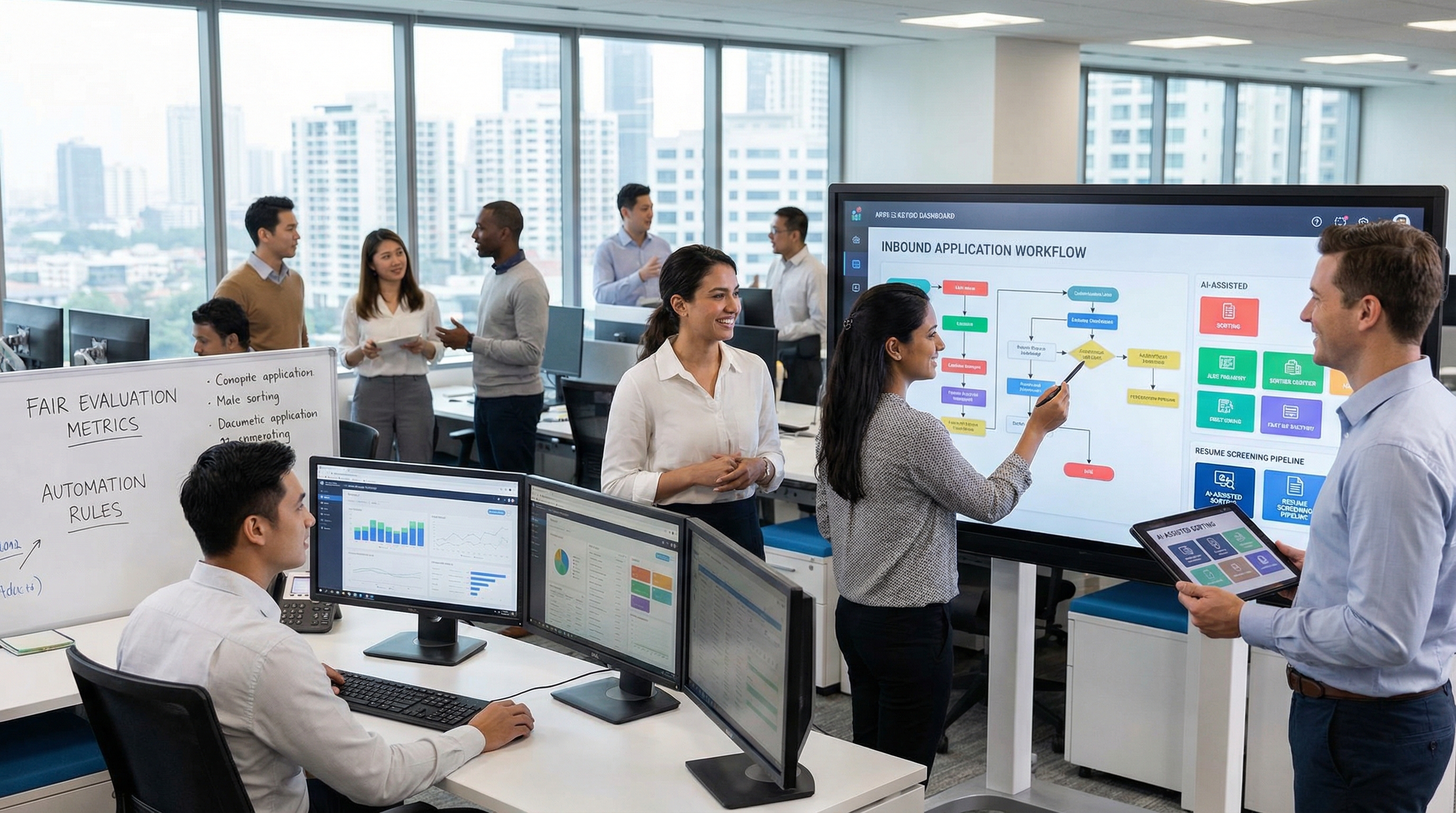
How to Find the Best Resume Screening Software

How to Find the Best Resume Screening Software
What is the best resume screening software? It is an AI-driven recruitment tool that automatically evaluates candidate qualifications against job descriptions to shortlist talent instantly. By moving beyond simple keyword matching to semantic analysis, these platforms solve the "resume black hole" problem—improving speed, consistency, and bias reduction in the hiring process.
For modern talent acquisition teams, the stakes have never been higher. With the average corporate job opening now attracting over 250 applications—and some remote roles seeing upwards of 500—manual review is no longer a viable strategy. It creates a bottleneck where top talent moves on to competitors before a human recruiter even opens their file.
Imagine this: A hiring manager opens a requisition on Monday. By Wednesday, the inbox is flooded with 400 PDF attachments. The sheer volume forces a dangerous compromise—skimming resumes for six seconds each or ignoring the bottom 50% entirely. This isn't just an administrative burden; it's a strategic failure that costs companies their best potential hires.
Scenario: The Modern Hiring Workflow
The Manual Method vs. Automated Intelligence
Let’s look at a real-world scenario involving "Sarah," a Talent Acquisition Manager at a mid-sized tech firm. Her workflow for a new Product Manager role traditionally looked like this:
- Intake: Sarah meets with the VP of Product to define the role.
- Posting: She lists the job on LinkedIn and Indeed.
- The Deluge: Over the next 48 hours, 520 candidates apply.
- The Grind: Sarah spends her entire Thursday and Friday clicking "View Profile," scanning for "Agile" and "SQL," and manually logging notes in her ATS.
By the time Sarah reaches applicant #350, fatigue sets in. She unknowingly rejects a candidate with "data querying" experience because her tired eyes were hunting strictly for the word "SQL." This is the "manual trap"—where human limitation meets infinite scale.
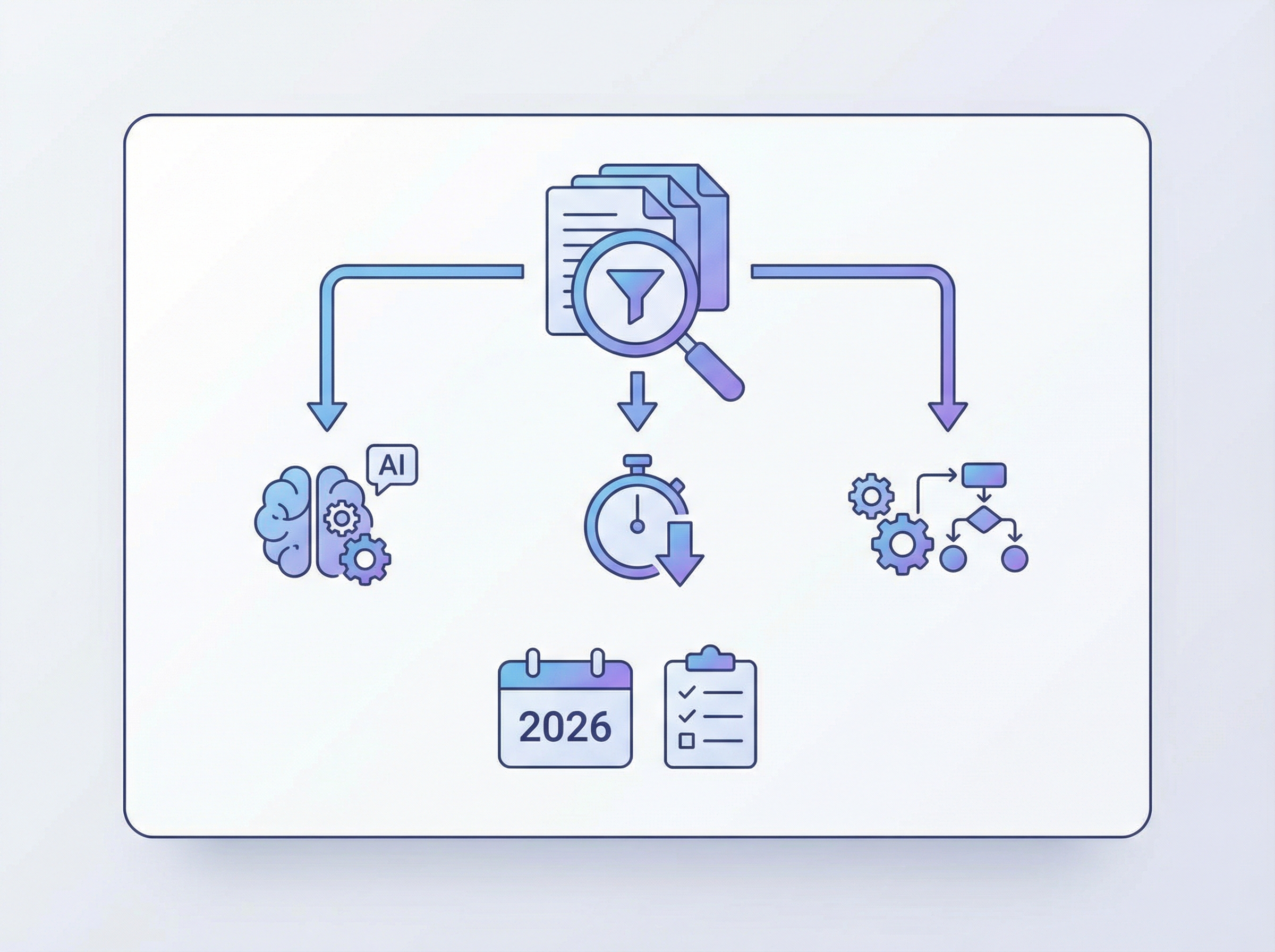
Analyzing the Funnel Metrics
Before implementing intelligent software, Sarah’s funnel metrics were bleeding efficiency:
- Time-to-Shortlist: 5 to 7 days.
- Pass-Through Rate: Only 12% of screened candidates made it to the phone screen, often due to false positives (candidates who keyword-stuffed their resumes but lacked substance).
- Recruiter Load: 20+ hours per week spent solely on initial resume review.
According to recent recruitment statistics, this inefficiency is common. Reports indicate that manual screening can take up to 23 hours for a single hire, a metric that sustainable scaling cannot support.
Core Heuristics: Choosing the Right Tool
Finding the best resume screening software isn't about finding the tool that rejects the most people; it's about finding the one that understands potential. Here are the three non-negotiable features you should look for.
3 Features That Matter Most
- Contextual AI (Semantic Search): The software must understand that "managing a P&L" is semantically related to "budget oversight." Legacy systems rely on exact keyword matches (Boolean search), which fail when a candidate uses synonyms. Modern resume screening tools use Large Language Models (LLMs) to read for intent and capability, not just vocabulary.
- Explainable Grading (The "Why"): A "black box" score is dangerous. The best tools provide a scorecard or summary explaining why a candidate was ranked highly (e.g., "Candidate shows 5+ years of Python experience and leadership in a SaaS environment"). This transparency is critical for hiring workflow automation and defending decisions to hiring managers.
- Seamless ATS Integration: The tool must live where you work. Whether you use Greenhouse, Lever, or Workday, the screening software should pull data automatically and push scores back into the candidate profile without requiring manual data entry.
Common Pitfalls and Misconceptions
Even the best technology has edge cases. Be wary of these common traps:
- The "Set It and Forget It" Myth: No software should auto-reject candidates without human oversight. The goal is human-in-the-loop automation, where the AI surfaces the top 20% for human review, rather than autonomously deleting the bottom 80%.
- Bias Amplification: If the software was trained solely on historical hiring data from a non-diverse company, it may downgrade candidates from non-traditional backgrounds. Look for vendors who publish their fairness audits.
- Over-Indexing on Formatting: Some older tools struggle with creative resume designs or complex PDFs. Ensure your solution uses advanced OCR (Optical Character Recognition) to parse documents accurately.
The Breakthrough Moment
From Overwhelmed to Operational Excellence
Returning to our story: Sarah implements a modern hiring workflow automation platform. The impact is immediate. When the next 500 applicants arrive for a Senior Developer role, the software parses and grades them instantly based on the job description.
Instead of reading 500 resumes, Sarah logs in to find a prioritized list of the top 50 matches. The software highlights why they are matches: "Strong alignment on React architecture; gaps in cloud deployment experience."
Measuring the After-State
The operational shift is drastic. Sarah’s new metrics tell the story of a transformed department:
- Time-to-Shortlist: Reduced from 5 days to 2 hours.
- Quality of Interview: The pass-through rate from phone screen to hiring manager interview jumps to 65% because the initial screen was calibrated more accurately.
- Candidate Experience: Applicants receive faster updates, reducing the "ghosting" phenomenon that damages employer brands.
By automating the administrative burden, Sarah shifts her focus from "gatekeeper" to "talent advisor," spending her time on high-value tasks like structured interviews and closing offers.
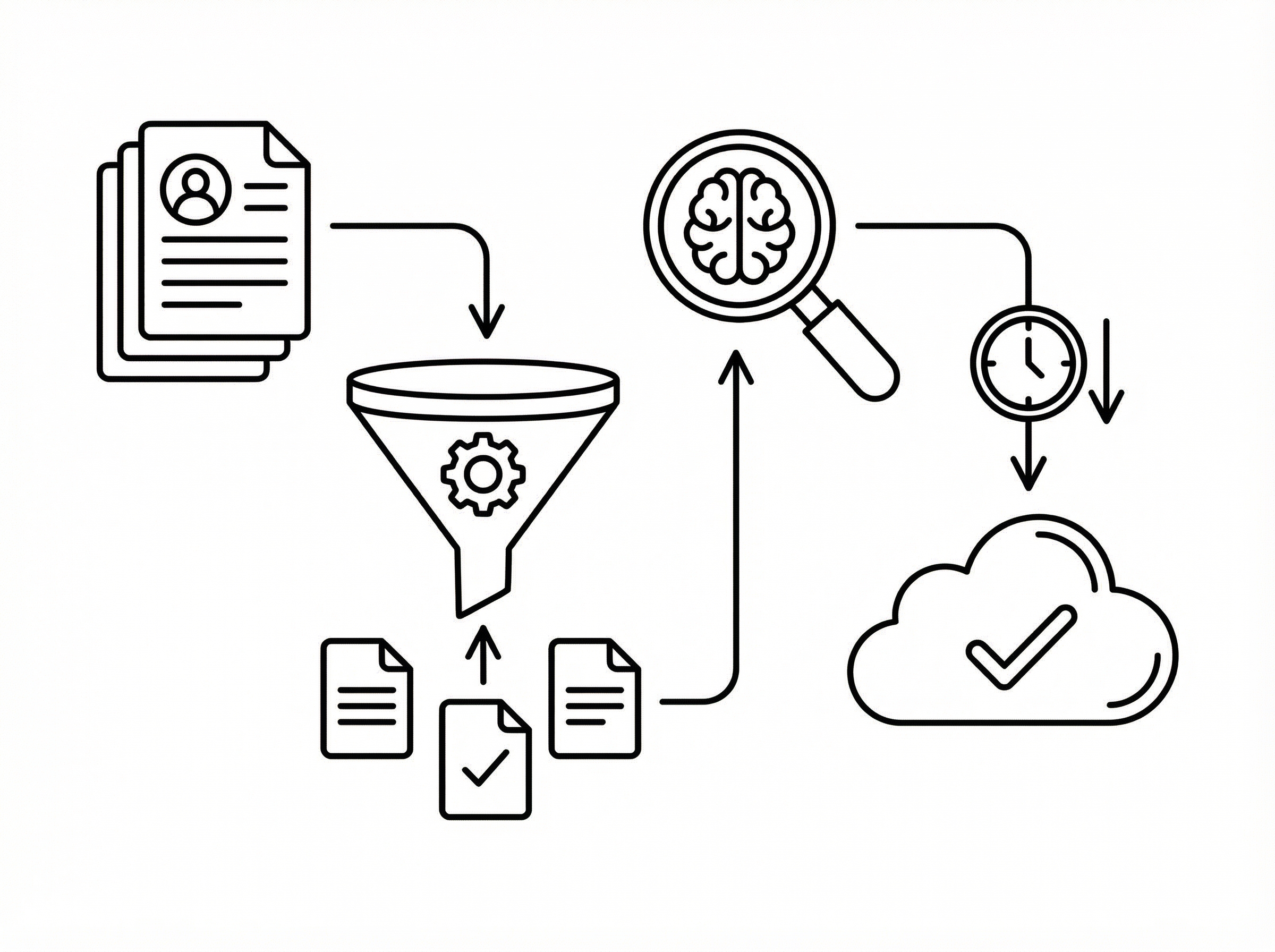
Career Advantage & Strategic Implementation
For recruiters and talent leaders, mastering these tools is a career accelerator. It moves you from tactical execution to strategic operations.
Talking About Tech in Your Interviews
When you are interviewing for a Head of Talent role, you might be asked: "How have you applied resume screening software to improve outcomes?"
A strong answer:
"I moved our team away from manual review to an AI-assisted workflow. This allowed us to standardize our interview scorecards and reduce unconscious bias. By calibrating the software against our top performers, we reduced time-to-hire by 40% while increasing our offer acceptance rate."
Resume Boosters for Recruiters
If you have implemented these systems, add these bullets to your own resume:
- Implemented AI-driven resume screening to process 10k+ annual applications, reducing recruiter screening time by 75%.
- Designed structured interview workflows integrated with ATS, resulting in a 20% increase in Quality of Hire.
- Operationalized hiring workflow automation to eliminate bottlenecks in the intake-to-offer lifecycle.
Pros & Cons of Automated Screening
| Benefit | Tradeoff |
|---|---|
| Speed & Scale: Can process thousands of resumes in minutes, instantly identifying top-tier talent that might be buried in the pile. | False Negatives: Highly qualified candidates with non-standard resume formats or "creative" job titles might be ranked lower by rigid algorithms. |
| Bias Reduction: Evaluates purely on skills and experience data, ignoring names, schools, or demographics (if configured correctly). | Setup Time: Requires initial calibration and "teaching" the AI what "good" looks like for your specific company culture. |
| Data-Driven Insights: Provides analytics on the talent pool, helping you adjust job descriptions if you aren't attracting the right skills. | Cost: Premium AI tools are an investment, though the ROI from saved recruiter hours usually offsets this quickly. |
Frequently Asked Questions
What is resume screening software?
It is a recruitment tool that uses algorithms (often AI or machine learning) to parse resumes, extract data, and compare candidate skills against a job description to rank or shortlist applicants automatically.
Can resume screening software backfire?
Yes, if it relies too heavily on keywords ("keyword stuffing") or if the "human-in-the-loop" is removed. It can miss qualified candidates who use different terminology than the job description if the AI lacks semantic understanding.
Is AI resume screening compliant with hiring laws?
Most reputable vendors build compliance into their algorithms (GDPR, EEOC). However, it is the employer's responsibility to audit the tool for adverse impact and ensure it does not discriminate against protected groups.
How does this integrate with background checks?
Typically, screening software sits at the top of the funnel. Once a candidate passes interviews and receives an offer, the ATS triggers the background checks via a separate integration, completing the automated workflow.
⸻
Conclusion
Mastering the use of the best resume screening software creates a durable hiring advantage. It frees your team from the drudgery of the "resume black hole" and allows them to focus on the human side of hiring—building relationships, assessing cultural add, and closing top talent. By combining speed with semantic intelligence, you ensure that no great candidate is ever left unread.
If you want to operationalize resume screening with structured workflows (Sourcing → resume screening → AI interviews → scorecards → offers → background checks), try tools like Foundire (https://foundire.com).