How to Drive Employee Empowerment

How to Drive Employee Empowerment: The Key to Modern Retention
Employee empowerment is the strategic practice of giving team members the authority, resources, and trust to make key decisions without constant supervision. In a hiring context, it transforms recruiters and junior staff from order-takers into decision-makers. It is not just a "nice-to-have" cultural perk; it is a critical operational lever that improves speed, quality of hire, and candidate experience.
According to recent 2024-2025 data, organizations with high levels of empowerment and engagement see 23% higher profitability and significantly lower turnover. Yet, many leaders hesitate to let go, fearing a loss of control. This hesitation creates the "approval bottleneck"—a silent killer of hiring efficiency.
Consider this scenario: A top candidate applies. They are perfect. But the recruiter can’t schedule the next round until the hiring manager reviews the resume, then reviews the phone screen notes, and then approves the interview slot. Three days pass. The candidate accepts an offer elsewhere. The bottleneck just cost the company talent.
Real-World Scenario: From Micromanagement to Autonomy
To understand the true impact of employee empowerment, let’s look at two different hiring realities through the lens of "Sarah," a VP of Talent, and her team.
The Old Workflow: Intake to Offer Paralysis
In the traditional model, Sarah’s team operated under a "permission-based" system. Every step required a sign-off. Her recruiters, despite being skilled professionals, had to wait for hiring managers to approve every resume and every screen.
The result? Sarah was drowning in administrative "noise." She spent 15 hours a week reviewing screening notes for roles she hadn't recruited for in years. Meanwhile, her recruiters felt undervalued, acting essentially as calendar schedulers rather than talent advisors. The metrics told a grim story: a 45-day time-to-fill average and a high candidate drop-off rate due to slow communication.
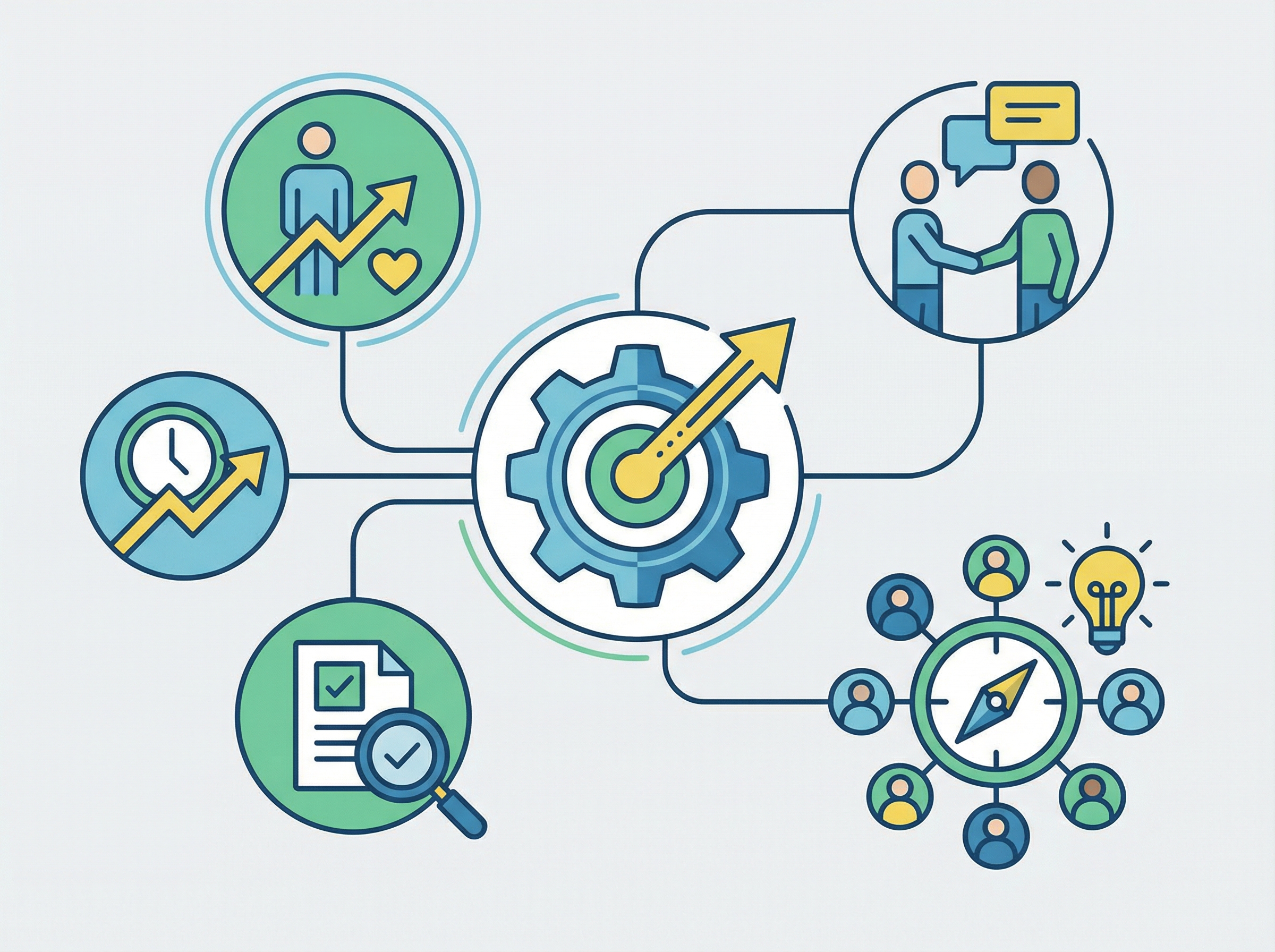
The Empowered Workflow: Decentralized Decision Making
Sarah decided to shift to an empowered model. She implemented a new rule: "If you can score it, you can move it."
She equipped her team with structured interview scorecards and automated workflow tools. Here is how the new process looked:
- Intake: The hiring manager and recruiter agreed on "Knockout Questions" and essential skills upfront.
- Screening: Recruiters used tools like Foundire to automate resume screening and conduct preliminary AI-assisted interviews.
- Decision: If a candidate met the scorecard threshold (e.g., a score of 4/5 on core skills), the recruiter had the authority to schedule the onsite interview immediately without asking for permission.
Measuring the Shift
The impact was immediate and measurable. By removing the "manager review" step between screening and interviewing, the team cut 7 days off their time-to-hire. Recruiters reported higher job satisfaction because they owned the outcome. The "pass-through rate" (candidates moving from screen to interview) stabilized because it was based on data, not a manager’s mood on a Tuesday morning.
Core Insights: 3 Heuristics for Safe Empowerment
Empowerment is not about abandonment. You don't just toss someone the keys and walk away. To work effectively, especially in high-stakes areas like hiring, you need a framework.
Heuristic 1: Guardrails over Gatekeepers
A gatekeeper stops progress to check credentials. A guardrail keeps things moving safely. In an empowered culture, you replace human gatekeepers with systemic guardrails. For example, instead of a manager reviewing every resume, set a guardrail: "Any candidate with these 3 certifications moves to the next round automatically." This maintains quality while boosting speed.
Heuristic 2: Information Accessibility
You cannot empower someone to make a decision if they don't have the full context. If a recruiter doesn't know the business goals for Q3, they can't prioritize the right candidates. Successful leaders practice "radical transparency," sharing salary bands, team objectives, and potential red flags openly so their team can navigate complex situations independently.
Heuristic 3: Psychological Safety
Empowerment means the risk of making a mistake increases. If a recruiter passes a candidate who bombs the final interview, how you react defines the culture. If you punish the error, empowerment dies. If you treat it as a calibration data point ("Why did the scorecard miss this?"), you build a learning machine.
Common Pitfalls and Misconceptions
- Fake Empowerment: Assigning responsibility ("You own this role") without authority ("But run the offer by me first"). This breeds resentment.
- Sink or Swim: confusing empowerment with lack of support. Junior employees still need coaching and structured workflows to succeed.
- The "Gut Feeling" Trap: allowing employees to make decisions based on intuition rather than data. Empowerment requires more structure (scorecards, rubrics), not less.
The Breakthrough Moment: Impact on the Bottom Line
For Sarah’s team, the breakthrough moment came during a hiring surge for a new engineering division. A Junior Recruiter, empowered with clear criteria and the right tech stack, managed to close a Senior Developer role entirely on her own—from sourcing to the verbal offer.
She used the automated workflow to validate skills, scheduled the panel interviews without waiting for Sarah’s approval, and drafted the offer letter based on pre-approved salary bands.
The Strategic Alignment:

- Time Saved: Sarah saved ~4 hours of involvement on that single hire.
- Cost Efficiency: The vacancy was filled 2 weeks faster than average, saving the company estimated lost productivity costs.
- Retention: That Junior Recruiter felt a massive sense of ownership and pride, cementing her loyalty to the team.
Career Advantage: Leveraging Empowerment for Growth
For recruiters and talent leaders, mastering employee empowerment is a career differentiator. It signals that you can scale operations and build high-performing teams.
Interview Q&A: Talking About Empowerment
Q: "How have you applied employee empowerment to improve outcomes?"
A: "I shifted our hiring model from a gatekeeper approach to a guardrails approach. By standardizing our interview scorecards and calibrating the team on 'what good looks like,' I empowered my recruiters to make pass/fail decisions independently. This streamlined our process, reduced time-to-fill by 40%, and allowed me to focus on strategic workforce planning rather than micromanaging screens."
Resume Boosters
Demonstrate your ability to build autonomous systems with bullets like these:
- Designed an empowered recruitment workflow that decentralized decision-making, reducing manager screen time by 60%.
- Implemented structured interview training, enabling junior staff to own full-cycle recruiting for entry-level roles.
- Operationalized 'guardrails' for hiring, resulting in a 25% increase in offer acceptance rates due to faster turnaround.
Pros & Cons of an Empowered Culture
| Benefit | Tradeoff |
|---|---|
| Speed & Agility: Decisions happen where the information is, dramatically reducing bottlenecks and time-to-hire. | Risk of Misalignment: Without clear calibration, different employees may apply different standards, leading to inconsistent quality. |
| Innovation & Engagement: Employees who own their work are more likely to suggest improvements and stay longer (retention). | Training Overhead: Requires significant upfront investment in training, scorecards, and tools to ensure "safe" autonomy. |
| Scalability: Leaders can focus on strategy rather than operations, allowing the organization to grow without adding management layers. | Loss of "Control": Managers must become comfortable with not knowing every detail, which can be psychologically difficult for some leaders. |
Frequently Asked Questions (FAQ)
What is employee empowerment in a hiring context?
In hiring, employee empowerment means giving recruiters and hiring teams the authority to make selection decisions (like passing a candidate to the next round or extending an offer) based on established criteria, without needing constant managerial sign-off. It relies on trust, data, and clear "guardrails" to function effectively.
Can employee empowerment backfire?
Yes, if implemented without structure. "Sink or swim" is not empowerment; it is negligence. If employees lack the training, context, or resources to make good decisions, they will make costly errors. This can damage confidence and lead to bad hires. Empowerment requires more initial guidance, not less.
How do you measure the success of empowerment initiatives?
Success is measured by operational metrics and sentiment. Look for a reduction in "Time-to-Fill" (speed), an increase in "Pass-through Rates" (efficiency), and improvements in employee engagement scores. If your team is making decisions faster and staying with the company longer, empowerment is working.
What tools support employee empowerment?
Tools that provide structure and data are essential. This includes Applicant Tracking Systems (ATS) for workflow visibility, structured interview platforms for calibration, and automated screening tools that give recruiters objective data to support their decisions.
Conclusion: The Durable Advantage of Trust
Mastering employee empowerment creates a durable hiring advantage that competitors cannot easily copy. It moves your organization from a fragile "command and control" structure to a resilient, agile network of decision-makers. The result is a team that moves faster, cares more, and produces better results.
Trust, when combined with the right structure, creates speed. If you want to operationalize employee empowerment with structured workflows—from sourcing and resume screening to AI interviews, scorecards, offers, and background checks—try tools like Foundire (https://foundire.com) to give your team the guardrails they need to succeed.