How to Design the Perfect Interview Loop

How to Design the Perfect Interview Loop
The Core of Interview Loop Design
Defining the Interview Loop
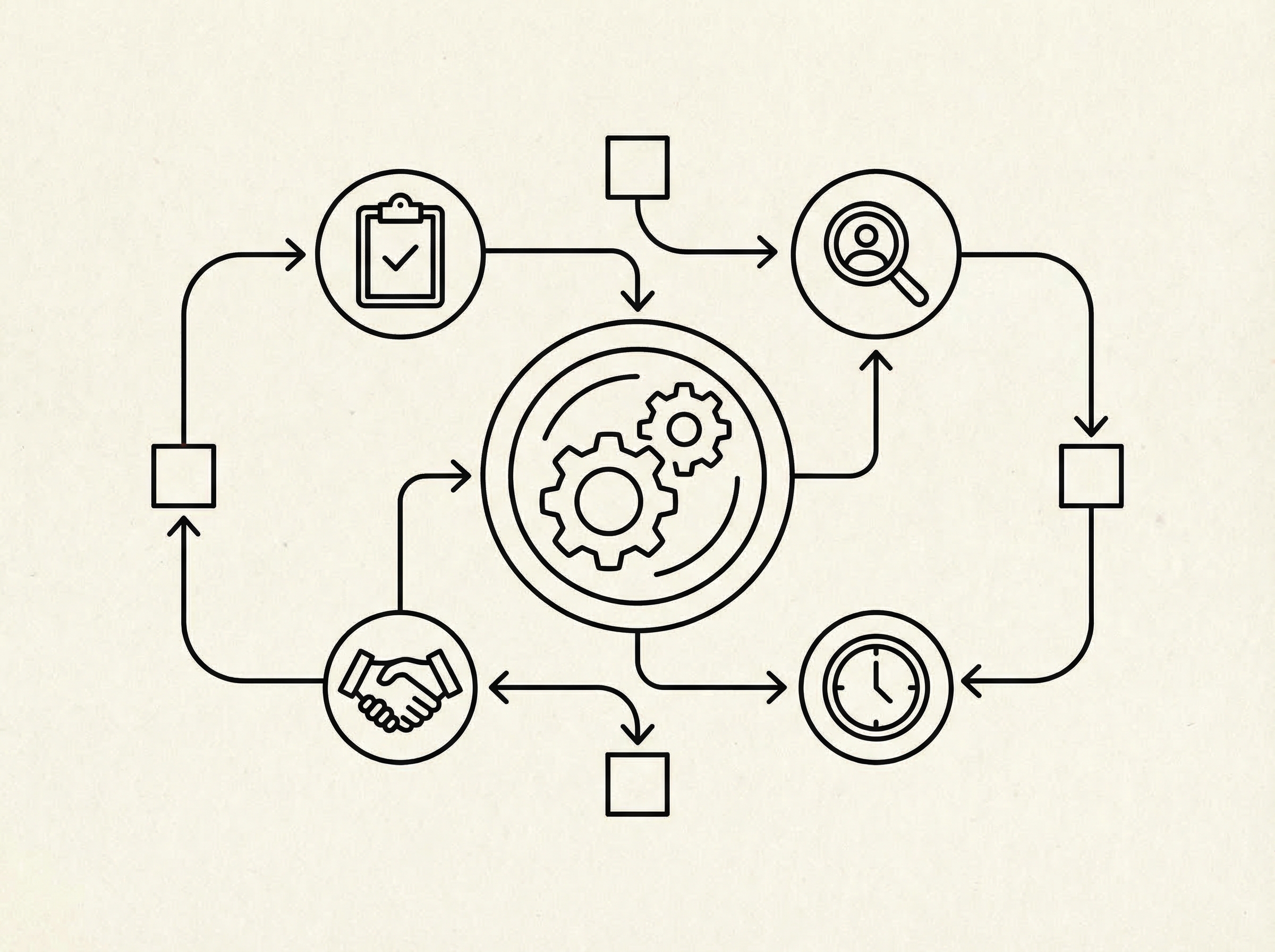
Interview loop design is the strategic, intentional architecture of a company's hiring process, mapping exactly how a candidate is evaluated from the initial recruiter screen to the final hiring manager decision. But what is it fundamentally? It is a structured blueprint that explicitly defines which core competencies are tested, who assesses them, and how feedback is standardized. Effective interview loop design matters deeply because it directly improves hiring speed, elevates the candidate experience, and drastically boosts decision quality. By replacing chaotic, redundant interviews with highly targeted evaluation sessions, talent acquisition teams can eliminate unconscious bias and accelerate the overall timeline from application to offer. Ultimately, a well-designed loop improves hiring results by ensuring every single conversation provides a unique, valuable signal rather than overlapping noise, creating a predictable, data-driven engine for talent evaluation that scales seamlessly.
A Real-World Hiring Scenario
Let’s look at a familiar, frustrating situation in modern talent acquisition. Meet Sarah, a Talent Lead at a fast-growing, mid-sized technology firm. Last year, Sarah was struggling with a chaotic, uncalibrated five-stage loop for her company's critical engineering and product marketing roles. Her standard process looked like this: an initial recruiter screen, followed by a hiring manager call, a demanding take-home assignment, an exhaustive panel presentation, and finally, an ambiguous "culture fit" interview with a company executive.
The result of this marathon? A staggering 57% candidate drop-off rate, largely because top-tier candidates simply abandoned the pipeline when the process dragged on unnecessarily. Furthermore, 63% of candidates felt ghosted during scheduling delays. Before optimizing her interview loop design, Sarah’s average time-to-hire hovered around a dismal 45 days. Interviewers were frequently asking candidates the exact same behavioral questions, while critical technical or strategic skills were entirely overlooked until the final round. Sarah realized that this inefficiency, miscommunication, and misalignment were causing wasted effort and losing elite talent to faster-moving competitors who had better hiring workflow automation.
The breakthrough moment happened when Sarah halted the chaos and implemented a strictly structured loop. By explicitly assigning competency focus areas, strictly capping the evaluation rounds, and mandating the use of interview scorecards, she transformed the entire hiring workflow. The impact was immediate and measurable: she reduced time-to-hire by 14 days, standardized the candidate evaluation process, and improved the pass-through rate to the offer stage by over 30%. Instead of dropping out due to fatigue, candidates actively praised the streamlined, respectful, and highly professional process, proving that operational rigor directly improves candidate sentiment.
Core Insights & Practical Takeaways
Heuristics for Structured Loops
Transforming your talent acquisition strategy requires far more than just sending calendar invites and hoping for the best. It requires adopting reliable, scalable heuristics that make structured interviews effective.
- Assign unique focus areas per interviewer: Never let two interviewers ask the exact same "tell me about a time you overcame a challenge" question. Map out a comprehensive grid where Interviewer A evaluates technical depth, Interviewer B assesses cross-functional collaboration, and Interviewer C focuses purely on execution and leadership capabilities. This guarantees 360-degree signal gathering without redundant candidate fatigue.
- Utilize standardized scorecards: Every single interviewer must evaluate candidates against a shared, pre-approved rubric with specific criteria. For example, a 1 to 5 rating scale should have explicit behavioral indicators for what constitutes a "5" versus a "3." This removes subjective interpretation, neutralizes bias, and creates objective data points for the final hiring decision.
- Cap loops at 4 rounds: Recent hiring trend data reveals a critical threshold: every extra interview round past four increases the probability of a candidate withdrawing by a massive 15%. Cap your loop at four high-impact rounds to protect the candidate experience, respect their time, and prevent costly drop-offs.
- Mandate post-interview calibration: Do not let candidate feedback languish in your ATS for days while the hiring manager forgets the details. Require all interviewers to submit their scorecards within 24 hours of the interview, followed by a mandatory 15-minute calibration meeting to discuss the objective data, explicitly forbidding "gut feelings" or vague assertions.
Common Pitfalls to Avoid
Even well-intentioned HR and recruiting teams can stumble significantly when rolling out a new interview loop design. You must actively avoid these three common pitfalls:
- Overlapping behavioral questions: When an interview loop lacks a designated competency map, candidates are forced to repeat their career history to five different people. This not only causes severe candidate fatigue but also yields shallow, repetitive evaluation data that fails to uncover their true capabilities.
- Skipping formal intake meetings: Rushing to open a requisition and source candidates without a highly structured intake meeting between the recruiter and the hiring manager guarantees a misaligned loop. The intake phase is exactly where you must agree on non-negotiable skills, salary bands, and how each attribute will be tested.
- Relying on gut-feel rather than structured data: When interviewers lack clear rubrics or skip scorecard submission, they inevitably fall back on affinity bias. This completely undermines diversity initiatives and leads to legally risky, inconsistent hiring practices.
To maintain absolute loop integrity, modern operational systems must work in perfect harmony. Today's most effective talent teams integrate their foundational ATS directly with a reliable resume screening tool and a sophisticated AI interview platform. These cutting-edge platforms handle the high-volume early funnel, ensuring that by the time a candidate enters the human-led interview loop, they are already highly qualified and verified. Advanced hiring workflow automation ensures that scorecards, offers, and background checks trigger seamlessly without manual recruiter intervention, preserving the speed and quality of the loop.
Career Impact & Weighing the Tradeoffs
Career Relevance for Recruiters
For recruiters, HR professionals, and talent leaders, mastering interview loop design is a profound career differentiator. It elevates you from a reactive administrative coordinator to a highly strategic talent advisor in the eyes of executive hiring managers. When you can confidently dictate the architecture of an interview process, push back on unnecessary rounds, and enforce scorecard compliance, you vividly prove your ability to drive operational excellence and influence critical business outcomes.
Q: “How have you applied interview loop design to improve outcomes at your current company?”
A: “I comprehensively standardized our engineering interview loop by mapping specific technical and behavioral competencies to four strictly defined rounds. I calibrated our hiring managers on using standardized interview scorecards, which drastically streamlined our feedback loops. Ultimately, this reduced our average time-to-fill by 18 days, improved candidate pass-through rates by 30%, and completely eliminated overlapping, redundant behavioral questions.”
If you want to actively highlight this specialized expertise on your professional resume or LinkedIn profile, use powerful, metrics-driven bullet examples like these:
- Standardized interview loop design across 5 distinct business departments, reducing average time-to-fill by 14 days and increasing overall offer acceptance by 22%.
- Streamlined holistic candidate evaluation by designing and implementing custom, competency-based interview scorecards directly into the enterprise ATS.
- Calibrated executive hiring panels through formal, data-driven intake processes, successfully reducing late-stage candidate drop-offs by 40%.
- Automated the transition from early-stage resume screening to structured interviews, improving recruiter capacity by over 15 hours per workweek.
- Redesigned technical evaluation workflows to cap interviews at 4 rounds, directly improving candidate satisfaction scores by 35%.
Pros & Cons of Structured Loops
Understanding the realistic tradeoffs of structured interview loop design ensures you can implement it effectively without being caught off guard by the initial organizational friction or pushback from hiring managers.
| Benefit | Tradeoff |
|---|---|
| Dramatically higher decision quality: Standardized rubrics and unique focus areas systematically eliminate bias, prevent groupthink, and provide comprehensive, actionable data on a candidate's actual capabilities. | High upfront time investment: Talent acquisition teams and hiring managers must spend hours collaboratively building competency maps, writing nuanced rubrics, and configuring the ATS before ever opening the role. |
| Reduced time-to-hire and candidate drop-off: Capping the evaluation process at 4 maximum rounds heavily accelerates the hiring timeline and protects the candidate experience against frustration and interview fatigue. | Rigid scheduling requirements: Coordinating highly specialized interviewers for specific, unskippable loop stages can create complex scheduling bottlenecks if not properly automated or supported by coordination tools. |
FAQs & Creating a Durable Advantage
Frequently Asked Questions
What is interview loop design?
Interview loop design is the structured planning of a candidate’s evaluation process. It dictates exactly how many interview rounds will occur, who conducts them, which specific skills or behaviors are tested in each round, and how feedback is systematically captured and scored to make objective hiring decisions.
Can interview loop design backfire?
Yes, interview loop design can backfire if the process is overly rigid, bureaucratic, or excessively long. Creating more than four interview rounds can spike candidate drop-off rates by up to 57%. It also fails if interviewers ignore their assigned topics or refuse to use standard scorecards.
How do AI interview platforms fit into loop design?
An AI interview platform typically fits at the very top of the structured loop, immediately following resume screening. It handles initial baseline skill assessments asynchronously, ensuring human interviewers spend their valuable time evaluating only highly qualified candidates in the later stages.
Why is post-interview calibration necessary?
Calibration meetings force interviewers to objectively justify their ratings using the specific behavioral data collected on their scorecards. This essential step prevents a single dominant voice from swaying the decision and ensures the final evaluation aligns directly with the predefined role requirements.
The Future of Hiring Workflows
Systematic, well-architected interview loop design is not just a fleeting HR trend; it is a durable, highly repeatable competitive advantage in modern talent acquisition. In a fast-paced market where top candidates frequently have multiple competing offers, an efficient, respectful, and highly structured hiring process stands out immensely. By fiercely eliminating redundancy, leveraging targeted evaluation data, and maintaining a strict, unyielding adherence to structured evaluations, your company can consistently secure the absolute best talent faster than the competition.
If you want to operationalize interview loop design with structured workflows (Sourcing → resume screening → AI interviews → scorecards → offers → background checks), try tools like Foundire (https://foundire.com).