How to Build an Interviewer Assignment Matrix

How to Build an Interviewer Assignment Matrix
The Core Problem: What is an Interviewer Assignment Matrix?
Defining the Search Intent & Core Value
If you are struggling with a slow hiring funnel, misaligned feedback, or candidates dropping out mid-process, you are likely searching for a structural fix. The most effective solution is an interviewer assignment matrix. Simply put, an interviewer assignment matrix is a structured grid mapping specific interviewers to designated competencies, questions, and interview stages. By assigning clear boundaries to each participant on a hiring panel, talent acquisition teams can completely eliminate redundant questions and dangerous evaluation blind spots.
Why does this matter now? Because in 2026, efficiency is everything. Recent reports highlight that 60% of companies saw their time-to-hire increase over the last year, with high-demand roles taking an average of 44 days to fill. Implementing a structured matrix directly reverses this trend. The primary outcome it improves is the holistic candidate experience, while simultaneously driving hiring speed, decision quality, and assessment consistency. Instead of asking candidates to repeat themselves, you construct a seamless hiring workflow automation that respects their time and yields highly actionable data for your team.
A Tale of Two Hiring Loops
To understand the urgency of this framework, consider Sarah, a Lead Recruiter at a fast-growing tech firm. After weeks of sourcing, she finally engaged a top-tier engineering candidate. The candidate breezed through the initial screening and was enthusiastic about the role. But then came the onsite loop. Sarah watched in dismay as the candidate dropped out of the process immediately after the final round.
The exit feedback was brutal but revealing: the candidate had faced three consecutive interviews, and in each one, the interviewer asked the exact same system architecture question. Because the interviewers had not coordinated their focus areas, they all leaned on their favorite default technical question. This created extreme inefficiency, glaring inconsistency in the overall evaluation, and entirely wasted effort. The candidate assumed the company was disorganized, and Sarah lost a key hire simply because the team lacked a structured plan.
Real-World Scenario: Transforming the Hiring Funnel
The Broken Process Before the Matrix
Let’s look at a concrete hiring scenario from intake to offer. Sarah and her Hiring Manager, Alex, were tasked with hiring three Senior Product Managers. Their existing workflow steps—intake, screening, interview, decision, and offer—were highly fragmented. Because there was no centralized plan, Alex’s panel of five interviewers entered each conversation blind.
The measurable baseline before utilizing a structured matrix was grim. Alex and Sarah were struggling with a bloated 45-day time-to-hire and a dismal 20% pass-through rate from the onsite stage to the offer stage. During the decision debriefs, the team realized they had mountains of notes on the candidates' product vision, but absolutely zero data on their cross-functional collaboration skills or their ability to execute. Because candidate scoring was entirely misaligned, Alex hesitated to pull the trigger on decisions, leaving candidates languishing in the pipeline until they accepted offers elsewhere.
The Breakthrough Moment
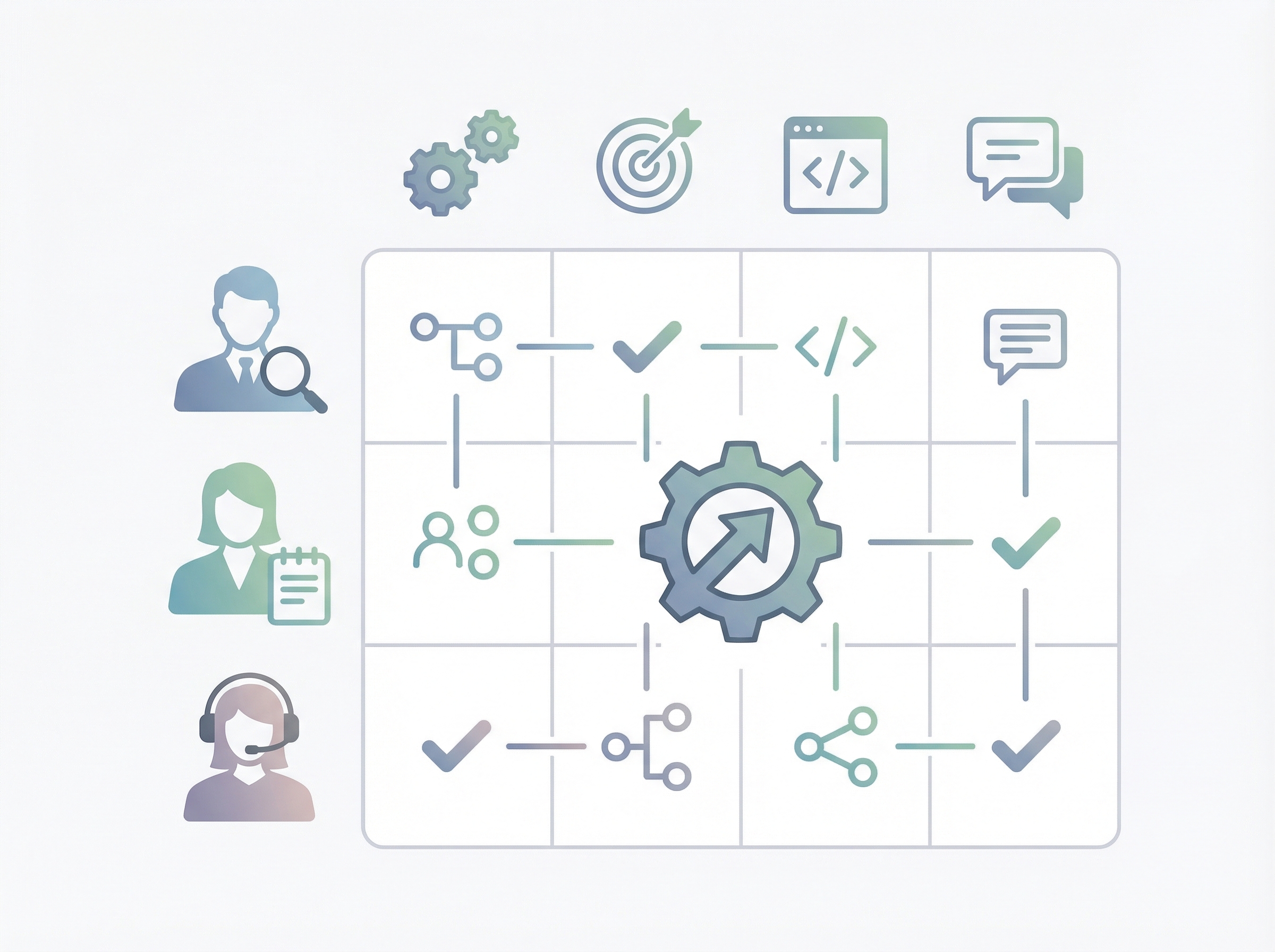
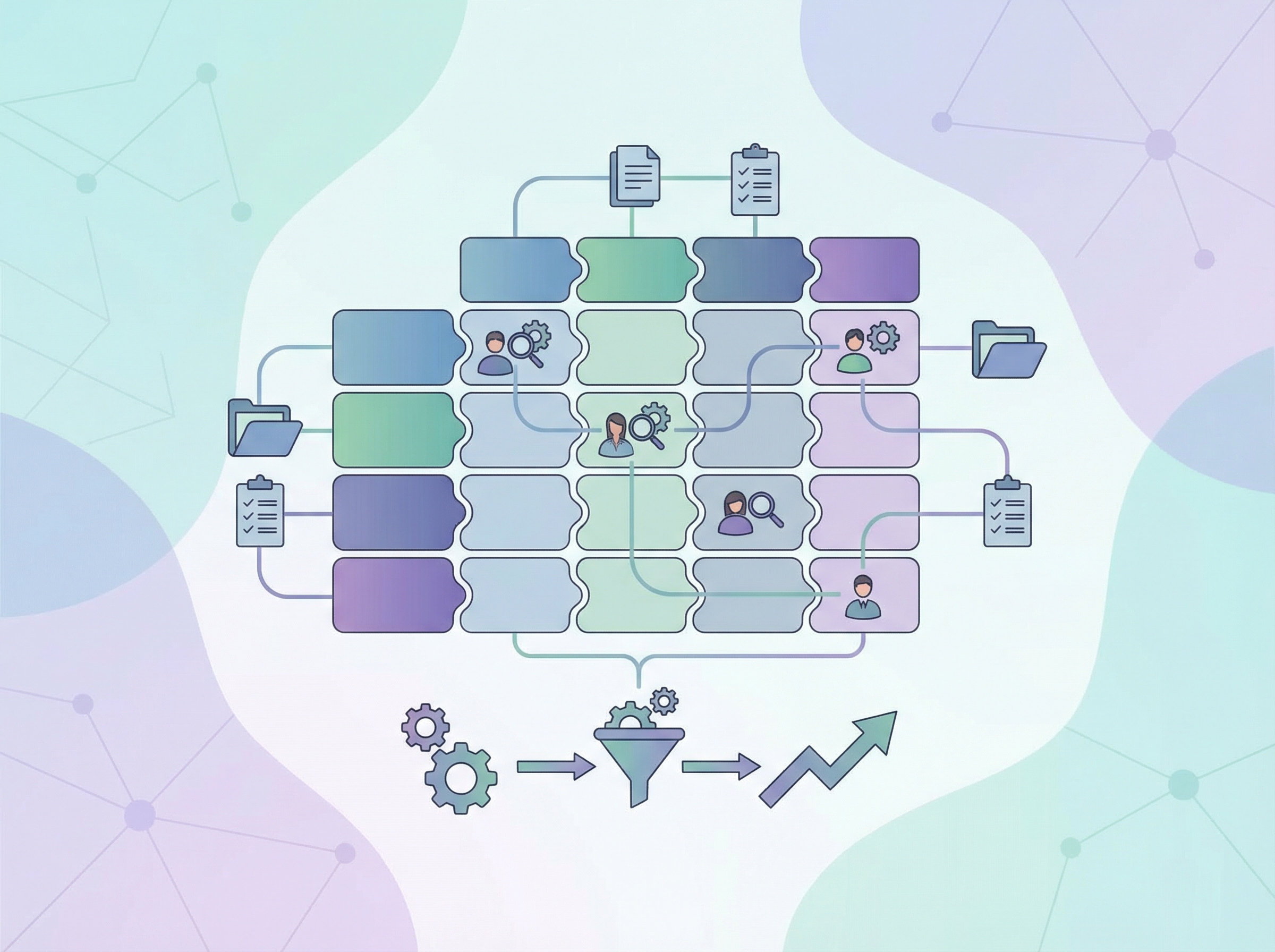
The turning point arrived when Sarah introduced a formal interviewer assignment matrix during the intake meeting. Instead of letting interviewers wing it, she mapped out the entire funnel. She ensured that each interviewer was strictly assigned to assess a unique pillar of the role. Interviewer A was assigned to "System Design and Architecture," Interviewer B was locked into "Cross-Functional Leadership," Interviewer C focused on "Product Execution and Metrics," and Interviewer D handled the "Culture Add" evaluation.
Applying this matrix fundamentally changed the outcome of their talent acquisition efforts. By integrating these unique pillars into their ATS, the before-and-after impact was staggering. The time-to-hire was reduced by 12 days, bringing them well below the industry average. Their pass-through rate skyrocketed because candidates experienced a logical, progressive conversation rather than a repetitive interrogation. Most importantly, the final decision debrief was fully calibrated. There were no missing competencies, no overlapping notes, and zero candidate drop-offs. The matrix transformed a chaotic free-for-all into a synchronized assessment machine.
Heuristics for a Perfect Matrix (& Pitfalls to Avoid)
Actionable Best Practices
Building a successful matrix requires more than just drawing a spreadsheet. It demands strategic hiring workflow automation. Here are the core heuristics to follow:
- Tie every assignment directly to a core role competency and ATS scorecard: Do not assign topics randomly. Look at the job description, extract the top five competencies, and build your matrix around them. Every assignment in the matrix must have a corresponding section in your interview scorecards within the ATS, making it impossible for interviewers to grade outside their lane.
- Balance technical assessments with behavioral panels: Interview fatigue is real. If you stack four technical interviews back-to-back, candidate performance will artificially degrade. Use your matrix to alternate heavy technical deep-dives with lighter behavioral or culture-focused sessions to maintain candidate energy.
- Build redundancy only where calibration is absolutely necessary: Sometimes, you want two people to assess "Leadership" to ensure an unbiased read. This is fine, but it must be intentional. If you overlap competencies, ensure the interviewers ask fundamentally different questions (e.g., one asks about strategic vision, the other about conflict resolution) to avoid wasting time.
- Train interviewers strictly on their assigned matrix focus: A matrix is useless if your panel ignores it. Conduct pre-briefs before the interview loop begins. Make it explicitly clear that interviewers are only authorized to evaluate their assigned competency. If an interviewer goes rogue and assesses a different skill, their feedback should be weighted less during the debrief.
Common Misconceptions and Pitfalls
Even well-intentioned HR teams can stumble when deploying this framework. Avoid these three common pitfalls:
- Overcomplicating the grid with too many overlapping criteria: A matrix should clarify, not confuse. If you ask one interviewer to assess six different competencies in a 45-minute window, you are setting them up for failure. Stick to one or two core pillars per 45-minute slot.
- Treating the matrix as a static document: The matrix should not be carved in stone. It needs to be updated post-intake and refined as the role evolves. If the first two candidates reveal that a specific technical skill is harder to find than expected, the matrix must be adjusted to probe that skill earlier in the funnel.
- Failing to integrate the matrix with modern technology: Your matrix shouldn't live in an isolated document. It must connect directly to your AI interview platform, your resume screening criteria, and eventually, your background checks. If your automated resume screening highlights a gap in a candidate's experience, the matrix should be dynamically updated to assign an interviewer to probe that exact gap.
Pros & Cons
| Benefit | Tradeoff |
|---|---|
| Measurable Alignment & Faster Decisions: Eliminates blind spots and redundant questions, reducing time-to-hire and leading to highly calibrated, data-backed hiring decisions. | Upfront Setup Time: Requires rigorous intake meetings and significant preparation from talent leaders to define competencies before a role goes live. |
| Enhanced Candidate Experience: Candidates experience a professional, structured interview loop that builds their confidence in your organization's operational maturity. | Strict Adherence Required: Interviewers must be disciplined; the system breaks down if panel members ignore their assigned topics and revert to their favorite unstructured questions. |
Career Advantage, FAQs, and Operationalizing Your Process
Elevating Your TA Career
For recruiters and talent leaders, mastering the interviewer assignment matrix is a massive career differentiator. In an era where 99% of talent acquisition teams are utilizing AI to some degree, the true differentiator is operational excellence. Talent professionals who implement structured interviews demonstrate strategic hiring oversight. They prove they can orchestrate complex hiring workflow automation rather than simply pushing resumes across a desk.
When interviewing for your next Talent Acquisition leadership role, you might encounter a question like this:
Q: "How have you applied an interviewer assignment matrix to improve outcomes?"
A: "I standardized the matrix across 5 departments, which streamlined our AI interviews and reduced redundant screening by 30%. By aligning our interview scorecards to the matrix, we calibrated our final decisions and successfully reduced time-to-fill by 15 days without compromising quality."
To highlight this competency on your own profile, consider these resume bullet examples demonstrating your impact:
- Calibrated hiring panels using structured assignment matrices to eliminate evaluation bias and redundancy.
- Streamlined ATS workflows by mapping distinct interviewer competencies to automated interview scorecards.
- Reduced time-to-fill by 15% through matrix-driven scorecards and tighter hiring manager alignment.
- Architected end-to-end recruitment pipelines, integrating resume screening and matrixed onsite panels to improve candidate pass-through rates.
Frequently Asked Questions
What is an interviewer assignment matrix?
It is a structured planning tool that assigns specific competencies, behavioral traits, and technical topics to individual interviewers on a hiring panel. It ensures that every critical requirement of a job description is evaluated without overlap, creating a comprehensive and calibrated candidate assessment.
Can an interviewer assignment matrix backfire?
Yes, if it becomes too rigid. If you overload a single interviewer with too many competencies, or if interviewers strictly ignore a candidate's red flags because "it wasn't in their assigned column," the matrix can fail. Proper training and post-interview debriefs are required to maintain flexibility while enforcing structure.
How does it improve resume screening?
An assignment matrix forces hiring managers to clearly define the role's required skills upfront during the intake phase. This exact list of competencies can then be fed back into your resume screening tools, ensuring recruiters and automated systems are only filtering for the traits that will actually be assessed during the onsite loop.
Closing & Next Steps
Ultimately, mastering the interviewer assignment matrix creates a durable hiring advantage. It shifts your recruitment strategy from a reactive, chaotic process to a predictable, data-driven engine. By defining who asks what—and ensuring every question links back to a core business need—you protect your candidates' time, empower your hiring managers, and secure top talent faster than the competition.
If you want to operationalize an interviewer assignment matrix with structured workflows (Sourcing → resume screening → AI interviews → scorecards → offers → background checks), try tools like Foundire (https://foundire.com).