How to Build a Standardized Hiring Process

How to Build a Standardized Hiring Process
Introduction: What is a Standardized Hiring Process?
A standardized hiring process is a structured, uniform workflow used to evaluate every candidate against the same set of criteria. Rather than relying on gut feeling or ad-hoc questions, this approach ensures consistency, reduces bias, and significantly improves the quality of hire. By operationalizing recruitment—from sourcing and resume screening to structured interviews and final offers—organizations create a fair ecosystem where talent is measured on merit, not chemistry.
Why does this matter now more than ever? In 2026, where time-to-hire averages over 42 days and the cost of a bad hire can exceed 30% of an employee’s annual salary, inconsistency is a luxury no company can afford. A standardized process provides the data needed to move fast without breaking things.
The Cost of Inconsistency: A Narrative Hook
Meet Jane. She’s a Senior Recruiter at a mid-sized tech firm, and she’s exhausted. Her hiring manager, Mark, just rejected a top-tier candidate because he "didn't get a good vibe," despite the candidate acing the technical assessment. Meanwhile, another candidate—who Mark loved because they went to the same university—struggled through the coding challenge but was pushed through to the final round.
Jane is drowning in a chaotic feedback loop. Without a standardized hiring process, she has no data to push back on Mark’s intuition. The result? Her time-to-fill is creeping up to 65 days, candidate drop-off is at an all-time high, and the team is burnt out from interviewing people who should have been screened out weeks ago.
Real-World Scenario: From Chaos to Calibration
To truly understand the power of standardization, let’s follow Jane and Mark’s journey as they transition from an intuition-led model to a data-driven recruitment engine.
The "Before" State: Intuition and Bottlenecks
In the old world, Jane would manually screen hundreds of resumes, passing the "best looking" ones to Mark. Mark would conduct unstructured interviews, asking different questions to every candidate. One candidate might spend 30 minutes discussing their dog, while another was grilled on system architecture.
The metrics were telling a grim story:
- Pass-through rate variability: Some weeks, 80% of candidates passed the first screen; other weeks, only 10%.
- Interview load: The engineering team was spending 40+ hours a week in interviews, many of which were repetitive or irrelevant.
- Bias: Hiring decisions correlated strongly with the interviewer's background rather than the candidate's skills.
The Workflow Transformation
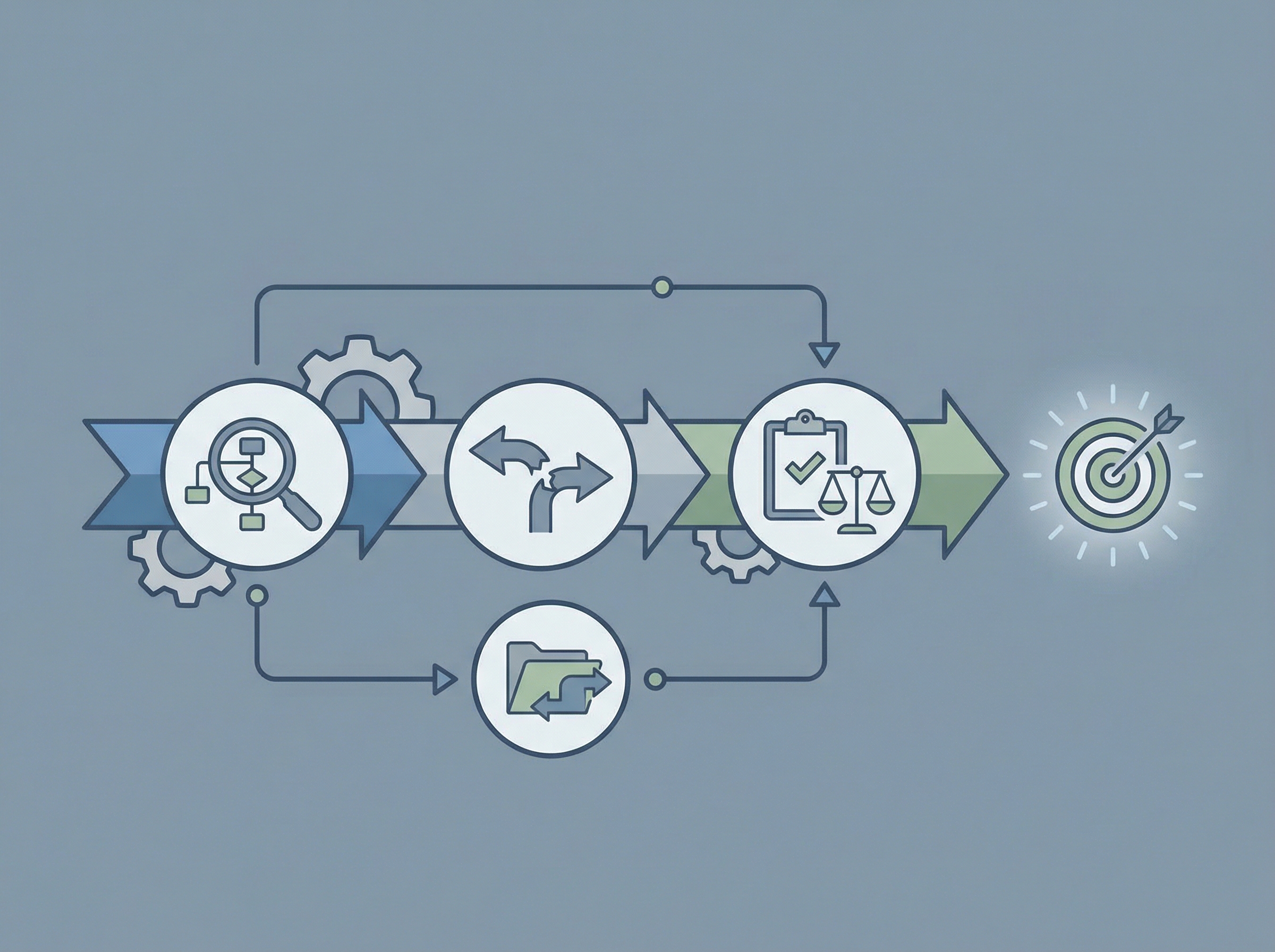
Jane decided to implement a standardized hiring process. She mapped out a new workflow designed to filter candidates objectively before they ever reached a human interviewer.
- Intake & Calibration: Jane and Mark sat down before the role went live. They defined the core competencies and assigned specific weightings to each skill.
- Automated Screening: Instead of manual resume reviews, Jane implemented Foundire, an AI interview and screening platform. This ensured every applicant was screened instantly against the required criteria, ranking them based on fit rather than keywords alone.
- Structured Interviews & Scorecards: Candidates who passed the AI screen moved to human interviews. Here, Mark was no longer allowed to "wing it." He was given a structured interview guide with pre-set questions and a scorecard rating system (1-5 scale) for specific competencies.
- Debrief & Decision: The team held a mandatory 15-minute calibration session where they compared scorecards, not "vibes."
Core Insights: Heuristics for Standardization
Building a machine like Jane’s requires adhering to a few unbreakable rules. Here are the heuristics that drive successful standardization.
3 Actionable Best Practices
1. Use Scorecards to Eliminate Halo Bias
Halo bias occurs when one positive trait (like a candidate being charismatic) overshadows major red flags. A standardized scorecard forces interviewers to rate specific attributes independently. If a candidate scores a 5/5 on communication but a 1/5 on technical aptitude, the scorecard reveals the gap that a "good conversation" might hide.
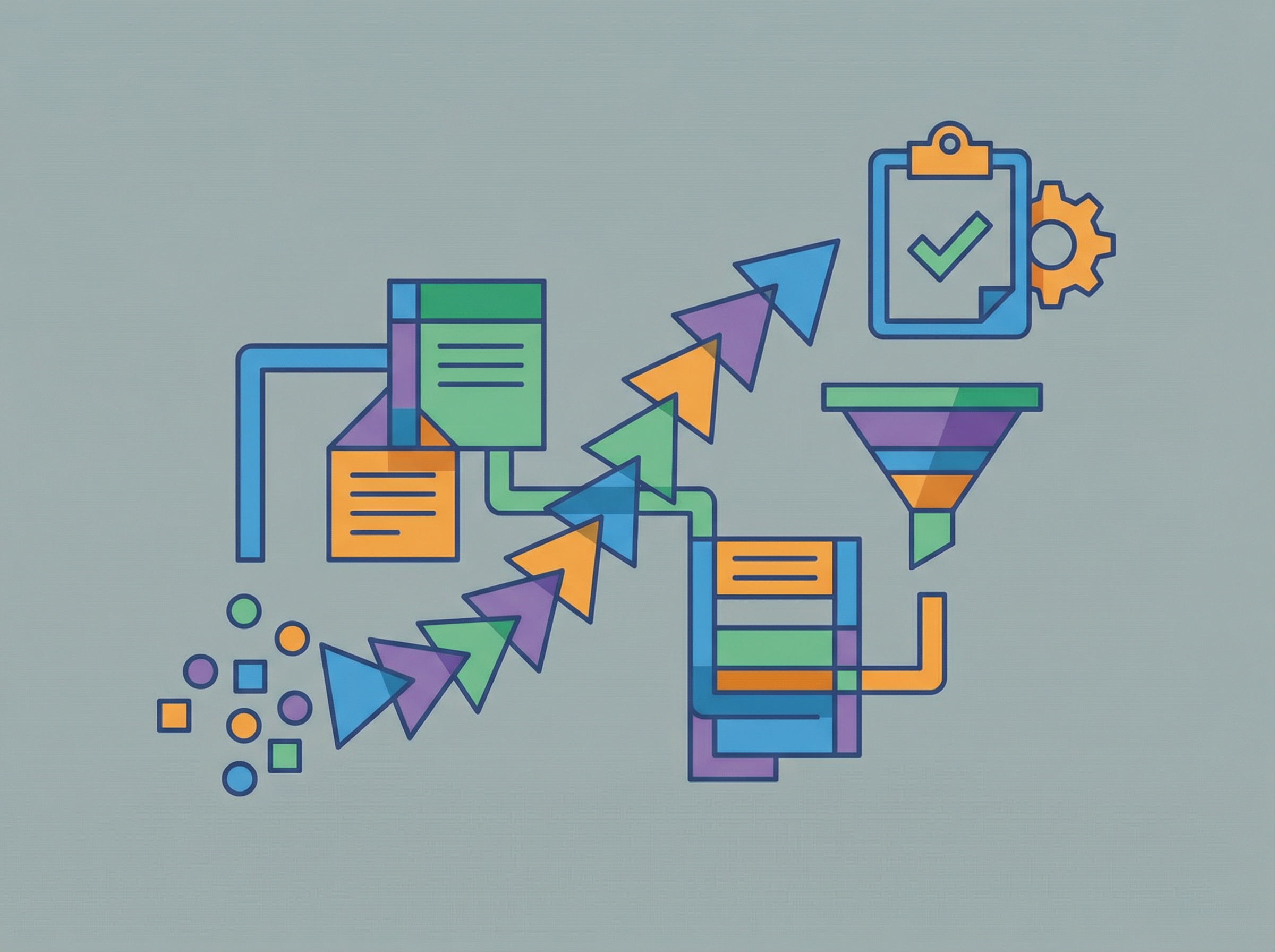
2. Automate the Top of the Funnel
Manual resume screening is the bottleneck of modern recruiting. By using tools like Foundire, you can automate the early stages of the hiring workflow. This doesn't just save time; it ensures every single applicant gets the same level of attention, removing the "fatigue bias" that happens when a recruiter reviews their 50th resume of the day.
3. Mandate Calibration Sessions
Make it a rule: no offer goes out without a calibration meeting. This isn't just a status update; it's a data review. If two interviewers scored the same candidate drastically differently (e.g., a 2 and a 5) on the same competency, that variance is a signal that your process—not the candidate—is broken. Calibrate immediately to realign on what "good" looks like.
Common Pitfalls to Avoid
- The "Robot" Fear: Don't let hiring managers claim that standardization "kills the human touch." Explain that structure frees them to connect with the candidate, as they don't have to scramble for the next question.
- Over-Engineering: A 20-page interview guide will be ignored. Keep scorecards to 4-5 core competencies per interview round.
- Ignoring the ATS: If your standardized data lives in spreadsheets outside your Applicant Tracking System (ATS), it’s useless. Ensure your scorecards and notes are logged centrally for legal defensibility and future analytics.
The Breakthrough Moment
For Jane and Mark, the turning point came three months into the new process. They were hiring for a Lead Developer—a role that historically took them 90 days to fill.
A candidate named Sarah applied. In the old process, Sarah’s non-traditional educational background might have caused her to be filtered out during a manual resume scan. However, the Foundire AI screening flagged her high match potential based on skills and project experience.
During the interview, Mark initially felt Sarah was "too quiet." But when he looked at his scorecard, he realized she had answered every technical scenario question perfectly. Another interviewer, utilizing the same structured framework, rated her highly on "architectural problem solving."
The "After" Metrics:
Because they relied on the standardized scorecards rather than Mark's initial reaction, they hired Sarah. She became a top performer within six months. The impact on the wider process was undeniable:
- Time-to-Hire: Dropped from 65 days to 41 days.
- Interview Hours: Engineering time spent on interviews decreased by 35% due to better upfront screening.
- Offer Acceptance: Increased to 88% because candidates appreciated the professional, organized process.
Career Relevance for Talent Leaders
Mastering the art of the standardized hiring process is a career accelerator. In a market obsessed with efficiency, being the recruiter who can build "hiring machines" makes you indispensable.
Q&A: Positioning Yourself as an Expert
Interviewer: "How have you applied a standardized hiring process to improve outcomes?"
You: "I moved my previous organization away from intuition-based hiring by implementing structured interview scorecards and automated intake workflows. By calibrating our criteria upfront and using platforms like Foundire to standardize screening, we reduced bias and cut our time-to-fill by 30% while increasing our quality-of-hire scores."
Resume Builders
- Designed and implemented a standardized hiring process that reduced time-to-fill by 3 weeks across engineering roles.
- increased pass-through rates by 25% by integrating AI-driven resume screening and structured interview guides.
- Achieved 100% adoption of competency-based scorecards, resulting in a 40% reduction in mis-hires.
Pros & Cons of Standardization
| Benefit | Tradeoff |
|---|---|
| Fairness & DE&I: Every candidate gets the same opportunity to prove their skills, drastically reducing unconscious bias. | Setup Time: Requires significant upfront effort to define competencies, build scorecards, and train hiring managers. |
| Scalability: A standardized process can handle 10 or 10,000 applicants without breaking, especially when aided by automation. | Perceived Rigidity: Some interviewers may feel restricted by scripts and scorecards until they see the results. |
| Legal Defensibility: Clear records of why a candidate was selected or rejected based on objective criteria protect the company. | Maintenance: Criteria must be regularly reviewed to ensure they don't become outdated as the market changes. |
Frequently Asked Questions
What is a standardized hiring process?
A standardized hiring process is a consistent recruitment workflow where every candidate undergoes the same screening methods, is asked the same core questions, and is evaluated using the same rating system (scorecards). It replaces "gut feeling" with objective data to ensure fairness and quality.
Can a standardized process backfire?
Yes, if it becomes too rigid or robotic. If interviewers sound like they are reading from a script without engaging the candidate, it can hurt the candidate experience. The goal is structured consistency, not robotic interrogation. Balance the structure with genuine human connection.
How do AI interview platforms fit into a standardized workflow?
AI platforms like Foundire act as the objective "first reviewer." They standardize the screening layer by evaluating candidates against set criteria 24/7, ensuring no one is missed due to human error or fatigue. They feed only the most qualified candidates into the structured human interview rounds.
What is the first step to standardizing a chaotic process?
Start with the intake meeting. Refuse to open a job requisition until you and the hiring manager have agreed on the 3-5 core competencies required and how they will be measured. Once you have the "rubric," the rest of the structure follows naturally.
Conclusion
Intuition is not a strategy. The most successful talent teams in 2026 are those that treat hiring as an operational science, not a guessing game. A standardized hiring process creates a durable advantage: it allows you to hire faster, fairer, and with greater confidence.
By defining your workflow—Sourcing → Screening → Structured Interviews → Offers—you remove the noise that leads to bad decisions. If you are ready to operationalize this ecosystem and stop drowning in resume chaos, try using tools like Foundire (https://foundire.com) to bring automation and consistency to your frontline screening. Standardization isn't just about control; it's about giving every candidate the chance to be seen clearly.