
How to Build a Role-Specific Question Bank

How to Build a Role-Specific Question Bank
Introduction: The Power of a Role-Specific Question Bank
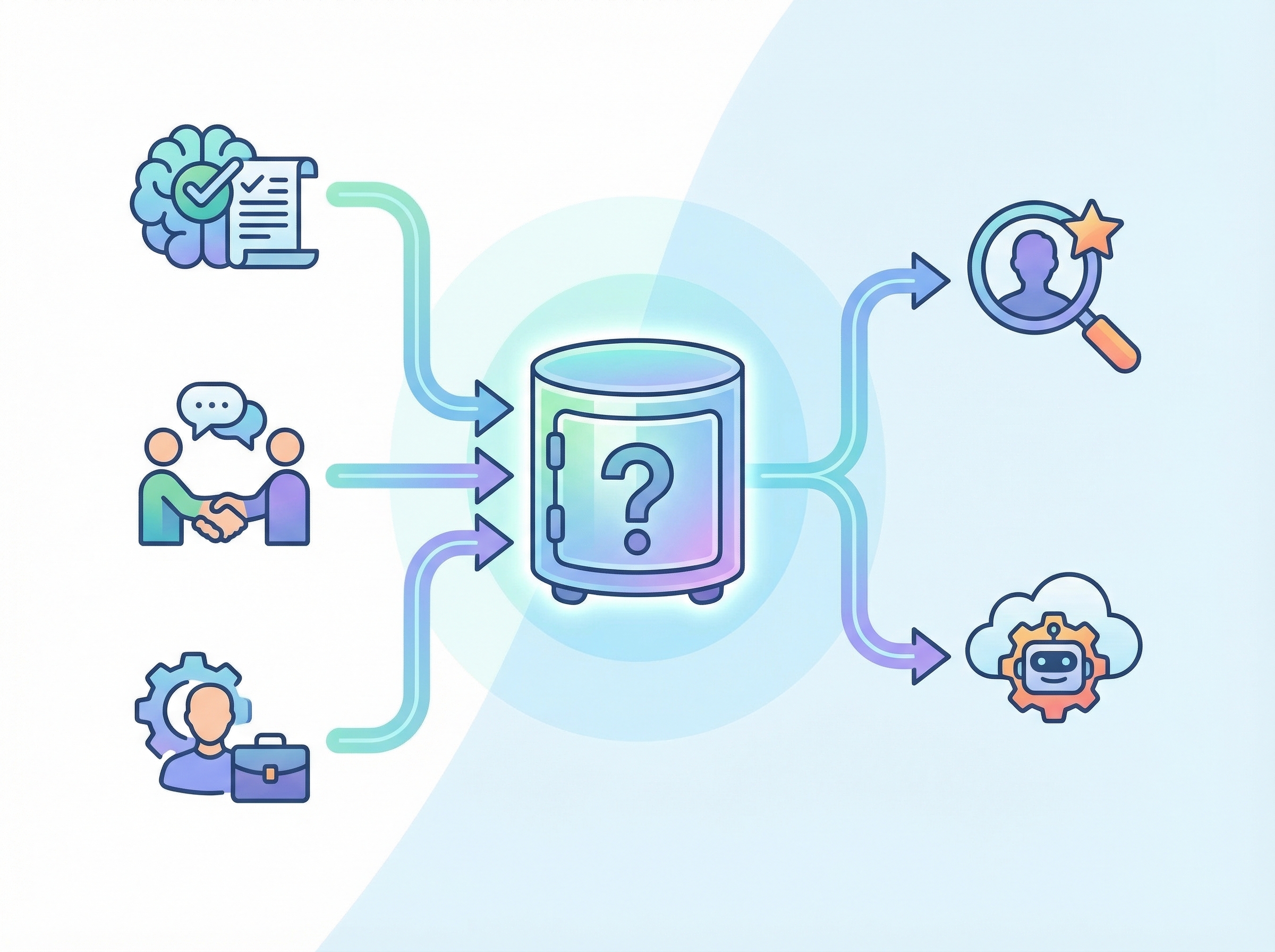
A role-specific question bank is a centralized repository of targeted, standardized interview questions tied directly to the unique competencies and daily realities of a specific job. In the fast-paced world of modern talent acquisition, relying on improvised conversations is no longer viable. Implementing a structured question repository directly improves hiring speed, elevates interview quality, guarantees consistency across panels, and provides a fairer, more transparent candidate experience. By ensuring that every applicant is evaluated against the exact same criteria, a role-specific question bank removes the guesswork from hiring and replaces it with data-driven decision-making. According to recent reports, structured interviews are up to twice as effective at predicting job performance compared to unstructured conversations.
Consider the cost of unstructured interviews. Meet Sarah, a Lead Recruiter at a rapidly scaling tech company. Earlier this year, she was drowning in a bloated, 68-day hiring cycle—a dangerous timeframe given that recent industry data shows average hiring journeys stretching to roughly 68.5 days, causing top talent to abandon the funnel. The primary bottleneck was a brilliant but chaotic engineering hiring manager who loved to improvise his interviews. One candidate would get a deep dive into backend system architecture, while the next would spend 45 minutes answering irrelevant brain-teasers about ping-pong balls.
The result was a nightmare for their hiring workflow automation. Feedback was wildly subjective, and the lack of standardization led to agonizing three-hour calibration meetings where no one could agree on who to hire. The team was wasting hours of operational effort, making biased assumptions, and ultimately losing out on premium talent who were frustrated by the disjointed process. Sarah knew she had to intervene before the hiring pipeline collapsed completely.
Best Practices, Pitfalls, and the Breakthrough
To fix this broken system, Sarah realized she couldn't just tell her hiring managers to "do better"—she needed to architect a systemic change. She collaborated with the engineering department to build a comprehensive role-specific question bank integrated directly into their ATS. But building an effective repository requires more than just brainstorming questions; it requires strategic alignment.
3 Actionable Heuristics for Structuring Questions
- Align questions to interview scorecards: Every question in your bank must map directly to a predetermined competency on your interview scorecards. If the scorecard assesses "cross-functional communication," the bank shouldn't feature a vague prompt like "Are you a team player?" Instead, it should ask: "Tell me about a time you had to push back on a product manager's timeline. How did you communicate the delay?" This ensures that every minute of the interview yields scorable data.
- Define explicit 'good' vs. 'bad' answer criteria: A question is only as useful as the rubric used to grade it. For every prompt in the bank, provide a brief guide for the interviewer. For example, a "good" answer might include specific metrics and demonstrate accountability, whereas a "bad" answer might rely on hypotheticals or blame other team members for failures.
- Regularly audit questions for relevance: The skills required for roles evolve rapidly. A role-specific question bank built in 2024 might be completely obsolete by 2026. Schedule bi-annual audits to ensure your questions still reflect the daily realities of the job, especially as emerging tools and AI platforms change the nature of technical and operational work.
Common Pitfalls to Avoid
Even with the best intentions, talent teams can stumble when rolling out a structured interview process. Here are three common pitfalls to avoid:
- Using generic brain-teasers: Questions like "How many windows are in New York City?" do not predict job performance. They only test a candidate's ability to indulge a stressful puzzle. Stick to behavioral and situational questions rooted in actual job functions.
- Ignoring candidate pass-through rates: If you notice that 90% of candidates are failing a specific technical question in your bank, the problem might not be the talent pool—it might be a poorly phrased or overly difficult question. Continuously monitor your funnel metrics and adjust questions that cause unnatural bottlenecks.
- Failing to train interviewers: A role-specific question bank is useless if hiring managers don't know how to use it. Many teams simply email a PDF of questions and assume the problem is solved. You must train interviewers on how to seamlessly integrate these questions into a natural conversation without sounding like a robot reading from a script.
The Turning Point in Sourcing & Screening
For Sarah, the breakthrough moment was undeniable. She rolled out the new structured role-specific question bank and enforced its use across all engineering panels. She synchronized this new structure with their existing operational systems, ensuring that sourcing, resume screening, and final background checks all aligned with the same core competencies defined in the question bank.
The impact was immediate and measurable. Because every interviewer pulled from the same validated list of questions and graded against the same rubrics, calibration meetings shrank from three exhaustive hours to a crisp 30 minutes. The chaotic hiring manager reported feeling significantly more prepared and less stressed before interviews. Most importantly, the data told a story of total transformation: their time-to-hire dropped by 30%, pass-through rates stabilized across the funnel, and hiring decisions aligned seamlessly without the friction of subjective bias. Sarah had turned a broken, highly subjective workflow into a predictable hiring machine.
Pros & Cons and Career Impact for Talent Leaders
Implementing structured interviews is a major operational shift. While the advantages are clear, it is important to understand the realities of adopting this methodology across an organization.
Benefits vs. Tradeoffs
| Benefit | Tradeoff |
|---|---|
| Measurably reduces bias: Standardizes the evaluation process, ensuring all candidates are judged purely on job-related competencies, which mitigates unconscious bias. | High upfront time investment: Building a comprehensive, calibrated question bank requires significant collaboration with hiring managers and subject matter experts before a role goes live. |
| Accelerates decision-making: Consistent data from structured interviews makes calibration meetings faster and more definitive. | Can feel rigid to some interviewers: Hiring managers accustomed to conversational, unstructured interviews may initially resist the required standardization. |
| Improves predictive validity: Job-specific questions are vastly superior at predicting a candidate's actual on-the-job performance compared to generalized behavioral questions. | Requires ongoing maintenance: The bank must be audited and updated regularly to remain relevant to the evolving scope of the role. |
Mastering Interview Design for Career Growth
For recruiters and talent leaders, mastering the creation and implementation of a role-specific question bank is a major career differentiator. The modern talent acquisition landscape demands professionals who are not just order-takers, but strategic talent advisors. When you can prove that you engineered a system to remove bias, reduce time-to-hire, and improve the quality of new hires, you elevate your profile from an administrative recruiter to a strategic business partner.
Q: "How have you applied a role-specific question bank to improve outcomes?"
A: "In my previous role, I partnered with engineering leadership to build a role-specific question bank tied to customized interview scorecards. I standardized our evaluation criteria and calibrated our grading rubrics. This streamlined the feedback loop, reduced our calibration meeting times by 25%, and improved our overall candidate pass-through rate by eliminating redundant and biased questioning."
If you are looking to highlight your expertise in structured interviewing on your resume, consider using concise, impact-driven bullet points that showcase your ability to operationalize these concepts. Here are a few examples to model:
- Standardized engineering interview workflows using a role-specific question bank, reducing calibration time by 25%.
- Partnered with cross-functional hiring managers to design 40+ customized interview scorecards, improving quality-of-hire metrics by 15% year-over-year.
- Streamlined the talent acquisition lifecycle by integrating structured interview questions into the ATS, resulting in a 30% decrease in overall time-to-hire.
- Calibrated evaluation rubrics to mitigate unconscious bias, leading to a more diverse and equitable hiring pipeline.
FAQs and Next Steps for Modern Hiring Teams
Frequently Asked Questions
What is a role-specific question bank?
A role-specific question bank is a centralized, standardized collection of interview questions designed explicitly for a particular job profile. It ensures every candidate is asked the same job-relevant questions, allowing hiring teams to evaluate candidates objectively based on predefined competencies rather than gut feeling.
Can a role-specific question bank backfire?
Yes, it can backfire if the questions are outdated, poorly calibrated, or if interviewers read them rigidly like a script. If hiring managers aren't trained to use the bank conversationally, it can create a cold, robotic candidate experience that damages your employer brand.
How often should a role-specific question bank be updated?
You should audit and update your question bank at least bi-annually, or whenever the core responsibilities and tools associated with the role change. Stale questions lead to misaligned hires and fail to evaluate modern skill sets.
How do you get hiring managers to adopt structured questions?
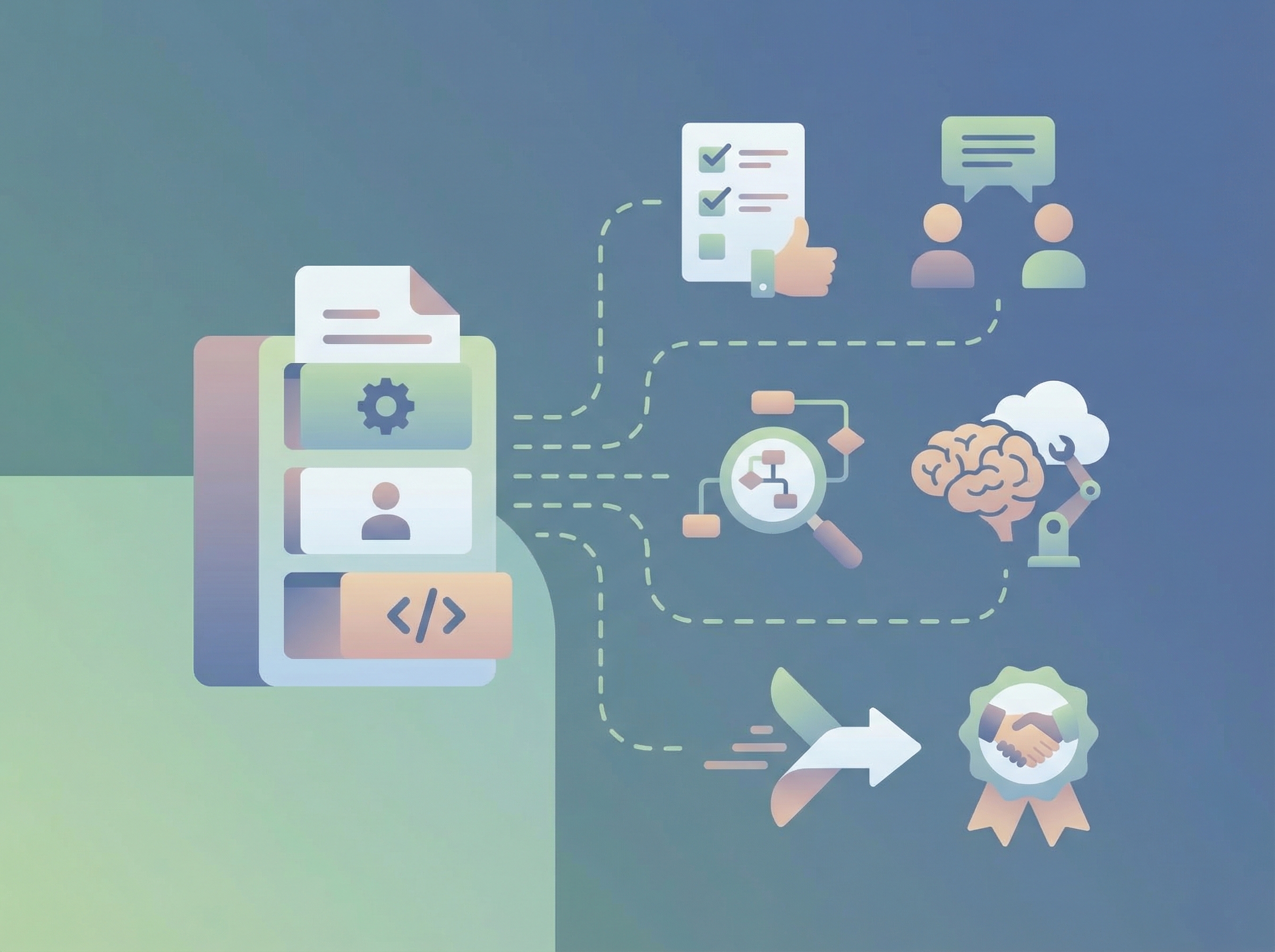
Involve them in the creation process. When hiring managers help define the required competencies and co-create the rubrics, they are much more likely to adopt the framework. Highlight how the system will ultimately save them time in interviews and calibration meetings.
Operationalizing Your Hiring Advantage
Transforming your recruitment process from subjective chaos into a structured, predictable engine requires commitment. However, as the data clearly shows, the benefits of standardizing your evaluations are undeniable. By defining core competencies, aligning your questions, and rigorously training your teams, you remove the friction that slows down growth. Mastering a role-specific question bank creates a durable hiring advantage, prevents costly candidate drop-off, and ensures you consistently secure the best talent in the market.
If you want to operationalize a role-specific question bank with structured workflows (Sourcing → resume screening → AI interview platform → scorecards → offers → background checks), try tools like Foundire (https://foundire.com).