How to Build a Modern Employee Handbook

How to Build a Modern Employee Handbook
Defining the Modern Employee Handbook
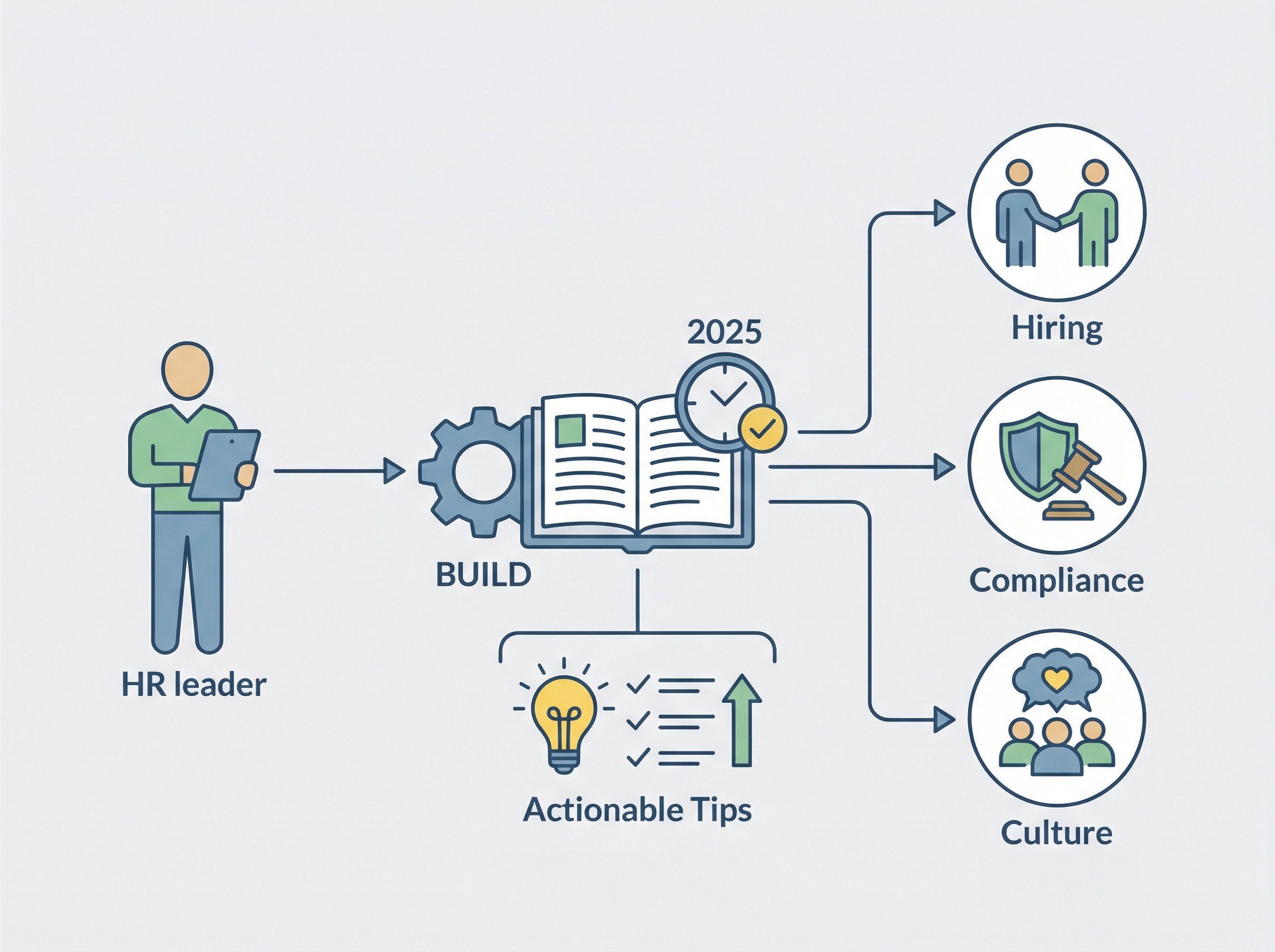
An employee handbook is the central operating system for your organization’s culture, policies, and expectations. It is not merely a legal shield or a dusty PDF stored in a forgotten folder; it is the single source of truth that aligns new hires, guides managers, and protects the company. When optimized, it accelerates time-to-productivity, ensures consistent decision-making, and reduces legal risk by clearly documenting everything from remote work eligibility to AI usage policies.
The Cost of Chaos: A Story Hook
Meet Alex, a Talent Leader at a mid-sized tech firm scaling rapidly. Alex’s team is excellent at sourcing and closing candidates, but the post-offer phase is a nightmare. New hires are bombarded with conflicting information: The hiring manager says remote work is "flexible," HR says it’s "hybrid with Tuesdays required," and the offer letter says nothing at all.
By day three, Alex is fielding slack messages from confused new employees asking how to expense their home office setup—a policy that exists only in the CEO’s head. This alignment gap isn't just annoying; it’s expensive. It wastes hours of recruiting time, erodes the candidate experience, and sets the stage for early attrition. Alex realizes that without a documented, accessible core system, the company isn't scaling—it's just swelling.
Scenario: The Handbook in the Hiring Workflow
To understand the true value of an employee handbook, we must look at it through the lens of the hiring workflow. It is not a document you hand over on Day One; it is a framework that influences every stage of the talent lifecycle.
From Offer Letter to Day One
Consider the journey of a candidate named Jordan. The recruitment process is seamless:
- Intake & Screening: Recruiters accurately describe the culture because they have a written reference for core values and benefits.
- Interview: Hiring managers use structured interview questions derived from the handbook’s competency framework.
- Offer: The offer letter references specific policies (like PTO and equity vesting) that are detailed in the handbook, creating legal clarity immediately.
- Onboarding: Instead of sitting through a four-hour PowerPoint, Jordan receives access to a searchable, digital handbook.
The Disconnect vs. The Solution
Without this system, the "Tribal Knowledge" problem takes over. Policies regarding generative AI tools, pay transparency, or "work from anywhere" weeks are applied inconsistently. One manager allows their team to use ChatGPT for coding; another forbids it strictly. One team takes unlimited PTO; another feels pressured to work holidays.
A modern employee handbook solves this by acting as the referee. It bridges the gap between what we say we do and what we actually do. It transforms vague verbal promises into enforceable, clear standards, directly impacting metrics like Time to Productivity and New Hire Retention.
Core Insights and Best Practices
Building a handbook that people actually read requires a shift in mindset. It must be user-centric, not just lawyer-centric.
3 Heuristics for Success
1. Culture First, Compliance Second
Your handbook is a branding document. If your company voice is casual and innovative, but your handbook reads like the terms of service for a credit card, you have a cultural disconnect. Write the introduction and cultural sections to inspire. Use "We" and "You" instead of "The Company" and "The Employee."
2. Make it a Living Document
The days of static PDFs are over. Modern handbooks should be web-based, searchable, and mobile-friendly. Tools like Notion, Confluence, or specialized HRIS modules allow you to update a policy once and have it reflect instantly for everyone. This is critical for keeping up with fast-moving trends like 2025’s evolving pay transparency laws or updated remote work compliance.
3. Operationalize the Content
Don't just state a rule; link to the action. If the handbook mentions a "Professional Development Stipend," include a direct link to the expense reporting tool or the form required to request it. If you discuss "referral bonuses," link to the submission portal in your ATS. This turns the handbook into a dashboard for getting things done.
Common Pitfalls to Avoid
- Over-Legislating: Avoid creating a policy for every single edge case. If one person wore flip-flops to a client meeting, you don't need a 10-page dress code. You need a conversation. Over-prescriptive rules kill autonomy.
- The "Forever" Trap: Failing to audit your handbook annually is dangerous. In 2025, if your handbook doesn't explicitly address AI usage policies (e.g., "Don't put proprietary code into public LLMs") or reproductive loss leave, you are legally exposed and operationally behind.
- Tone Deafness: Using harsh, disciplinary language ("Failure to comply will result in immediate termination") in the first few pages sets an adversarial tone. Save the necessary legal disclaimers for the appendix or specific compliance sections, and keep the main body collaborative.
The Breakthrough: Measuring Impact
Let’s return to Alex. After recognizing the chaos, Alex spearheaded a "Handbook 2.0" project. They audited existing policies, purged outdated rules, and migrated the content to a searchable intranet site. The results were measurable and immediate:
"By standardizing our policies, we reduced repetitive HR tickets by 40% within the first quarter. Managers stopped guessing, and new hires reported feeling 'fully integrated' two weeks faster than previous cohorts."
Beyond efficiency, the breakthrough was cultural. When a difficult situation arose—a harassment complaint—the clear, pre-established investigation protocol in the handbook ensured it was handled fairly and legally, protecting both the employee and the company. The handbook transformed from a chore into a strategic asset.

Career Relevance for Talent Leaders
For recruiters and HR professionals, mastering the employee handbook is a career differentiator. It demonstrates that you understand the infrastructure of an organization, not just the people processing.
Interview Q&A Strategy
Q: "How have you improved organizational consistency or culture?"
A: "I led the overhaul of our employee handbook, transforming it from a static legal document into a digital culture guide. This standardized our onboarding process, reduced policy-related inquiries by 30%, and ensured our remote work guidelines were compliant with multi-state labor laws. It aligned our managers on performance standards and created a single source of truth for the entire company."
Resume Power Bullets
- Revamped employee handbook for a 200+ person remote workforce, integrating new AI usage and data privacy policies to mitigate risk.
- Reduced HR ticket volume by 30% by creating a searchable, self-service policy portal, freeing up 15 hours of HR time weekly.
- Standardized onboarding protocols across 4 departments, resulting in a 20% improvement in 90-day new hire retention scores.
Pros and Cons of Detailed Handbooks
| Benefit | Tradeoff |
|---|---|
| Legal Protection: clearly defines at-will employment, anti-harassment protocols, and safety standards, which are critical defenses in litigation. | Maintenance Effort: Requires constant auditing to stay compliant with changing state and federal laws (e.g., PUMP Act, state sick leave updates). |
| Operational Efficiency: Reduces cognitive load for managers by providing pre-written answers to common questions about benefits and leave. | Rigidity Risk: If not written carefully, detailed policies can accidentally create "implied contracts" that limit leadership’s flexibility in unique situations. |
| Cultural Alignment: Sets a clear standard for behavior and values, helping to weed out bad fits early. | Alienation: If the tone is too bureaucratic or harsh, it can damage the psychological contract with new hires before they even start. |
Frequently Asked Questions
What is an employee handbook?
An employee handbook is a document provided by an employer that outlines the company's culture, core values, policies, and procedures. It serves as a guide for employees regarding expectations, benefits, and workplace conduct, while protecting the employer by documenting legal compliance.
Can an employee handbook backfire?
Yes. If a handbook contains rigid language like "fair treatment is guaranteed" or "progressive discipline will always be followed," it can create an implied contract that overrides "at-will" employment. This limits an employer's ability to terminate employees even for valid reasons.
How often should an employee handbook be updated?
At minimum, you should review your handbook annually. However, best practice is to update it whenever significant laws change (like new state-specific leave laws) or when internal policies shift (such as new remote work or AI guidelines).
Is an employee handbook mandatory by law?
While no single federal law explicitly mandates an "employee handbook," various federal and state laws require employers to notify employees of certain rights in writing (e.g., FMLA, sexual harassment policies, paid sick leave). A handbook is the most efficient way to consolidate these mandatory notifications.
Conclusion
Mastering the employee handbook creates a durable hiring advantage. It signals to candidates that your house is in order and gives your current team the clarity they need to perform. It is the blueprint for the house you are building with your talent.
If you want to operationalize your handbook by integrating it into structured workflows—from sourcing and resume screening to AI interviews, scorecards, and offers—try tools like Foundire (https://foundire.com).