How to Build a Decision-Ready Scorecard

How to Build a Decision-Ready Scorecard: The Blueprint for Evidence-Based Hiring
In the high-stakes world of talent acquisition, the difference between a bad hire and a top performer often comes down to the quality of the data gathered during the interview. Yet, many teams still rely on "gut feelings" rather than structured evidence.
The Hidden Cost of Vague Feedback
A decision-ready scorecard is a structured evaluation tool that compels interviewers to rate candidates based on specific, pre-defined behavioral indicators and competencies rather than subjective impressions. By mapping candidate responses to a standardized rating scale (often 1–4 or 1–5), it transforms qualitative conversations into quantitative data, enabling hiring teams to make objective, apples-to-apples comparisons between applicants.
Why does this matter? Because the traditional "thumbs up, thumbs down" approach to feedback is a silent killer of hiring velocity and quality. When interview feedback is unstructured, debriefs turn into debates about personality rather than performance. A decision-ready scorecard shifts the conversation from "Do I like them?" to "Can they do the job?"—improving hiring speed, reducing unconscious bias, and ensuring consistency across the entire talent lifecycle.
The "Nice Guy" Trap: Imagine a scenario where a hiring team spends three weeks debating a candidate. The feedback is glowing but vague: "Great culture fit," "Good energy," and "Seems smart." When pressed for evidence of the candidate's technical project management skills, the room goes silent. The team realizes they have fallen in love with the candidate's personality but have zero data on their competence. This is the exact inefficiency a decision-ready scorecard eliminates.
Scenario: The Chaos of Unstructured Interviews
To understand the power of a decision-ready scorecard, we have to look at the chaos that precedes it. Let’s look at a realistic scenario involving Sarah, a VP of Engineering, and Mike, a Senior Tech Recruiter, at a mid-sized SaaS company.
The Setup: A Disjointed Process
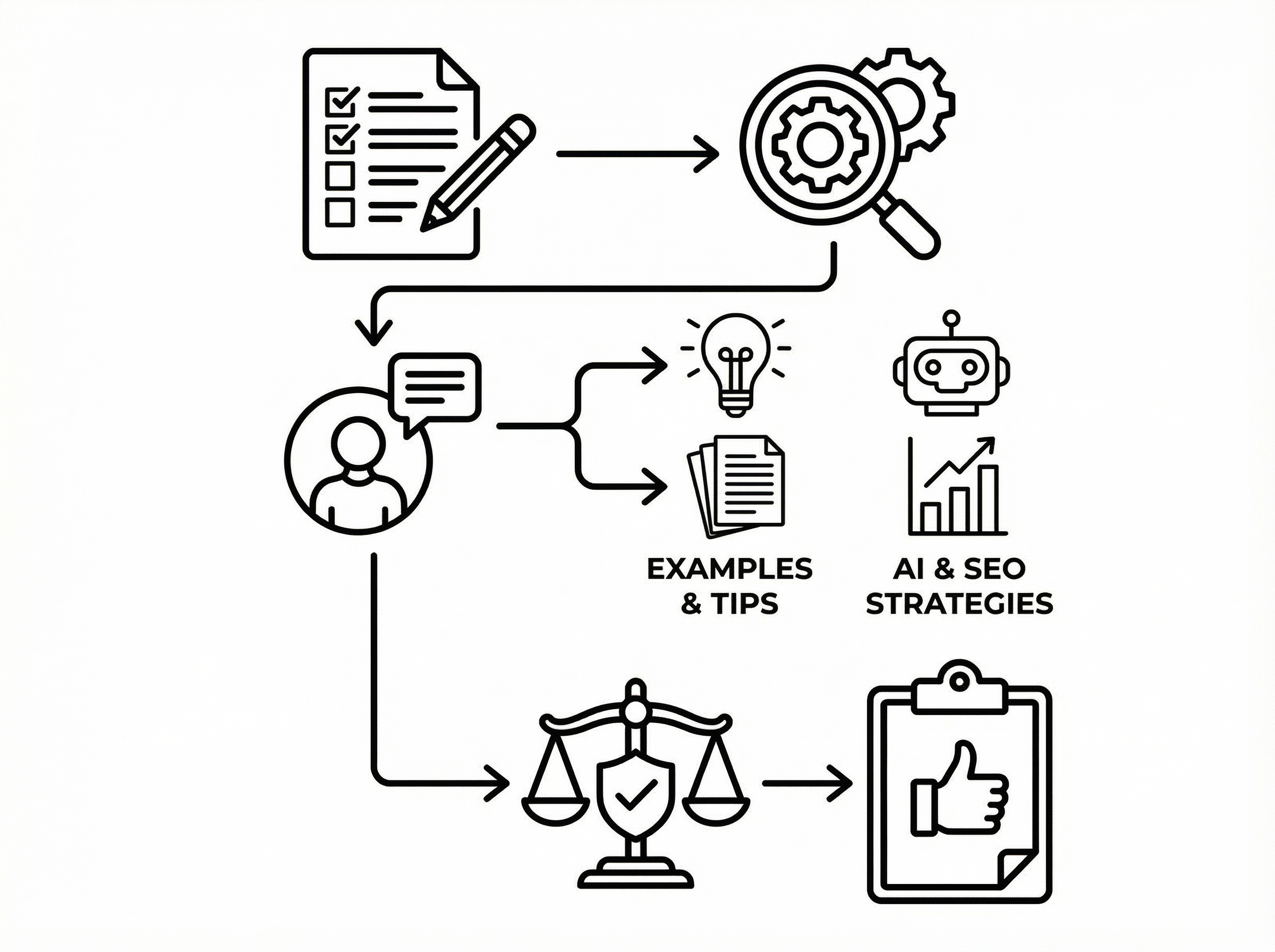
Sarah needs to hire a Senior DevOps Engineer. The market is tight, and speed is essential. Mike sources five strong candidates and moves them into the interview pipeline. The workflow looks standard on paper: Intake → Resume Screening → Technical Interview → Culture Interview → Offer.
However, the execution is flawed. Sarah tells her interview panel, "Just make sure they know Kubernetes and fit our vibe." She doesn't assign specific focus areas. As a result, three different interviewers ask the candidate, "Tell me about a time you failed," while no one digs deep into the candidate’s experience with cloud security protocols.
The Bottleneck Breakdown
By the time the team gathers for the debrief on "Candidate A," the friction is palpable.
- Interviewer 1 says, "I gave them a 'Strong Yes' because they went to the same university as our CTO, so they must be good." (Bias: The Halo Effect)
- Interviewer 2 says, "I gave a 'No' because they seemed nervous and didn't make much eye contact." (Bias: Non-verbal bias irrelevant to coding).
- Interviewer 3 says, "I didn't have time to get to the technical questions, but they seem like a fast learner."
The result is a deadlock. The team has spent 10 collective hours interviewing but lacks the decision-ready data to move forward. The metrics reflect this pain: The "Time to Decision" after an onsite interview drags out to 5 business days. During this delay, Candidate A accepts an offer from a competitor who moved faster. This cycle repeats, inflating the Cost per Hire and frustrating everyone involved.
Core Insights: Constructing the Scorecard
To fix the broken process experienced by Sarah and Mike, you must move beyond simple job descriptions and build a mechanism for data capture. Here are the core heuristics for building a scorecard that actually drives decisions.
Heuristic 1: Define Behavioral Anchors, Not Just Traits
A common mistake is listing a trait like "Communication" with a 1–5 scale. This is useless because "good communication" means different things to different people. instead, use behavioral anchors.
- Rating 1 (Negative): Candidate rambles, does not answer the specific question asked, uses passive voice to hide lack of ownership.
- Rating 3 (Competent): Candidate answers clearly, provides context, and structures their answer using the STAR method (Situation, Task, Action, Result).
- Rating 5 (Exceptional): Candidate anticipates follow-up questions, tailors communication style to the audience (technical vs. non-technical), and synthesizes complex ideas into simple takeaways.
Heuristic 2: Assign "Swim Lanes" to Interviewers
To avoid the "Tell me about yourself" repetition loop, the scorecard must dictate who covers what.
Interviewer A (Manager): Focuses on "Strategic Thinking" and "Team Leadership."
Interviewer B (Peer): Focuses on "Technical Execution" and "Code Quality."
Interviewer C (Cross-functional): Focuses on "Stakeholder Management" and "Adaptability."
This ensures 100% coverage of the necessary competencies and respects the candidate’s time.
Heuristic 3: No Number Without a Note (The "Evidence Rule")
A decision-ready scorecard must enforce a rule: You cannot select a rating without providing evidence. If an interviewer selects a "4" for "Problem Solving," they must write down exactly what the candidate said that justified that score. This prevents "gut feeling" ratings and forces the interviewer to recall the data of the interview.
Common Pitfalls to Avoid
- The "Kitchen Sink" Scorecard: Trying to measure 15 different traits in a 45-minute interview. Stick to 4–6 core competencies per interview session.
- Vague Cultural Definitions: Using "Culture Fit" as a scorecard category. This is often a proxy for bias. Instead, use "Values Alignment" defined by specific behaviors (e.g., "Demonstrates curiosity by asking questions about our roadmap").
- Ignoring the "No Hire" Signal: If a scorecard reveals a candidate scored a "1" on a non-negotiable skill (like integrity or core technical ability), the process should stop immediately. Don't try to balance a "1" with a "5" elsewhere.
The Breakthrough: From Chaos to Clarity
Let’s return to Sarah and Mike. After losing Candidate A, Mike decides to implement a decision-ready scorecard for the next round. He sits down with Sarah and defines five specific competencies required for the role, creates behavioral anchors for each, and assigns specific questions to the interview panel.
The "Aha!" Moment
They interview "Candidate B." During the debrief, the tone is completely different.
Instead of "I liked him," Interviewer 1 opens their laptop and reads from the scorecard: "I rated Candidate B a '4' on System Architecture. When I asked about scaling databases, he specifically cited his experience sharding PostgreSQL at his last job, referencing the 30% reduction in query time."
Interviewer 2 adds, "I rated him a '2' on Cross-functional Collaboration. He struggled to give an example of a time he compromised with a product manager, insisting his technical way was the only right way."
The Aftermath
Because the data was structured: 1. Speed: The debrief meeting lasted 15 minutes instead of 60. 2. Clarity: The team realized Candidate B was a technical wizard but a cultural risk. They decided to pass based on evidence, not vibes. 3. Metrics: Over the next quarter, the "Pass-through Rate" from Onsite to Offer stabilized, and the team’s "Quality of Hire" scores (measured by 90-day retention and performance) increased by 20%.
Career Advantage for Talent Leaders
For recruiters and talent acquisition leaders, mastering the art of the scorecard is a significant career differentiator. It moves you from being viewed as a "scheduler" to a "strategic talent advisor."
Interview Q&A Strategy
If you are interviewing for a Head of Talent or Lead Recruiter role, you can leverage this concept to demonstrate your operational maturity.
Interviewer: "How do you improve Quality of Hire?"
You: "I move hiring managers away from gut-based hiring by implementing decision-ready scorecards. In my last role, I standardized the evaluation criteria, which reduced our interview debrief times by 50% and ensured every hiring decision was backed by documented evidence of competency, rather than just likability. This also significantly reduced bias in our process."
Resume Boosters
When updating your resume or LinkedIn profile, use strong action verbs related to structured hiring:
- "Designed and implemented decision-ready scorecards for Engineering and Sales departments, reducing false-positive hires by 15%."
- "Operationalized a structured interview framework, training 40+ hiring managers on evidence-based rating scales."
- "Partnered with leadership to define core competencies, aligning the hiring workflow (Screening → AI interviews → Scorecards) to business objectives."
Pros & Cons of Structured Scoring
| Benefit | Tradeoff |
|---|---|
| Reduces Bias & Legal Risk: Focusing on job-related evidence minimizes the influence of unconscious bias (gender, race, affinity) and provides a paper trail for hiring decisions. | Upfront Investment: It takes time to write good questions and rubrics. Hiring managers used to "winging it" may initially resist the structure. |
| Faster Consensus: Debriefs become data reviews rather than arguments, significantly shortening the feedback loop. | Perceived Rigidity: Some interviewers feel a strict scorecard kills the "natural flow" of conversation (though skilled interviewers can balance both). |
| Predictive Accuracy: Structured interviews are statistically proven to be better predictors of job performance than unstructured chats. | Maintenance Required: Scorecards must be updated as the role evolves; using an old scorecard for a changed role leads to misalignment. |
Frequently Asked Questions
What is a decision-ready scorecard?
A decision-ready scorecard is a hiring tool that lists the specific skills, traits, and qualifications required for a job, alongside a rating scale (1-5) and behavioral indicators. It forces interviewers to provide evidence-based feedback, ensuring hiring decisions are objective and data-driven rather than based on gut feelings.
Can structured scorecards backfire?
Yes, if they are too complex. If a scorecard asks for 20 ratings, interviewers will suffer from cognitive fatigue and default to "3s" (middle-of-the-road ratings) just to finish it. Keep scorecards focused on 4-6 critical competencies to ensure high-quality data.
How does a scorecard differ from a job description?
A job description is an external marketing document telling candidates what the job is. A scorecard is an internal alignment document telling interviewers what to measure. The job description defines the "what"; the scorecard defines the "how we measure it."
How do I automate scorecards?
Most modern Applicant Tracking Systems (ATS) allow you to digitize scorecards so interviewers can submit feedback via mobile or desktop immediately after the interview. Advanced tools can even transcribe interviews and use AI to suggest ratings based on your defined competencies.
Conclusion
Mastering the decision-ready scorecard is not just about paperwork; it is about operational excellence. It creates a durable hiring advantage by ensuring that every person who joins your company is there because they have the proven ability to succeed, not just because they "interviewed well."
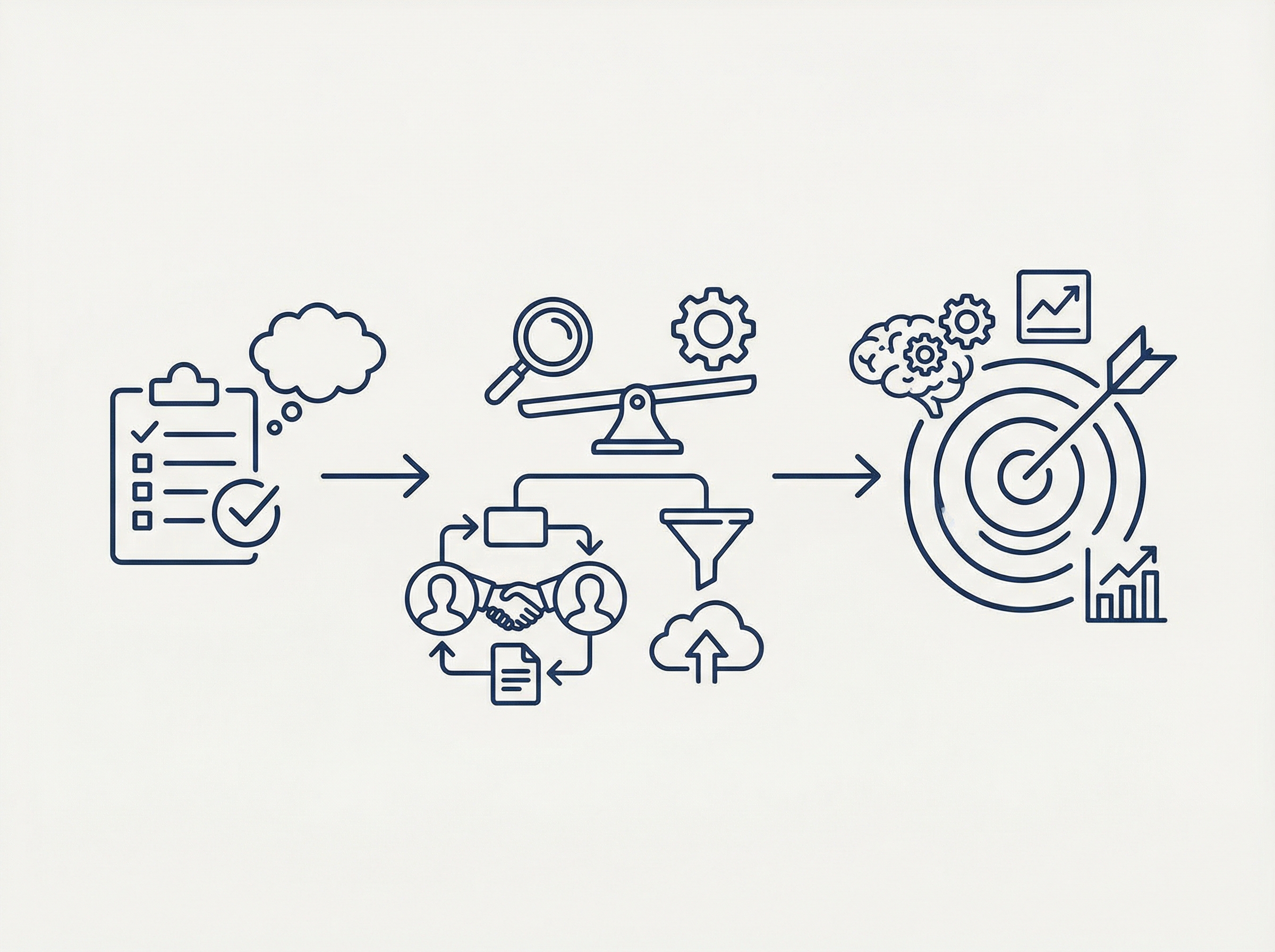
When you align the entire workflow—from sourcing to resume screening, to AI-assisted interviews, and finally to the scorecard debrief—you create a machine that consistently outputs high-quality talent.
If you want to operationalize this level of precision with structured workflows (Sourcing → resume screening → AI interviews → scorecards → offers → background checks), try tools like Foundire (https://foundire.com).