How to Align Resume Screening & Interviews

How to Align Resume Screening & Interviews
Resume screening + structured interviews is the practice of creating a single, cohesive evaluation funnel where the criteria used to select candidates from resumes directly inform the questions asked in interviews. Instead of treating screening and interviewing as isolated steps—one for filtering keywords and one for assessing culture—this approach aligns them to improve hiring speed, consistency, and candidate experience. When aligned correctly, this workflow prevents "false positives" from clogging calendars and ensures every interview validates specific signals spotted during the screen.
Imagine a hiring process where every question asked in an interview has a direct lineage to a claim made on a resume. That is the power of alignment. Yet, for many teams, the reality is a disjointed mess: recruiters screen for keywords, while hiring managers interview for "gut feel." The result? A leaky funnel where great resumes often lead to terrible interviews.
Real-World Scenario: The 'False Positive' Trap
The Setup: High Volume, Low Clarity
Let’s look at a scenario common in modern recruiting. Meet Sarah, a Senior Tech Recruiter at a mid-sized fintech company. She just opened a requisition for a Senior Backend Engineer. Within 48 hours, the Applicant Tracking System (ATS) is flooded with 400+ applications. Under pressure to "fill the pipe," Sarah spends an average of 17 seconds per resume (a common industry standard), scanning for keywords like "Python," "AWS," and "Microservices."
She passes 15 candidates to the hiring manager, Mark. On paper, they look perfect. They have the years of experience, the right past employers, and the buzzwords.
The Conflict: The Interview Disconnect
Mark begins interviewing. By the third candidate, he’s frustrated. "Sarah," he messages, "Candidate #3 didn't know the basics of API design, even though his resume lists 'Senior Architect' at a FAANG company."
This is the classic False Positive Trap. Sarah screened for presence of data (keywords), but Mark interviewed for competency (skills). Because their criteria weren't linked, the process broke down.
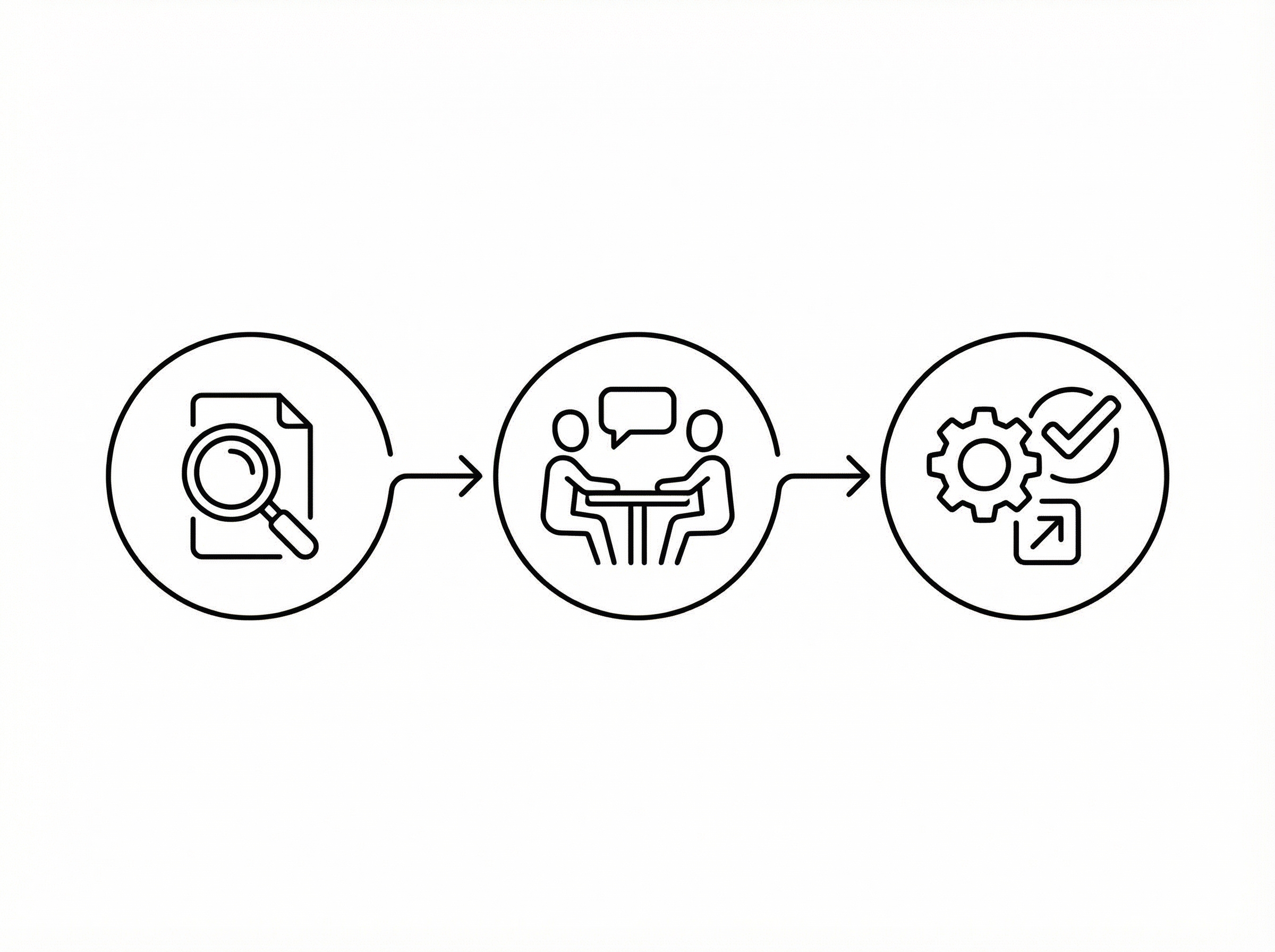
- The Cost: Mark spent 3 hours interviewing unqualified candidates.
- The Metric: The "Pass-Through Rate" from Screen to Interview was high (good for Sarah), but the Interview-to-Offer ratio was nearly zero (bad for the business).
- The Impact: According to the U.S. Department of Labor, the cost of a bad hire can reach up to 30% of the employee's first-year earnings—but the cost of wasted interview time is the silent killer of team velocity.
Core Insights: Bridging the Gap
To fix this broken chain, you must move from ad-hoc filtering to a Unified Evaluation Framework. Here are three actionable heuristics to align your resume screening and structured interviews.
1. Map Resume Signals to Interview Competencies
Don't just look for "Project Management" on a resume. Instead, define what that signal means for the interview. Create a mapping document before you screen a single candidate:
- Resume Signal: "Led a team of 5 developers."
- Screening Check: Verify dates and title progression.
- Interview Question: "Tell me about a time you had to resolve a conflict between two engineers on your team. What was the outcome?"
This creates a "Golden Thread" that runs through the entire process. If a candidate is advanced because of a specific claim, the interview exists to validate that specific claim.
2. Automate the "First Pass" with Purpose
Modern AI tools are essential for handling volume, but they must be calibrated to your scorecard, not just keywords. Tools like Foundire or advanced ATS plugins can be set to look for semantic matches rather than exact keyword matches. Use automation to flag "likely matches" based on the same criteria your hiring managers use in their scorecards. This ensures that the robot and the human are grading on the same curve.
3. The "Calibration Call" Heuristic
Most teams do an "Intake Call" when opening a role. Upgrade this to a Calibration Call. Review the first 10 rejections and the first 5 approvals together.
Ask: "I rejected this resume because they lacked experience scaling systems. Mark, would you have interviewed them?"
If Mark says "Yes, I would have dug into their side projects," your screening criteria are misaligned. Adjust immediately.
Common Pitfalls to Avoid
- The "Gut Feel" Override: Allowing hiring managers to ignore the scorecard because they "liked" a candidate's university or hobby. This reintroduces bias.
- Over-Indexing on Pedigree: Assuming a candidate from a top-tier company automatically passes the screen. This is the leading cause of false positives.
- Ignoring Soft Skills in Screening: Failing to look for evidence of communication (e.g., clear resume formatting, concise summaries) which are often deal-breakers in the interview.
The Breakthrough: A Standardized Funnel
The Turning Point
Let's go back to Sarah. She implements a Unified Scorecard. Now, when she screens a resume, she isn't just checking a box; she is filling out the first column of the interview scorecard. She rates "Technical Depth" based on the resume evidence (e.g., GitHub links, patent listings). When Mark opens the candidate's profile for the interview, he sees Sarah's preliminary rating and the specific evidence she cited.
Measurable Outcomes
The impact of this shift is often dramatic and measurable:
- Interview-to-Offer Ratio: Improves from 10:1 to 4:1. Mark only talks to people who are highly likely to pass.
- Time-to-Fill: Decreases by 20% because calendar time isn't wasted on bad matches.
- Candidate Experience: Candidates stop hearing "Tell me about yourself" five times. Instead, interviews feel tailored: "I saw you led the migration to Azure; tell me about the biggest challenge you faced there."
Career Relevance for Talent Leaders
Mastering the alignment of resume screening and structured interviews is a career accelerator. It moves you from an "administrative recruiter" to a "talent advisor."
How to Sell This in an Interview
Q: "How do you handle high-volume hiring without sacrificing quality?"
A: "I don't just screen resumes; I build a unified evaluation funnel. By aligning the screening rubric directly with the interview scorecard, I ensure that every candidate I pass has already demonstrated evidence of the core competencies you need. In my last role, this reduced our false-positive interview rate by 40%."
Resume Bullets for Your Own Profile
- Designed and implemented a unified scorecard system, linking resume screening criteria to structured interview questions, reducing hiring manager interview hours by 15 hours/week.
- Improved quality-of-hire by operationalizing a "Golden Thread" assessment strategy, ensuring 95% of candidates passing the screen met baseline technical requirements.
- Partnered with engineering leadership to calibrate AI screening tools against competency frameworks, resulting in a 30% increase in diverse candidate pass-through.
Pros & Cons of Structured Alignment
| Benefit | Tradeoff |
|---|---|
| Reduced Bias: Decisions are based on pre-defined criteria rather than pedigree or affinity, improving diversity and legal defensibility. | High Upfront Effort: Requires significant time to build rubrics, scorecards, and align with hiring managers before the role opens. |
| Predictable Outcomes: Data shows that structured processes are far better at predicting job performance (validity) than unstructured ones. | Perceived Rigidity: Some hiring managers may feel "constrained" by the structure and miss the "informal chat" vibe. |
| Efficiency at Scale: Once built, the system allows for rapid decision-making and easier delegation to junior recruiters or AI tools. | Maintenance: Scorecards must be updated dynamically as the role evolves or market conditions change. |
Frequently Asked Questions
What is resume screening + structured interviews?
It is the strategic alignment of the recruitment funnel where resume screening criteria act as the initial data points for a standardized interview scorecard. This ensures that the skills identified during screening are rigorously validated using consistent questions during the interview, reducing bias and improving hiring precision.
Can structured interviewing automation backfire?
Yes, if not monitored. Automated screening can accidentally filter out non-traditional candidates who possess the right skills but lack specific keywords. It requires "explainable AI" settings and regular human calibration to ensure the tool isn't rejecting qualified talent due to formatting or semantic nuances.
How do I create a scorecard that works for both screening and interviewing?
Identify 4-6 core competencies for the role. For the "Screening" column, list evidence visible on documents (e.g., "5+ years Java," "Certifications"). For the "Interview" column, list behavioral or situational questions that verify that evidence (e.g., "Describe a complex Java bug you solved").
What are the main benefits of using scorecards in hiring?
Scorecards provide objective data for decision-making, reduce the influence of unconscious bias (like the halo effect), and create a legal record of why a candidate was selected or rejected. They also allow for data-driven optimization of the hiring process over time.
⸻The Bottom Line: The gap between the resume screen and the interview is where most hiring failures happen. By treating them as two halves of the same whole—connected by a unified scorecard—you create a durable hiring advantage that is faster, fairer, and more effective.
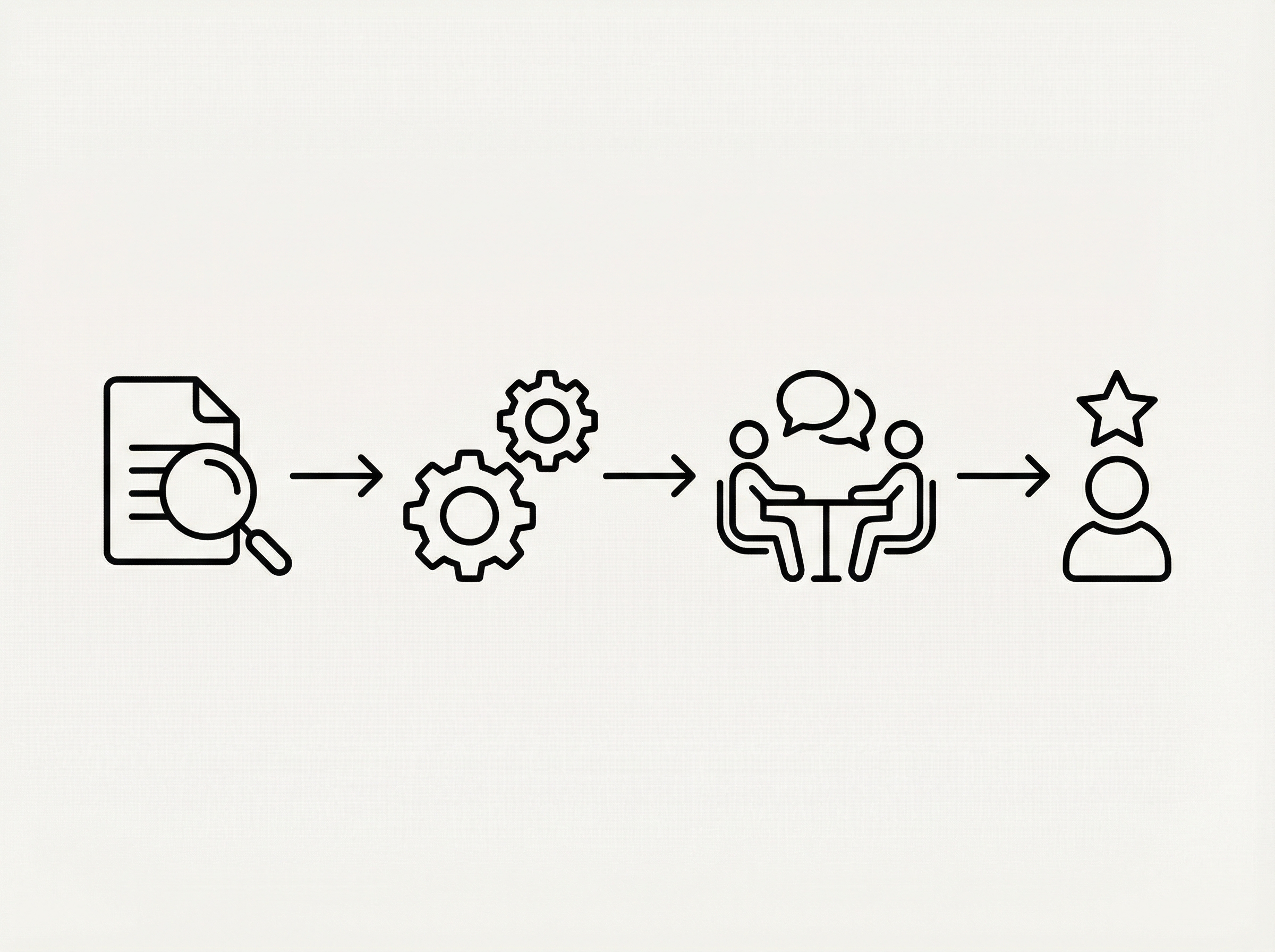
If you want to operationalize resume screening + structured interviews with structured workflows (Sourcing → resume screening → AI interviews → scorecards → offers → background checks), try tools like Foundire (https://foundire.com).