How Job Enrichment Boosts Retention

How Job Enrichment Boosts Retention: The Hidden Cure for Turnover
What is job enrichment? It is the strategic redesign of a role to increase the depth of responsibility, autonomy, and meaning an employee experiences—distinct from simply adding more work. In an era where 60% of CEOs list retention as their top priority for 2025, job enrichment has emerged as a critical lever for keeping top talent engaged.
For hiring managers and HR leaders, the stakes are high. High turnover isn't just an inconvenience; it’s a financial hemorrhage, costing organizations 1.5x to 2x an employee’s annual salary. But the solution isn't always a pay raise. Often, it's about transforming a job from a repetitive checklist into a career-defining role.
Key Takeaway: Job enrichment isn't about "doing more things" (job enlargement); it's about "doing more meaningful things" (vertical expansion). It turns employees from task-doers into decision-makers.
Consider the story of "Alex," a Senior Recruiter who was ready to quit—not because of the pay, but because of the process.
The 'Stagnant Recruiter' Dilemma: A Real-World Scenario
Alex is a high-performing recruiter at a mid-sized tech firm. On paper, everything looks fine. The salary is competitive, and the benefits are standard. But after two years, Alex is burning out. Why?
The "Before" Workflow (The Cog in the Machine):
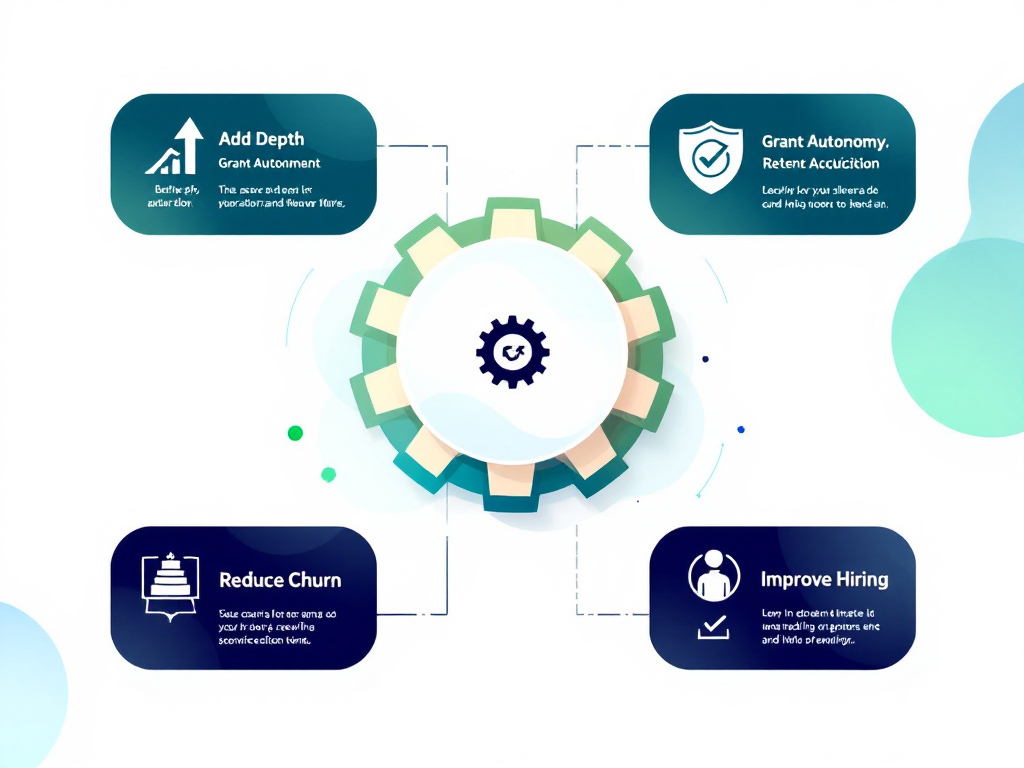
- Micro-Tasking: Alex spends 30 hours a week screening resumes based on rigid keywords provided by hiring managers.
- No Authority: Even when Alex spots a "wildcard" candidate with high potential, they must seek approval to schedule an initial screen.
- Disconnected Outcomes: Once a candidate is handed off to the hiring manager, Alex never hears about them again until an offer is made or rejected. There is no feedback loop.
- The Metric: Success is measured solely by "Time to Fill."
The result? Alex feels like a robotic gatekeeper. The pass-through rate (candidates moving from screen to interview) is dropping because Alex lacks the context to sell the role effectively. The internal Net Promoter Score (eNPS) for the talent team is at an all-time low.
This is the classic "job enlargement" trap: Alex is often asked to "do more"—screen more resumes, manage more requisitions—but the work itself remains shallow and reactive. Alex starts replying to LinkedIn messages from headhunters.
Core Insights: 5 Strategies to Operationalize Enrichment
To save Alex (and the thousands of employees like them), we must apply the Hackman & Oldham Job Characteristics Model. This 1970s framework is seeing a massive resurgence in 2024-2025 as remote work forces companies to redesign how work gets done.
Here are five actionable heuristics to operationalize job enrichment:
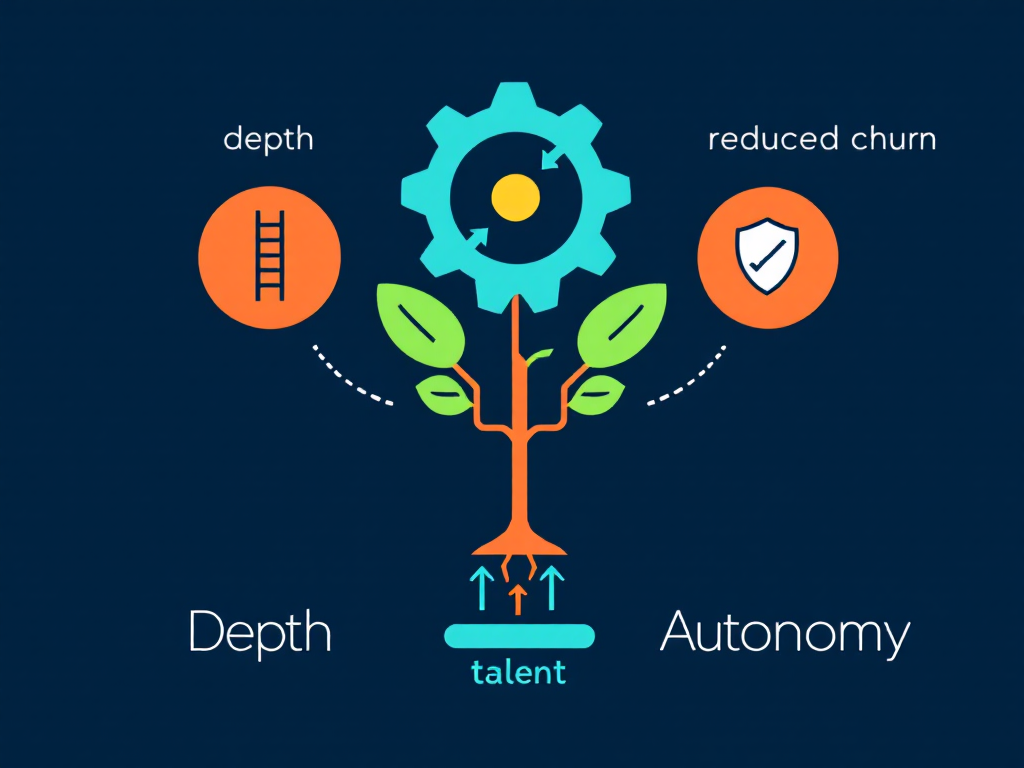
1. Vertical Loading (The "Decision-Maker" Heuristic)
Stop delegating tasks; start delegating authority. Instead of just screening resumes, Alex is given ownership of the "Engineering Hiring Strategy." This means Alex now helps draft the job description, advises the hiring manager on market trends, and has the final say on which candidates make the shortlist.
2. Establish "Task Identity"
Humans crave completion. We want to see a project from start to finish. In an enriched role, Alex doesn't just hand off a candidate; they own the relationship through to the offer letter. This "full-cycle" ownership creates a sense of pride and accountability that segmented tasks cannot match.
3. Create Direct Feedback Loops
According to recent HR reports, lack of feedback is a primary driver of disengagement. Enrichment requires removing the middleman. Instead of feedback filtering through a VP, Alex now joins the debrief meetings with engineering leads. Hearing directly why a candidate failed or succeeded allows Alex to calibrate their search in real-time, turning a failure into a learning moment.
4. Grant Autonomy Over Method
Allow talent to choose their tools. If Alex believes a new AI sourcing tool or a specific networking event will yield better results than LinkedIn InMail, let them manage their own budget to test it. Autonomy is the enemy of burnout.
5. Automate to Elevate
You cannot enrich a job if the employee is drowning in admin. This is where modern tools step in. Platforms like Foundire allow you to automate the low-value "drudge work"—like initial resume screening or scheduling—so the recruiter can focus on the high-value "enriched" work, such as candidate relationship building and strategic advisory.
The Breakthrough: Measuring the Impact
Back to our scenario. The VP of Talent decides to pilot a "Pod Model" of job enrichment. Alex is paired directly with the Engineering Lead, given a budget for sourcing tools, and told, "Your goal isn't just to fill seats; it's to improve the quality of hire for the Engineering department."
The "After" Impact:
- Outcome: Alex feels like a strategic partner, not a service provider.
- Metric 1 (Retention): Alex rejects a competitive offer from a rival firm because "I wouldn't have this level of ownership there."
- Metric 2 (Performance): The pass-through rate jumps from 15% to 45% because Alex understands exactly what the team needs.
- Metric 3 (Efficiency): Time-to-fill decreases by 30% because the feedback loop is immediate.
This isn't hypothetical. Companies like The Hartford have documented similar success by using "vertical loading" to empower teams to handle complex cases independently, resulting in higher satisfaction and faster case resolution.
Career & Interview Relevance
For recruiters and talent leaders, understanding job enrichment is a career superpower. It transforms you from an "order taker" into an "organizational architect."
The Interview Edge
When you are interviewing for a Head of Talent or Senior HRBP role, you will be asked how you handle retention. Here is the winning answer:
Q: "How have you applied job enrichment to improve team performance?"
A: "I moved my team from a task-based model to an ownership model. Instead of assigning 'tasks,' I assigned 'outcomes.' For example, I gave my senior recruiters full autonomy over their respective department's hiring strategy and budget. This reduced our turnover to near zero and improved our quality-of-hire scores by 20% year-over-year."
Resume Bullets That Prove Impact
Don't just list responsibilities. Show enrichment:
- "Redesigned the recruitment workflow to increase recruiter autonomy, resulting in a 25% increase in team retention."
- "Implemented 'Vertical Loading' strategies that empowered junior staff to manage full-cycle projects, reducing management bottleneck by 40%."
- "Transformed the sourcing role into a 'Talent Advisor' position, incorporating market intelligence responsibilities and increasing job satisfaction scores."
Pros & Cons of Job Enrichment
| Benefit (The Upside) | Tradeoff (The Reality Check) |
|---|---|
| Reduced Turnover Costs: Engaged employees stay longer, saving the 1.5x salary cost of replacement. | Training Investment: Requires upfront time and budget to upskill employees so they can handle new authority. |
| Higher Productivity: Autonomy reduces bottlenecks; decisions happen faster without constant manager approval. | Potential Ego Clashes: Some managers struggle to "let go" of control, leading to friction during the transition. |
| Better Succession Planning: Employees are constantly learning "a level up," creating a natural pipeline of future leaders. | Pay Expectations: Significantly enriched jobs may eventually require compensation adjustments to match the new scope. |
Frequently Asked Questions
What is job enrichment vs job enlargement?
Job enlargement is simply adding more tasks of the same level (horizontal expansion)—like asking a recruiter to screen for two departments instead of one. Job enrichment adds depth and authority (vertical expansion)—like letting that recruiter design the interview process for those departments. Enlargement often leads to burnout; enrichment leads to engagement.
Can job enrichment backfire?
Yes. If you increase responsibility without increasing support or authority, it feels like "dumping work." Enrichment requires a balance: for every new responsibility added, a low-value administrative task should be removed or automated. It also requires the employee to want growth; forcing autonomy on someone who prefers routine can cause anxiety.
How does job enrichment apply to remote teams?
Enrichment is critical for remote success. Without physical oversight, "micromanagement" fails. Remote enrichment involves outcome-based management: defining the "what" and letting the remote employee decide the "how" and "when." It relies on asynchronous trust and giving remote workers visibility into the "whole" project so they don't feel isolated.
Does job enrichment require a salary increase?
Not immediately, as the primary reward is psychological (mastery and autonomy). However, if the enrichment is successful and the employee consistently delivers at a higher strategic level, their compensation should eventually be adjusted to reflect their increased market value to retain them long-term.
Conclusion: The Durable Advantage
In 2025, the companies that win the talent war won't just be the ones with the highest salaries—they will be the ones offering the most interesting work. Job enrichment is the antidote to the "cog in the machine" feeling that drives top talent away. By trusting your people with the authority to make decisions, you don't just keep them; you build a team of future leaders.
If you want to operationalize job enrichment by automating the boring stuff—so your team can focus on the strategy—try optimizing your workflow with structured tools like Foundire (Sourcing → resume screening → AI interviews → scorecards → offers → background checks).