How HR Analytics Transforms Hiring

How HR Analytics Transforms Hiring: The 2025 Guide for Talent Leaders
For decades, hiring was an art form—a "gut feeling" about a handshake or a candidate's vibe. Today, that approach is a liability. HR analytics is the shift from intuition to evidence, applying statistical modeling and data mining to human capital to solve business problems. It answers the critical question: Which people-decisions actually drive business results?
In a 2025 landscape where skills-based hiring is used by 81% of organizations and efficiency is paramount, HR analytics is no longer optional. It is the engine that improves speed, quality, and consistency in recruitment. Whether you are a recruiter trying to reduce time-to-fill or a CHRO defending your budget, mastering this discipline transforms you from an administrator into a strategic partner.
Imagine this common scenario: A hiring manager rejects a candidate because they "didn't seem enthusiastic." Meanwhile, your data shows that "enthusiasm" scores have zero correlation with performance in that role, but "technical problem solving" does. HR analytics gives you the authority to challenge that bias with facts, saving the company from a bad hire—or a missed opportunity.
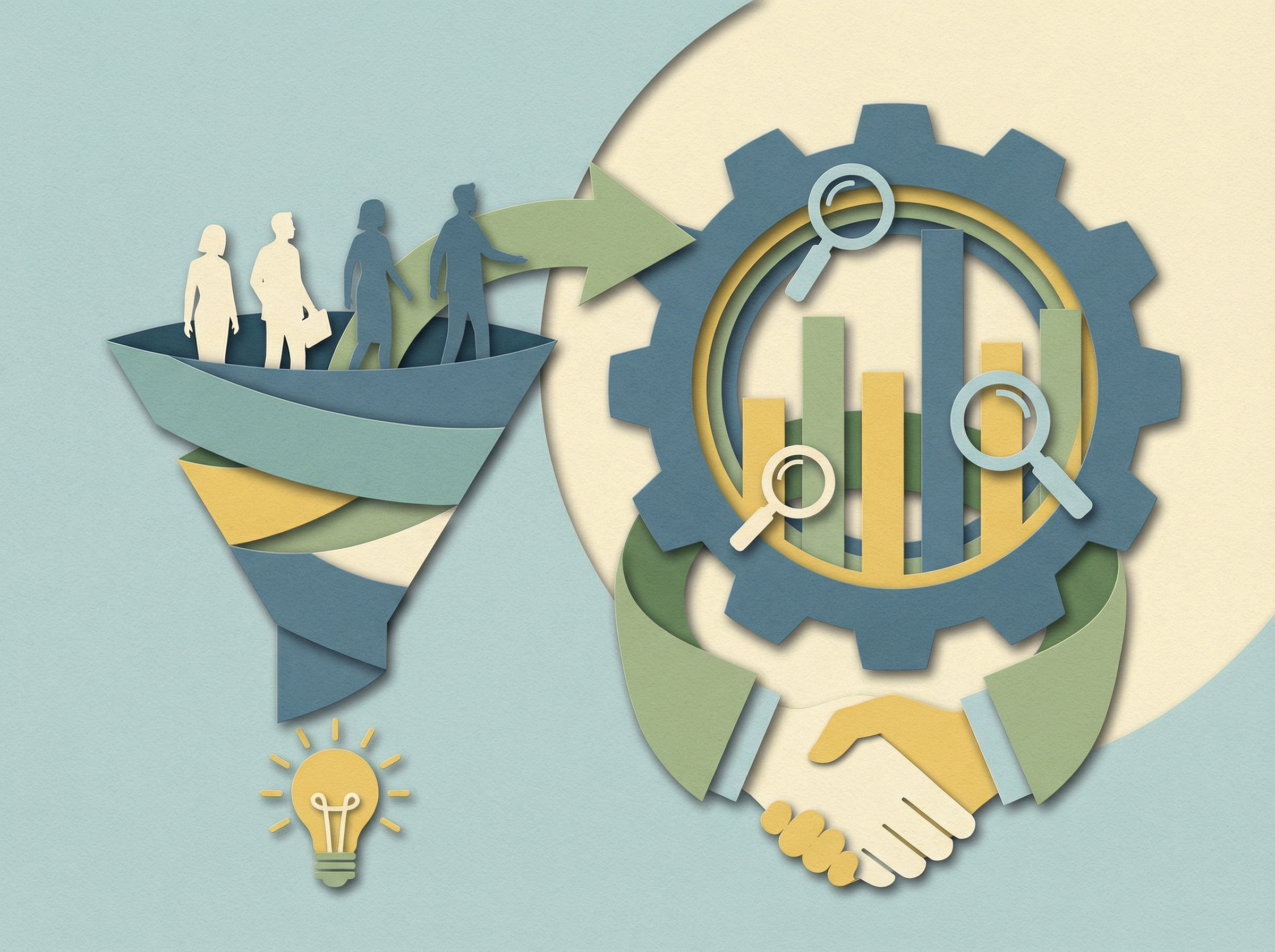
Real-World Scenario: The "Black Hole" in the Funnel
Let’s look at a concrete example of HR analytics in action. Meet Sarah, a Talent Acquisition Manager at a mid-sized fintech company. Her team was drowning. They were receiving 2,000 applications a month, yet hiring managers were complaining they weren't seeing enough qualified candidates. The "Time-to-Fill" metric had crept up to 65 days, well above the industry average of 42.
The Bottleneck
Sarah’s initial instinct was to spend more money on job boards to widen the top of the funnel. This is the "reactive" approach. However, she decided to dig into her Applicant Tracking System (ATS) data instead.
She mapped the candidate journey: Application → Recruiter Screen → Hiring Manager Review → Assessment → Onsite Interview → Offer.
The data revealed a shocking anomaly. While 80% of candidates passed the recruiter screen, only 15% passed the "Hiring Manager Review" stage. Sarah wasn't facing a sourcing problem; she was facing an alignment problem. Her recruiters were sending through hundreds of candidates that managers deemed unqualified.
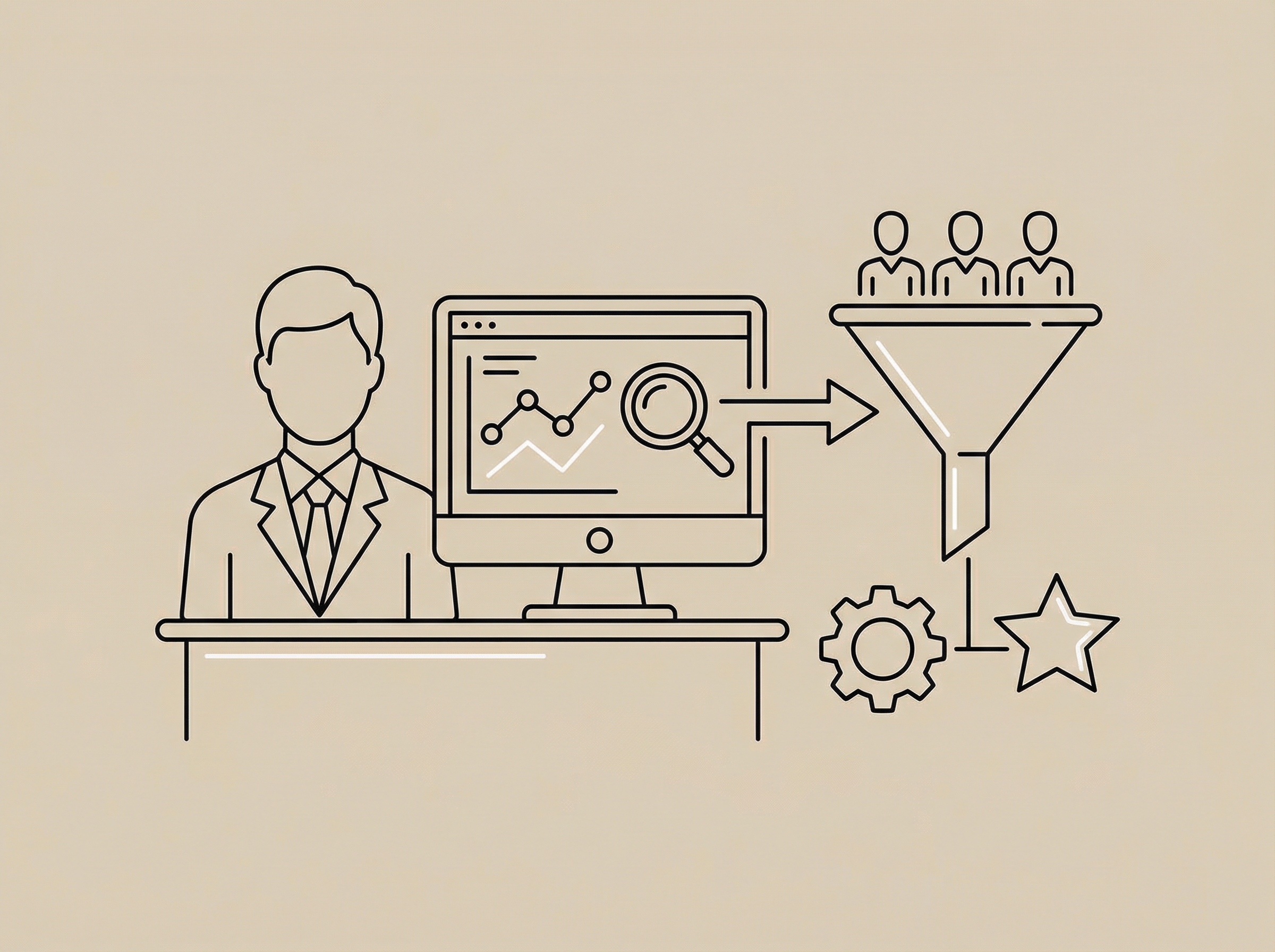
Applying the Data
Sarah used this insight to change the workflow. She didn't buy more ads. Instead:
- She implemented a structured intake meeting to recalibrate what "qualified" meant.
- She analyzed the specific reasons for rejection (e.g., "lack of Python experience") and added a "knockout question" to the application form.
- She introduced a calibrated scorecard system so recruiters and managers were scoring candidates on the same criteria.
By moving from "I think we need more candidates" to "The data shows a 65% misalignment at Stage 2," Sarah solved the actual problem.
Core Insights & Best Practices for 2025
To replicate Sarah’s success, you need more than just a spreadsheet. You need a framework. Here are actionable heuristics for applying HR analytics effectively.
1. Distinguish Between Descriptive and Predictive
Most HR teams get stuck on descriptive analytics (what happened? e.g., "Turnover was 15% last year"). The real value lies in predictive analytics (what will happen? e.g., "Employees with commute times over 45 minutes are 3x more likely to quit in month 6").
Pro Tip: Don't just report the news; forecast the weather. Use data to flag "flight risks" or predict which candidate sources yield the highest long-term performers.
2. Garbage In, Garbage Out (Data Hygiene)
Your analytics are only as good as your inputs. If recruiters aren't logging the real reason a candidate was rejected in the ATS (e.g., selecting "Other" instead of "Salary Mismatch"), your data is useless. Standardize your dropdown menus and enforce their use.
3. Operationalize with the Right Tools
You cannot analyze what you do not measure. This is where tools that structure the hiring process become critical. Platforms like Foundire are essential here because they automate the collection of standardized data—from resume screening to AI-driven interview notes—creating a clean dataset that makes analytics possible.
Common Pitfalls to Avoid
- Analysis Paralysis: Trying to measure 100 metrics at once. Start with the "Vital Few": Time-to-Fill, Cost-per-Hire, Quality-of-Hire (measured by 90-day retention), and Pass-Through Rates.
- Ignoring Context: Data tells you what, but humans tell you why. If an interview stage has a high drop-off, it might not be the candidates—it might be a rude interviewer.
- Confusing Correlation with Causation: Just because high performers all wear blue shirts doesn't mean you should only hire people in blue shirts. Always test your hypotheses.
The Breakthrough Moment: Impact on the Bottom Line
Back to Sarah. After three months of her data-driven interventions, the breakthrough happened. It wasn't just that the process felt smoother—the numbers proved the ROI.
Before vs. After
- Pass-through Rate (Manager Review): Improved from 15% to 60% because recruiters were only sending truly qualified candidates.
- Time-to-Fill: Dropped from 65 days to 38 days.
- Recruiter Efficiency: Recruiters spent 40% less time screening irrelevant resumes, allowing them to focus on closing candidates.
Most importantly, Sarah could walk into the CFO’s office and say, "By using HR analytics to fix our funnel, we saved $120,000 in wasted agency fees and reduced lost productivity days by 27%." That is the difference between an administrative function and a business driver.
Career Advantage: Talking Data in Interviews
For recruiters and talent leaders, fluency in HR analytics is now a major career differentiator. During interviews, you must demonstrate that you make decisions based on evidence, not just experience.
Q&A: How to Answer "How do you use data?"
Q: "Tell me about a time you used data to improve a hiring process."
A: "In my last role, I noticed our offer acceptance rate had dropped to 60%. I analyzed the data and found the drop-off was highest among engineering candidates who waited more than 48 hours for an offer. I streamlined the approval workflow, reducing offer generation time from 4 days to 24 hours. As a result, our acceptance rate rebounded to 85% within two months."
Resume Bullet Examples
- "Leveraged predictive analytics to identify high-turnover risk factors, implementing an intervention program that improved retention by 18% YoY."
- "Reduced Time-to-Hire by 30% by analyzing funnel pass-through rates and eliminating redundant interview stages."
- "Designed and implemented a structured interview scorecard system, increasing Quality of Hire scores by 22%."
Pros & Cons of HR Analytics
| Benefit | Tradeoff |
|---|---|
| Removes Bias: decisions are based on performance data rather than unconscious bias or "gut feeling." | Dehumanization Risk: Over-reliance on numbers can miss the nuances of human potential and soft skills if not balanced with empathy. |
| Defensible ROI: Allows HR to speak the language of finance, justifying budgets for tools and headcount. | Implementation Cost: Requires investment in modern tech stacks (ATS, AI tools) and data literacy training for the team. |
| Predictive Power: shifts the function from reactive firefighting to proactive workforce planning. | Privacy Concerns: Collecting and analyzing deep employee data requires strict governance to avoid ethical breaches. |
Frequently Asked Questions
What is HR analytics in simple terms?
HR analytics (also called people analytics) is the practice of collecting and analyzing data about your workforce to make better business decisions. It involves using statistics and technology to understand trends in hiring, retention, performance, and engagement, moving HR from "I think" to "I know."
Can HR analytics backfire?
Yes. If the data is "dirty" (inaccurate input), it leads to wrong conclusions. Additionally, if analytics are used punitively (e.g., tracking bathroom breaks) rather than strategically, it destroys company culture and trust. Ethical governance is mandatory.
How do I start with no budget?
Start with the data you already have in your ATS or Excel. focus on one simple problem, like "Why do people leave?" by categorizing exit interview data. You don't need expensive software to calculate basic metrics like turnover rate or time-to-fill.
Conclusion
As we move through 2025, the gap between organizations that use HR analytics and those that don't is widening. The former are building agile, high-retention teams; the latter are guessing. Mastering this skill doesn't just improve your metrics—it secures your seat at the leadership table. Data creates a durable hiring advantage that outlasts market fluctuations.
If you want to operationalize these insights with structured workflows—from sourcing and resume screening to AI interviews and scorecards—try tools like Foundire (https://foundire.com). By automating the heavy lifting of data collection, you free yourself to do what humans do best: making the final, strategic decision.