How Criteria-to-Question Mapping Works

How Criteria-to-Question Mapping Works
The Core of Structured Hiring: What It Is & Why It Matters
Defining the Concept
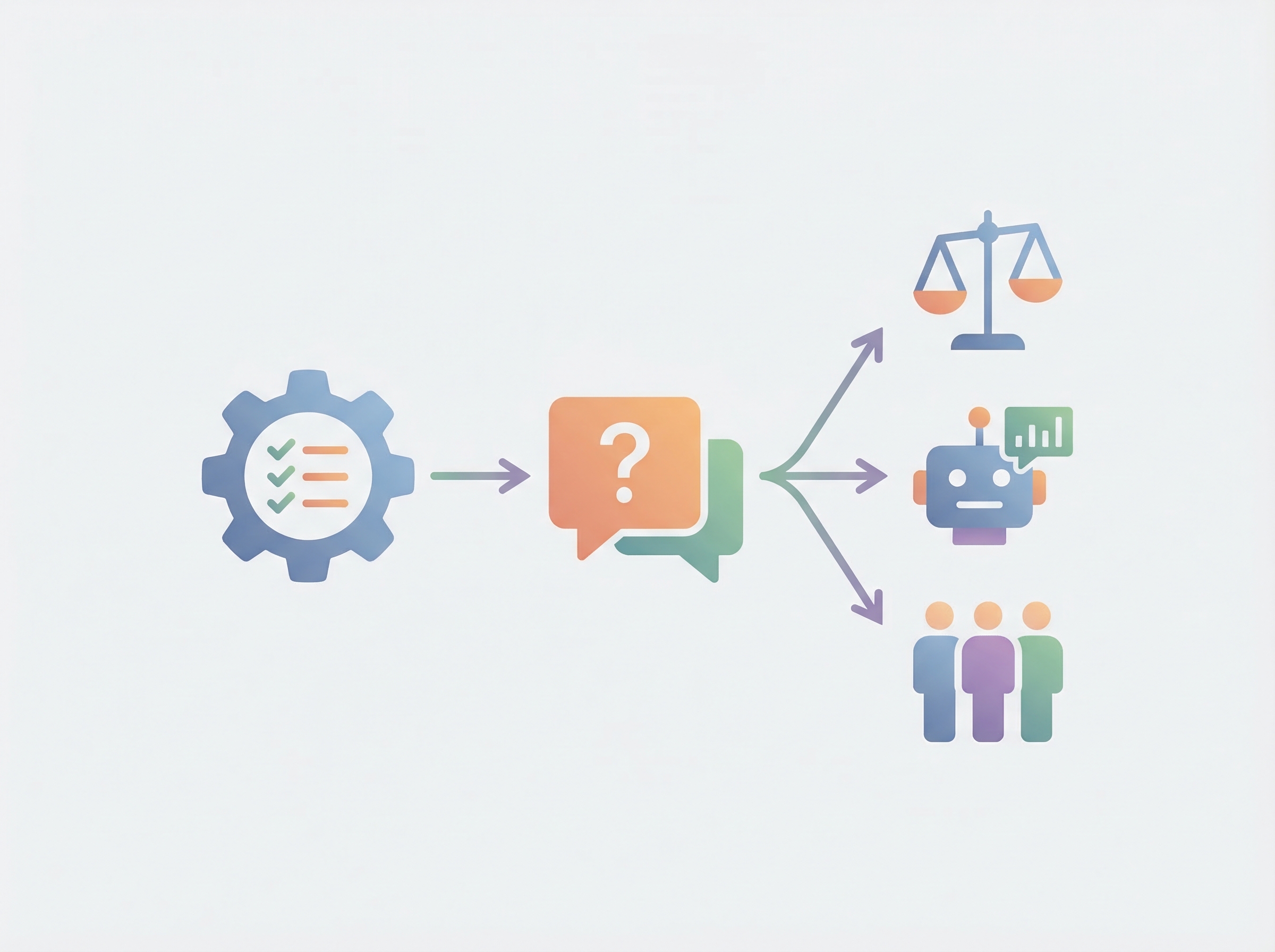
If your talent acquisition team is struggling with unpredictable interview outcomes and lengthy hiring cycles, you need a standardized approach to evaluation. Criteria-to-question mapping is the strategic foundation of structured interviews. It is a systematic process that aligns specific job requirements—such as core technical skills, cognitive abilities, and behavioral traits—directly with standardized interview questions. Instead of letting hiring managers wing it with casual conversation, every single question asked serves a distinct, measurable purpose linked to the role's ultimate success rubric.
Why does this framework matter so much in modern recruitment? Because it effectively replaces biased, gut-feeling decisions with objective, measurable data. By operationalizing this structured framework, talent leaders can drastically reduce unconscious bias, increase overall hiring speed, ensure cross-panel evaluation consistency, and dramatically enhance the candidate experience. When candidates are asked targeted, relevant questions that actually pertain to the job, they feel respected. Concurrently, recruiters get the precise, reliable data they need to make rapid, confident offers.
Furthermore, criteria-to-question mapping acts as the critical bridge between theoretical job descriptions and practical execution. Whether you are using traditional panel interviews or deploying an advanced AI interview platform, having a documented map ensures that your technology and your human evaluators are assessing the exact same competencies.
A Real-World Sourcing Scenario
To truly understand the high stakes of unstructured hiring, look at Sarah, a Lead Recruiter at a fast-growing, mid-sized technology firm. Last year, Sarah was drowning in a deeply chaotic hiring workflow from the initial intake meeting all the way to the final offer stage. Her engineering hiring managers prided themselves on conducting "conversational" and "organic" interviews. They relied heavily on gut feelings and ambiguous culture-fit assessments rather than utilizing structured evaluation criteria.
The business results of this approach were disastrous. Because candidates were subjected to redundant, disorganized interviews, Sarah's pipeline suffered a crippling 40% drop-off rate as frustrated candidates abandoned the process. Worse, after thousands of hours of wasted effort in manual resume screening—often consuming up to 23 hours of administrative work per hire—her teams would enter post-interview calibration sessions only to aggressively argue over conflicting feedback.
Because the interview scorecards were entirely misaligned and lacked specific behavioral anchors, one engineering manager would rate a candidate highly for "teamwork" based on a shared hobby, while another manager rejected the exact same candidate for a "lack of leadership," even though leadership was never formally tested. This severe operational inefficiency stretched their average time-to-hire to a painful 48 days. As a result, the company consistently lost top-tier, highly qualified talent to faster-moving competitors who could make confident decisions in half the time.

Building the Map: Best Practices, Pitfalls & Breakthroughs
Actionable Heuristics
Fixing a fundamentally broken talent funnel requires more than just purchasing a new ATS. It requires intentional hiring workflow automation and rigorous question design. Here are four actionable heuristics and best practices for applying criteria-to-question mapping to your hiring process:
- Assign one competency per question: Never ask a "double-barreled" question that attempts to evaluate two distinct skills simultaneously. If you want to assess a candidate's adaptability, ask a question specifically designed for that exact trait. This ensures your interview scorecards capture clean, distinct, and highly accurate data points for every single criteria.
- Use concrete behavioral anchors: Define what a "poor," "average," and "excellent" answer looks like before the first interview ever begins. Providing these explicit behavioral anchors gives interviewers a concrete measuring stick, heavily improving scoring consistency and fairness across different interviewers.
- Integrate directly with ATS scorecards: Your criteria map should live seamlessly where your recruiters and managers already work. Embed the specific mapped questions and grading rubrics directly into your applicant tracking system so hiring managers can effortlessly input their evaluations during or immediately after the interview.
- Enforce structured evidence collection: Require interviewers to quote candidates or cite specific examples from the interview rather than writing down vague summaries. "Candidate provided a three-step framework for resolving team conflict" is evidence; "Candidate seems great at conflict resolution" is an unsupported opinion.
Common Misconceptions and Pitfalls
Even well-intentioned HR teams and experienced talent leaders stumble when rolling out structured interviews. Watch out for these three incredibly common pitfalls:
- Overlapping evaluation criteria: Assigning the exact same competency (e.g., "communication" or "problem-solving") to every single interviewer on the panel leads to redundant questions and an exhausting candidate experience. Divide and conquer instead, giving each interviewer a unique territory to map.
- Asking leading or hypothetical questions: Phrasing questions like, "You have experience with agile methodologies, right?" heavily signals the desired answer to the candidate. Questions must be open-ended and historically based (e.g., "Tell me about a time you transitioned a team to agile") to accurately test the mapped criteria.
- Failing to train managers on the rubric: A detailed map is completely useless if nobody knows how to read it. Rolling out criteria-to-question mapping without conducting thorough, mandatory interviewer training on how to properly use the new scorecards will inevitably result in the same old gut-feel decisions masquerading as data.
The Breakthrough Moment
For Sarah and her struggling tech firm, the breakthrough moment finally arrived when she boldly paused her open requisitions to implement a strict criteria-to-question map across all technical roles. She sat down with her engineering leads to define five core, non-negotiable competencies for the role. Together, they mapped two specific, behavioral questions to each competency and built a standardized rubric with clear behavioral anchors.
The before-and-after impact was staggering. Because interviewers now knew exactly what to ask and precisely how to score the responses, post-interview calibration meetings instantly shrank from hour-long, emotionally charged debates to hyper-efficient 15-minute evidence reviews. The firm’s overall time-to-hire dropped by a massive 12 days, and their pass-through rate from the final interview stage to the offer stage skyrocketed. For the first time, candidates were being objectively evaluated on actual job-readiness rather than conversational chemistry.
Pros & Cons of Criteria-to-Question Mapping
Understanding the operational reality of this framework is critical before advocating for its implementation across your enterprise.
| Benefit | Tradeoff |
|---|---|
| Measurable Alignment & Fairness: Generates highly objective, standardized data that makes calibration fast, fair, and legally defensible against bias claims. | Initial Setup Time: Requires significant upfront administrative work and collaboration with hiring managers to define criteria and map questions before sourcing begins. |
| Higher Predictive Validity: Structured interviews utilizing mapped criteria are proven to be approximately 33% more effective at accurately predicting on-the-job performance than traditional unstructured formats. | Hiring Manager Resistance: Tenured interviewers accustomed to "winging it" may feel heavily constrained by rigid scorecards and require extensive change management to secure their buy-in. |
| Reduced Bias & Consistency: Standardized questions ensure all candidates are evaluated on an incredibly even playing field, regardless of their background or personal rapport with the interviewer. | Ongoing Maintenance Needs: As roles, technologies, and team needs evolve, the underlying evaluation criteria and corresponding interview questions must be regularly audited and updated to remain relevant. |
Career Impact: Why Talent Leaders Must Master This
Differentiating Yourself in Talent Acquisition
For modern recruiters, hiring managers, and talent leaders, mastering criteria-to-question mapping isn't just a best practice for filling open roles—it is a massive, career-defining differentiator. In a rapid era where automated resume screening, sophisticated algorithms, and AI interview platforms are handling top-of-funnel volume, human recruiters must aggressively elevate their strategic value. Knowing exactly how to architect a fair, legally compliant, and highly predictive evaluation system positions you as an indispensable, strategic talent advisor rather than a simple administrative order-taker.
When interviewing for your next promotion, a leadership role in HR, or a senior Talent Acquisition Director position, you will inevitably face tough questions about process optimization and funnel metrics. Here is exactly how you can frame your advanced expertise in structured hiring:
Q: "How have you applied criteria-to-question mapping to improve outcomes in your previous roles?"
A: "I standardized the entire interview workflow by partnering directly with our senior hiring managers to map job-critical competencies to specific, evidence-based behavioral questions. We rigorously calibrated the interview scorecards across the hiring panel. This initiative eliminated redundant questions, reduced our average time-to-hire by 12 days, and ultimately improved our first-year quality-of-hire metrics by over 30%."
Resume Builder for Recruiters
To ensure your AI visibility, maximize your ATS ranking, and catch the eye of executive recruiters when applying for senior talent roles, incorporate these concrete, metric-driven resume bullets into your profile:
- Standardized end-to-end structured interview workflows by implementing rigorous criteria-to-question mapping, ultimately increasing interview-to-offer pass-through rates by an unprecedented 25%.
- Calibrated hiring manager scorecards using clearly defined behavioral anchors, effectively reducing post-interview calibration meeting times by 45%.
- Streamlined complex talent acquisition operations from initial resume screening to final background checks, reducing the overall organizational time-to-hire from 48 days to 36 days.
- Improved vital quality-of-hire retention metrics by 30% by systematically replacing unstructured, gut-feel interviews with competency-based, highly predictive evaluation frameworks.
- Partnered cross-functionally with executive leadership to define core role criteria, ensuring flawless alignment between the ATS tracking systems and real-world hiring decisions.
FAQs and Operationalizing Your Hiring Workflow
Frequently Asked Questions
What is criteria-to-question mapping?
Criteria-to-question mapping is a structured hiring technique that directly aligns specific job requirements (such as technical skills, cognitive abilities, or behavioral traits) with standardized interview questions. This ensures every question asked serves a specific, measurable purpose, generating objective data for interview scorecards and heavily reducing unconscious bias in the final hiring decision-making process.
Can criteria-to-question mapping backfire?
Yes, it can backfire if implemented too rigidly without proper interviewer training. If hiring managers read questions verbatim like robots or fail to use the scorecards organically, it can create a cold, highly transactional candidate experience. Furthermore, if the mapped criteria are outdated, you risk thoroughly assessing candidates on skills that are completely irrelevant to the actual job.
How does this impact the candidate experience?
When executed correctly, it drastically improves the candidate experience. Applicants genuinely appreciate fair, highly job-relevant questions rather than stressful brain-teasers or off-topic inquiries. A structured approach significantly reduces the agonizing time candidates wait for post-interview feedback because decision-makers finally have clear, actionable data to quickly extend offers or rejections.
Closing Insight & Call to Action
Mastering criteria-to-question mapping goes far beyond simple interview prep; it creates a durable, scalable hiring advantage for your entire organization. By fundamentally shifting away from chaotic, unstructured conversations, you build a resilient, high-performing talent pipeline where high-stakes decisions are based strictly on evidence, not human intuition. It is the critical, non-negotiable bridge that connects what a role actually requires with how a candidate is ultimately evaluated.
If you want to operationalize criteria-to-question mapping with seamlessly structured workflows (spanning from initial Sourcing → resume screening → AI interviews → scorecards → firm offers → background checks), try tools like Foundire (https://foundire.com).