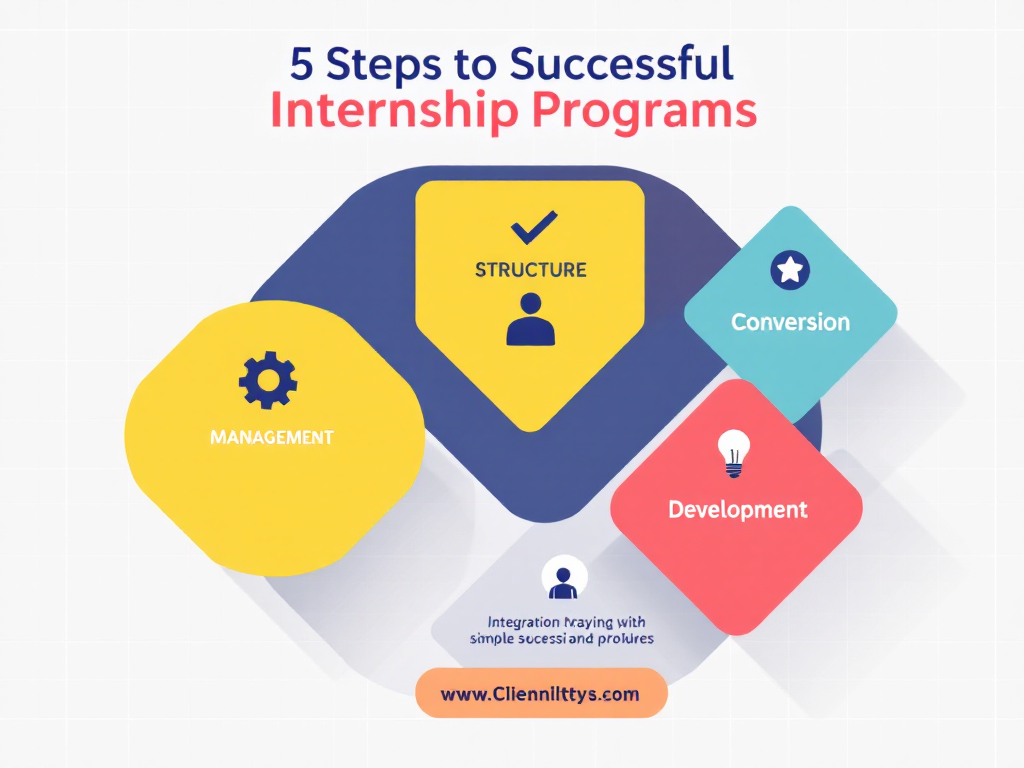
5 Steps to Successful Internship Programs

What is a Strategic Internship Program?
Internship programs are structured, professional learning experiences that serve as a dedicated talent pipeline for organizations, transforming early-career potential into long-term high performance. Far from being a source of "cheap labor," a well-executed program functions as a prolonged interview and training ground, allowing companies to assess cultural fit and technical aptitude before making a full-time commitment.
When optimized, these programs reduce future recruitment costs, increase retention rates, and inject fresh perspectives into stagnant workflows. However, without a strategic backbone, they often devolve into administrative burdens that drain resources rather than building value.
The Cost of Chaos
Meet Alex, a University Recruiter at a mid-sized tech firm. It’s October—peak campus recruiting season—and Alex is staring at a digital pile of 500+ unvetted resumes from three different university career fairs. There is no central system, just a folder of PDFs and a spreadsheet of "maybe" candidates.
Because there is no standardized screening process, Alex has to manually review every resume. By the time he identifies the top 10% of candidates, three weeks have passed. Top talent has already accepted offers from competitors who moved faster. The remaining candidates are funneled to hiring managers who conduct ad-hoc, unstructured interviews, resulting in feedback like "I just didn't get a good vibe," rather than data-driven assessments. The result? A chaotic scramble to fill seats, a poor candidate experience, and a conversion rate that barely justifies the budget.
Scenario: The Campus Recruiting Bottleneck
The scenario above isn't unique to Alex; it is the default state for many organizations that treat early talent recruiting as a seasonal event rather than an operational workflow.
The Traditional Workflow
In a typical, non-optimized environment, the workflow looks like this:
- Intake: Recruiters collect resumes at career fairs or via generic job boards.
- Screening: Manual resume review based on GPA or university prestige (often biased and predictive of little).
- Interviewing: Managers squeeze interviews into their lunch breaks, asking inconsistent questions.
- Selection: Decisions are made in "roundtable" debates based on memory rather than scorecards.
- Outcome: An 8-to-10-week time-to-hire window with a low conversion rate of interns to full-time employees (often roughly 15-20%).
The Data Disconnect
The friction here is palpable. Without hiring workflow automation, data gets lost between steps. A candidate might ace a technical screen but get rejected because a hiring manager asked a "brain teaser" that had no relevance to the job. This disconnect leads to high manager frustration and significantly higher costs per hire.
To solve this volume problem without sacrificing quality, modern talent teams are turning to tools like Foundire to automate the top-of-funnel screening. By using intelligent assessments to rank candidates based on skills rather than pedigree, recruiters can focus their energy on closing the best talent rather than reading hundreds of resumes.
Core Insights: Structuring for Success
Transforming an internship program from a burden to a strategic asset requires moving away from "gut feel" and toward structured interviews and operational rigor. Here are the heuristics that differentiate elite programs.
Actionable Heuristics
- Calibrate Before You Source: Before a single resume is reviewed, hold a calibration session with hiring managers. Define exactly what "good" looks like for an intern. Are you looking for raw coding ability, or problem-solving adaptability? Create interview scorecards that map specific questions to these competencies.
- Separate Mentors from Managers: A common mistake is forcing the direct manager to be the sole source of support. Assign a dedicated mentor for daily guidance and "safe" questions, while the manager focuses on project deliverables and performance evaluation. This reduces manager burnout and improves the intern's psychological safety.
- Automate the Screen: Use an AI interview platform or automated skills assessment to standardize the initial bar. This ensures every candidate—regardless of which school they attend—gets an equal opportunity to demonstrate their capability, removing pedigree bias and saving hundreds of recruiter hours.
Common Pitfalls to Avoid
The "Gopher" Trap: Never use interns for fetching coffee or filing paperwork. If the work isn't meaningful, you aren't assessing their potential as a full-time hire, and you are actively damaging your employer brand.
- Vague Success Metrics: If an intern doesn't know what they need to achieve to get a return offer, your program has failed. Define clear deliverables (e.g., "Ship one feature to production" or "Complete a market analysis report") at the start of the summer.
- The "Post-Internship Ghost": Failing to stay in touch with interns between the end of the program and their graduation date is where conversion rates die. Treat them as employees on a leave of absence, not cold leads.
- Unpaid or Underpaid Roles: According to NACE data, paid internships have significantly higher conversion rates. Unpaid programs limit your talent pool to only those who can afford to work for free, hurting diversity and quality.
The Breakthrough: Operationalizing Talent
Let’s return to Alex. After implementing a structured workflow, the story changes. Instead of drowning in PDFs, Alex uses an automated screening tool to surface the top 50 candidates based on skills assessments.
He presents these pre-vetted candidates to managers with clear interview scorecards already attached. The managers conduct focused, 30-minute structured interviews. Because the criteria are clear, decisions are made in days, not weeks.
The Impact:

- Time-to-Fill: Reduced by 40%, locking in top students before competitors.
- Conversion Rate: Jumps to over 60%, meaning the majority of junior hiring needs for the next year are solved before graduation season even begins.
- Retention: Data shows that employees converted from internships have roughly 20% higher retention rates after one year compared to external hires.
Career Relevance for Talent Leaders
For recruiters and HR professionals, mastering early talent workflows is a significant career differentiator. It proves you can manage volume, analyze data, and drive long-term workforce planning.
Interview Q&A
Q: "How have you applied internship programs to improve long-term hiring outcomes?"
A: "I shifted our approach from reactive campus recruiting to a standardized operational workflow. by implementing structured interviews and calibration sessions, we reduced bias and improved our intern-to-FTE conversion rate by 25%. We also introduced resume screening automation to handle volume, which allowed us to focus personal outreach on top-tier candidates."
Resume Builders
- Designed and executed a university recruitment strategy that increased intern conversion rates from 35% to 65% YoY.
- Implemented AI interview platforms to screen 1,000+ applicants, reducing time-to-hire by 3 weeks.
- Standardized interview scorecards across 12 departments, ensuring consistent evaluation criteria for early-career talent.
Pros & Cons of Formal Programs
| Benefit (Strategic Advantage) | Tradeoff (Operational Cost) |
|---|---|
| Higher Retention: Interns converted to full-time hires stay significantly longer than external hires, reducing future turnover costs. | High Management Overhead: Requires significant time investment from senior leadership and mentors to be effective; cannot be "set and forgotten." |
| Lower Cost-Per-Hire: Reducing reliance on expensive agencies for entry-level roles by building your own pipeline. | Delayed ROI: The payoff is long-term (1-2 years). Immediate productivity is often lower as interns ramp up and learn. |
| Employer Branding: A strong program creates brand ambassadors on campus, attracting future waves of talent organically. | Reputational Risk: A poorly managed program spreads quickly on social media and campus networks, potentially damaging the employer brand. |
Frequently Asked Questions
What is the ideal duration for internship programs?
Most successful internship programs run for 10 to 12 weeks during the summer. This duration is long enough for the intern to complete a significant project and for the company to accurately assess their potential for a full-time role, without being too disruptive to the academic calendar.
Can internship programs backfire?
Yes. If interns are ignored, given menial tasks, or subjected to a disorganized environment, they will share their negative experiences on platforms like Glassdoor and LinkedIn. This can severely damage your ability to recruit future graduates and tarnish your broader employer reputation.
How do you measure the ROI of an internship program?
ROI is best calculated by looking at the conversion rate (percentage of interns hired full-time) and the retention differential (how much longer former interns stay vs. other hires). Higher retention reduces future recruiting costs, which is the primary financial driver of the program.
Do I need an ATS for internship hiring?
For high-volume campus recruiting, an ATS (Applicant Tracking System) is essential, but often insufficient on its own. Integrating specialized tools for resume screening and candidate engagement is usually necessary to manage the influx of applications without creating a bottleneck.
Conclusion
Mastering internship programs is not just about filling summer desks; it is about building a durable, compound-interest investment in your company's future. By treating interns as prospective full-time employees from day one and applying the same operational rigor used for executive hires, you create a self-sustaining talent engine that outperforms the market.
If you want to operationalize your early talent strategy with structured workflows—from resume screening and AI interviews to scorecards and offers—consider using tools like Foundire to standardize the process and secure the best next-generation talent.