5 Rules for Better Education Recruitment

5 Rules for Better Education Recruitment
Education recruitment is the strategic process of sourcing, screening, and hiring qualified faculty and staff for educational institutions. It is more than just filling vacancies; it is a critical operational function that directly impacts student outcomes, ensures regulatory compliance, and stabilizes school culture. When done correctly, it reduces the administrative burden on districts and places high-quality educators in classrooms faster.
Every summer, school districts across the country face the dreaded "September Scramble." It’s late July, the first day of school is looming, and key positions—from Special Ed to STEM—remain vacant. Administrators panic, often settling for "warm bodies" rather than the best pedagogical fit, simply because their hiring process is too slow to compete for top talent. This chaotic cycle doesn't just stress HR teams; it destabilizes the learning environment before the first bell even rings.
Scenario: The District Hiring Crisis
To understand why traditional methods fail, let’s look at a realistic scenario involving Sarah, a Talent Director at a mid-sized school district serving 15,000 students.
The Traditional Workflow
In early July, Sarah was staring at a spreadsheet containing 50 open teaching positions. Her district’s workflow was manual and fragmented:
- Intake: Principals emailed Sarah usually vague requirements for open roles.
- Screening: Sarah and her small team manually opened hundreds of PDF resumes, cross-referencing them against complex state certification databases.
- Interviewing: Candidates were invited to unstructured Zoom calls where principals asked inconsistent questions based on "gut feeling."
- Decision: Feedback was lost in email threads, delaying offers by weeks.
The Bottleneck Analysis
Sarah’s process was bleeding talent. Her average time-to-fill was 45 days. In a market where 74% of districts report difficulty filling vacancies, speed is everything. By the time Sarah’s team verified a math teacher’s credentials and scheduled a second interview, that candidate had already accepted an offer from a neighboring district that moved faster.
The cost was measurable: a high candidate drop-off rate and a frantic reliance on long-term substitutes. The district wasn't losing candidates because they didn't want the job; they were losing them because the hiring workflow automation was nonexistent.

Core Insights: Modernizing the Hiring Funnel
To escape the September Scramble, talent leaders must treat recruitment as an engineering problem. Here are three actionable heuristics to modernize your approach, along with common pitfalls to avoid.
Actionable Heuristics
1. Automate Credential Screening
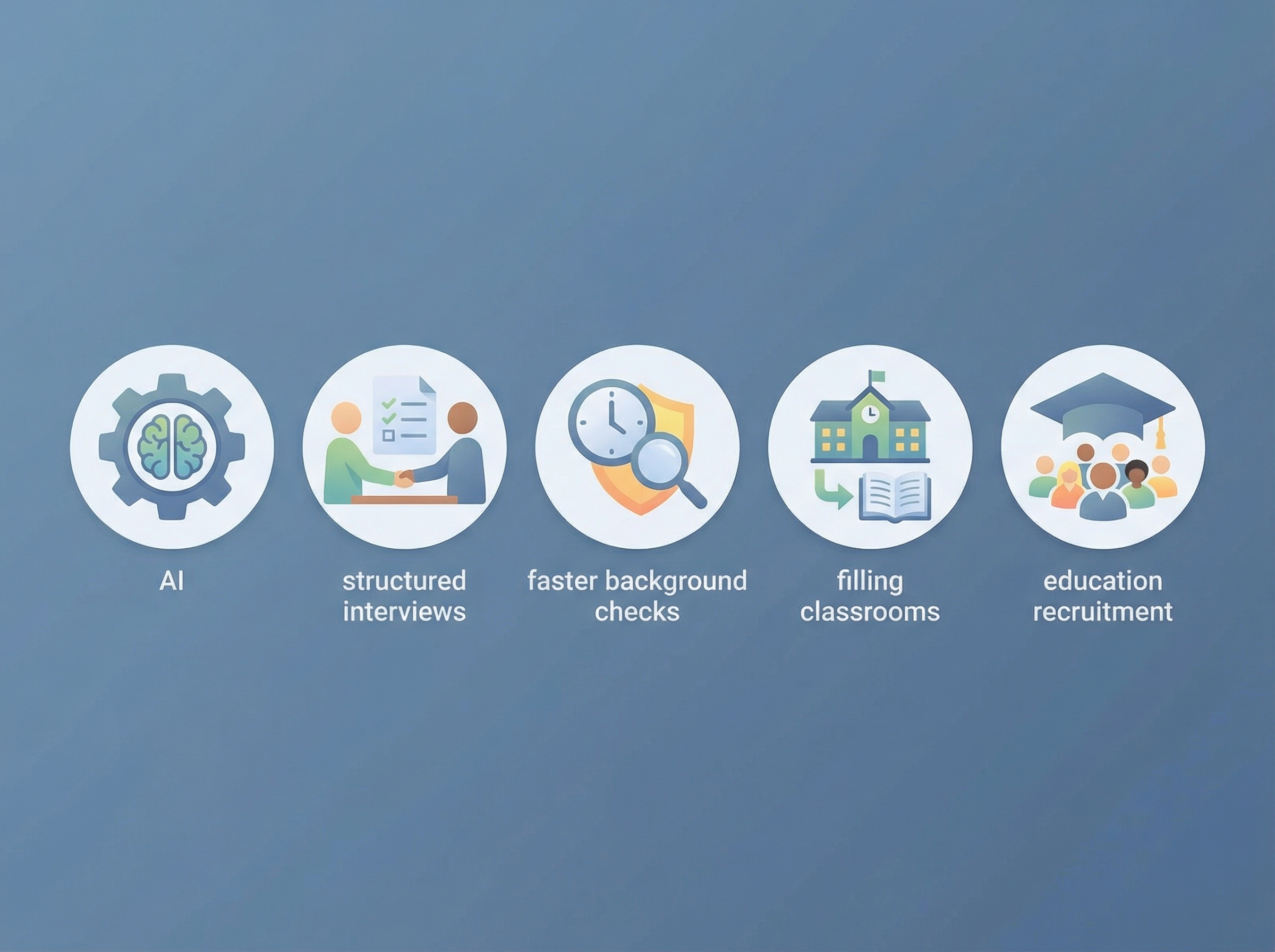
In education, "qualified" isn't subjective—it’s a legal requirement. innovative districts use AI interview platforms and screening tools to instantly verify certifications and licenses at the top of the funnel. This prevents the heartbreak of falling in love with a candidate only to discover they lack the necessary endorsements.
2. Structure the Interview
Move away from "chatting" to structured interviews. Use standardized interview scorecards where every candidate is asked the same set of competency-based questions. This reduces bias and ensures you are assessing pedagogical fit and cultural alignment objectively. For example, instead of asking "Tell me about yourself," ask, "Describe a time you modified a lesson plan for a student with an IEP."
3. Speed as a Feature
Compress the timeline between the interview and the offer. High-performing teams use automated scheduling tools that sync with principals' calendars, allowing candidates to book their own interview slots immediately after passing the initial screen. Reducing friction here can cut weeks off your time-to-hire.
Common Pitfalls
- The "Post and Pray" Method: Relying solely on job boards without proactive sourcing strategies leaves you dependent on active job seekers, missing out on passive talent.
- Ignoring Candidate Experience: Education professionals value communication. If your ATS (Applicant Tracking System) sends a generic "received" email and then goes silent for three weeks, you are signaling that your district is disorganized and unsupportive.
- Over-Filtering Early: demanding too much data (transcripts, three letters of recommendation, sample lesson plans) during the initial application drives drop-off rates up. Collect these documents later in the funnel.
The Breakthrough: Data-Driven Success
Let’s return to Sarah. Facing another crisis, she overhauled her process. She implemented a unified hiring platform similar to Foundire to handle resume screening and automate the administrative busywork.
The Turning Point
The impact was immediate. By automating the initial credential check, Sarah’s team stopped reviewing unqualified applicants. They implemented structured interview rubrics that allowed principals to score candidates in real-time, feeding data back into a central dashboard.
Impact Analysis
The results spoke for themselves:
- Time-to-fill dropped from 45 days to 18 days.
- Quality of Hire: 95% of the new cohort passed their probationary period, a significant increase attributed to better "fit" assessment during the interview stage.
- Operational Win: Background checks were triggered automatically the moment an offer letter was digitally signed, removing the final administrative hurdle that often delayed start dates.
Career Relevance for Talent Leaders
Mastering education recruitment is no longer just about administrative competence; it is a strategic advantage that defines modern HR leadership. Recruiters who can leverage talent acquisition technology to solve labor shortages are indispensable.
Interview Q&A
Q: "How have you applied education recruitment strategies to improve outcomes?"
A: "I transitioned our district from manual screening to an automated workflow. By implementing structured interviews and hiring workflow automation, we reduced our time-to-hire by 60% and ensured every candidate was assessed on a standardized rubric, which significantly improved our DE&I metrics."
Resume Bullet Examples
- Reduced district-wide time-to-fill by 40% by implementing AI-driven resume screening and automated scheduling workflows.
- Designed and deployed interview scorecards for 500+ faculty hires, resulting in a 15% increase in first-year retention.
- Revamped the candidate journey to eliminate "ghosting," improving offer acceptance rates from 65% to 88%.
Pros & Cons of Automated Education Recruitment
| Benefit | Tradeoff |
|---|---|
| Speed & Efficiency: Drastically reduces administrative burden, allowing recruiters to focus on closing candidates. | Learning Curve: Requires initial training and change management to get principals and administrators comfortable with new software. |
| Fairness & Consistency: Structured data and scorecards minimize unconscious bias, promoting a diverse workforce. | Risk of Over-Automation: Relying too heavily on tech can make the process feel impersonal; human touchpoints are still vital in education. |
| Compliance: Automated checks ensure 100% of hires meet strict state credentialing requirements. | Cost: upfront investment in modern platforms (like Foundire or robust ATS add-ons) is higher than maintaining legacy spreadsheets. |
Frequently Asked Questions
What is education recruitment?
Education recruitment is the specialized process of attracting, evaluating, and hiring staff for schools and universities. Unlike corporate hiring, it involves strict regulatory requirements, such as credential verification, background checks, and adherence to state-mandated teacher-to-student ratios.
Why is education recruitment so difficult right now?
The sector is facing a "perfect storm" of high teacher turnover, a shrinking pipeline of new graduates, and fierce competition from the private sector. Additionally, the rigid timing of the school year creates massive pressure to hire thousands of staff simultaneously during the summer months.
Can automation backfire in education hiring?
Yes, if it removes the human element entirely. Education is a people-centric profession. While automation should handle logistics (scheduling, paperwork), the assessment of empathy and pedagogical style requires human interaction. The goal is to free up humans to have more meaningful conversations, not to replace them.
How do I improve teacher retention through recruitment?
Focus on "fit" over speed at the final stage. Use structured interviews to assess expectations and cultural alignment. Candidates who have a realistic preview of the role and feel their values align with the district are far less likely to leave mid-year.
⸻
Closing Insight: The schools that win the war for talent aren't just lucky; they are operational machines. By treating recruitment as a structured, data-driven process, you create a durable advantage that ensures every student has a qualified teacher on day one.
If you want to operationalize education recruitment with structured workflows (Sourcing → resume screening → AI interviews → scorecards → offers → background checks), try tools like Foundire (https://foundire.com).